By Anastasiia M., payments content, covering crypto processing for iGaming and eCommerce.
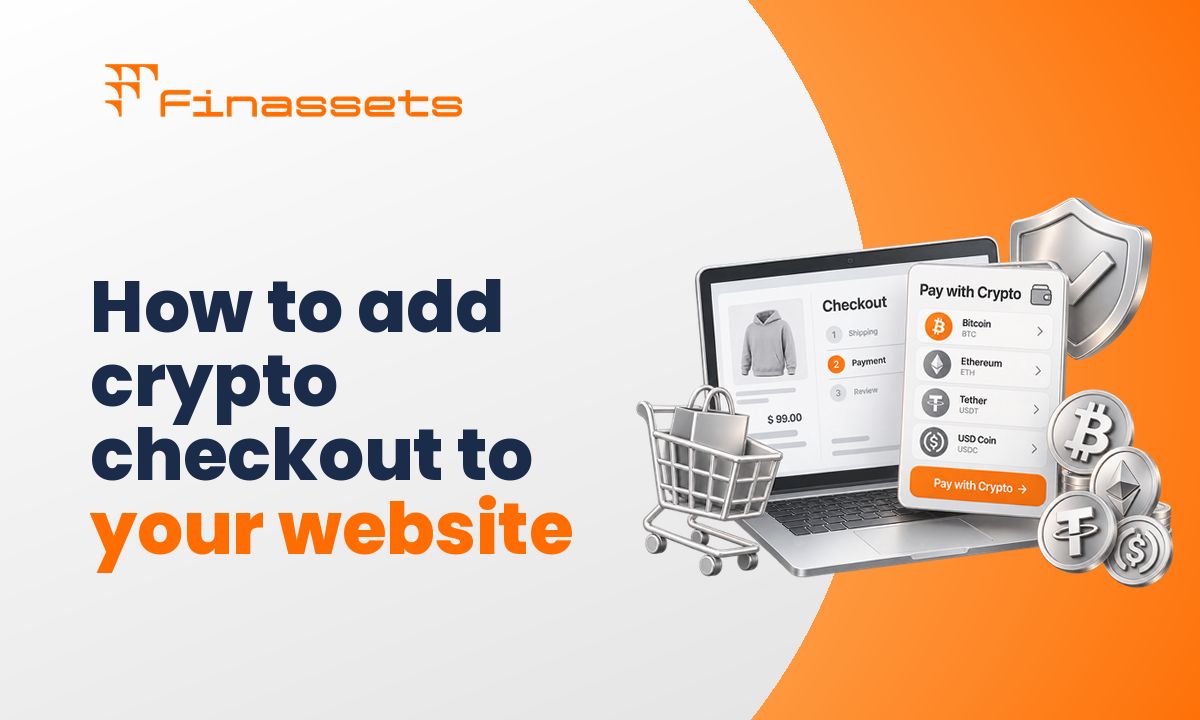
Crypto payments can be added to an online store alongside cards and bank transfers. The buyer gets one more way to pay, and the store can accept funds without card chargebacks and rolling reserve.
Let's look at how a crypto payment goes through, when the store gets the funds, how much processing costs, how refunds work, and in which cases it's worth connecting cryptocurrency.
A crypto provider ties the buyer's transfer to a specific order
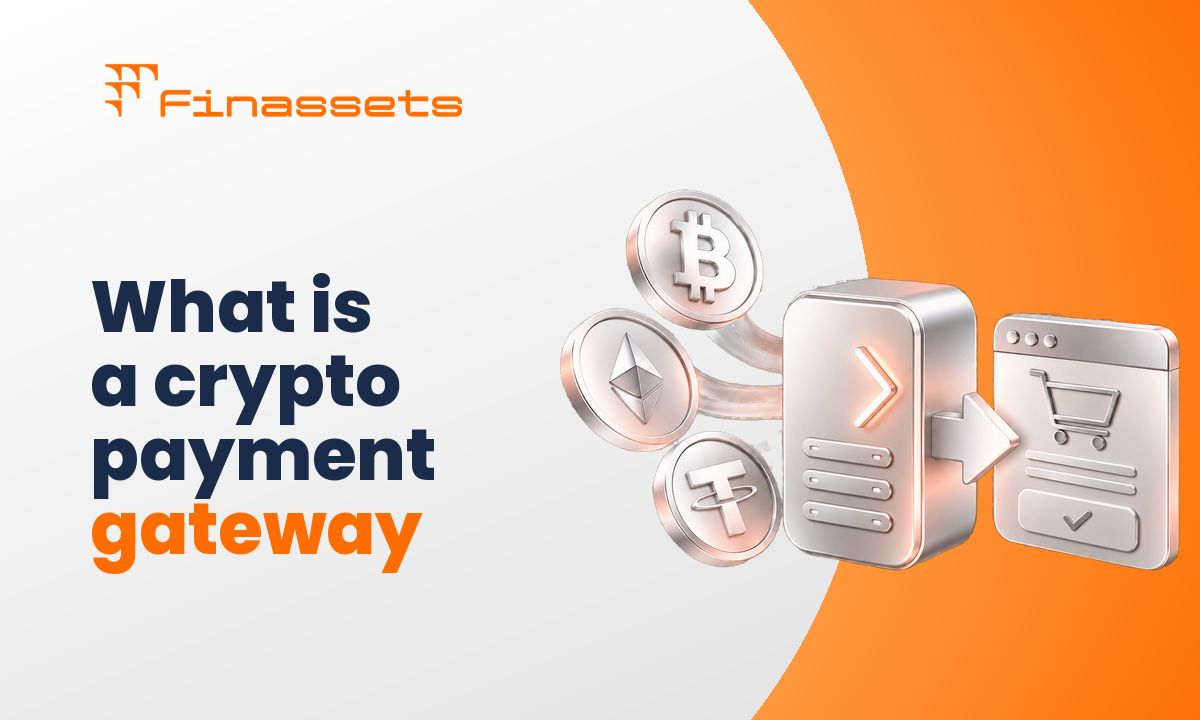
The buyer sends cryptocurrency from their own wallet or from an exchange account. The payment provider creates the payment data, tracks the transfer on the blockchain, and passes the order status to the store.
The store doesn't need to track transactions in a blockchain explorer itself, create payment addresses, or calculate the amount at the current rate. The provider handles these tasks.
In eCommerce, the stablecoins USDT and USDC are often used. Their value is pegged to the dollar, so the payment amount depends less on market swings.
The buyer goes through five steps from checkout to payment confirmation
- Chooses to pay with cryptocurrency.
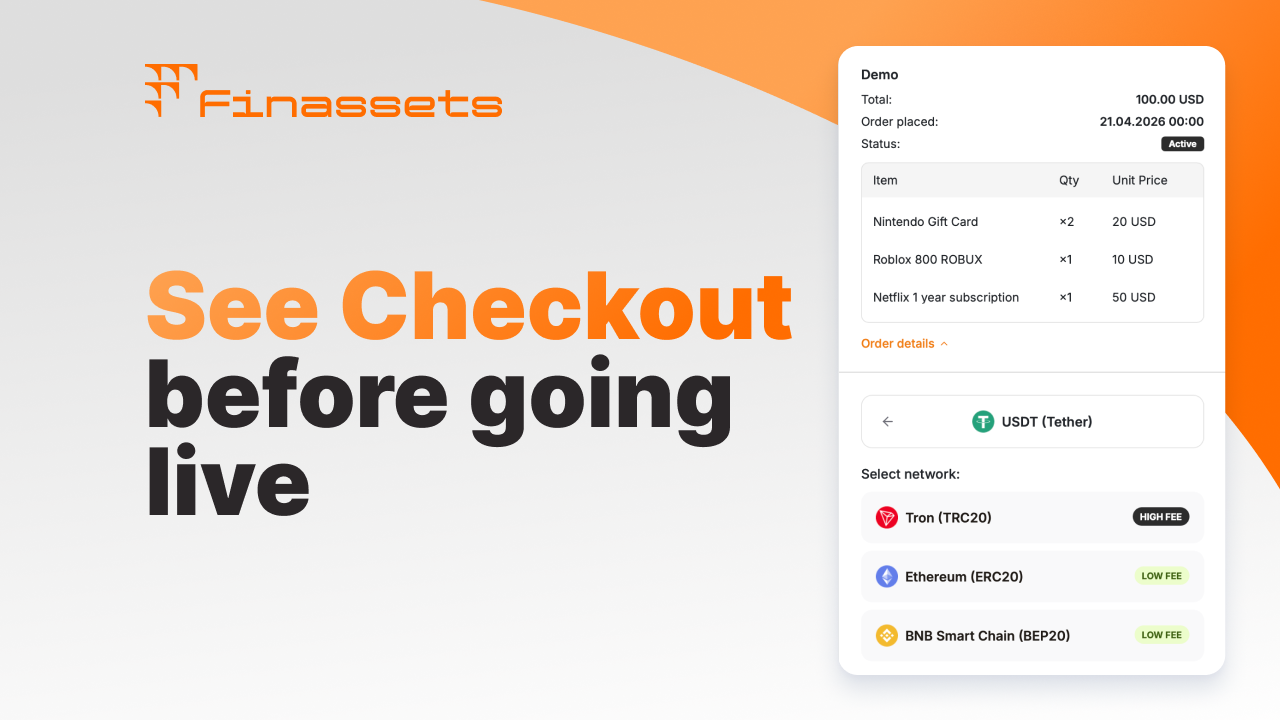
- Chooses the asset and network, for example USDT on the TRON network.
- Sees the amount, address, and QR code. The rate is locked for a set time.
- Sends the transfer from a wallet or from an exchange.
- After network confirmation, gets the payment status and returns to the site.
For a buyer who already has cryptocurrency, the process takes a few simple actions inside their usual wallet or exchange.
An order can be confirmed once the required number of network confirmations is received
After sending, the transaction is confirmed on the blockchain. The speed depends on the network chosen.
At Finassets, the transaction is detected within 15 seconds. After network confirmation, funds are credited to the merchant's balance within 30 seconds.
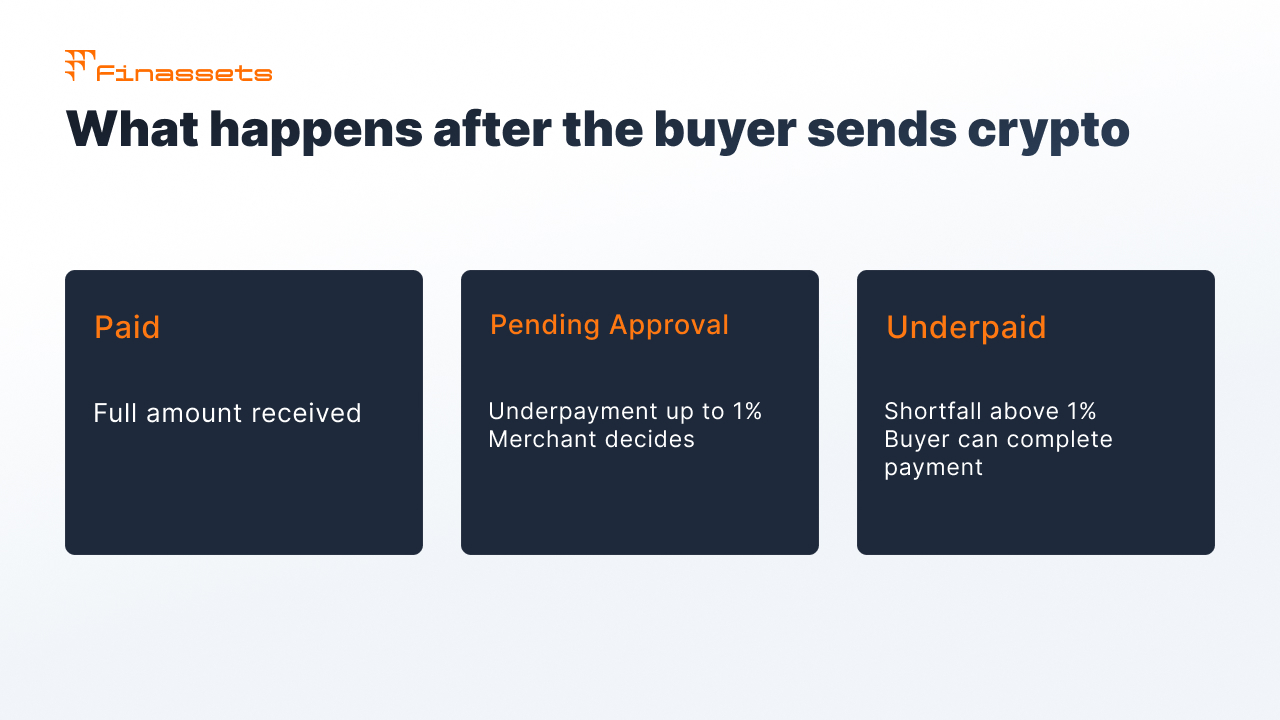
Checkout can get one of the main statuses:
- paid, the full amount was received;
- pending_approval, the underpayment is no more than 1%, and the merchant makes the decision;
- underpaid, the underpayment exceeds 1%, and the store can wait for the balance to be paid or close the checkout manually.
Underpayment can occur with a transfer from an exchange, if it withholds a withdrawal fee.
Received funds can be held, converted, or withdrawn
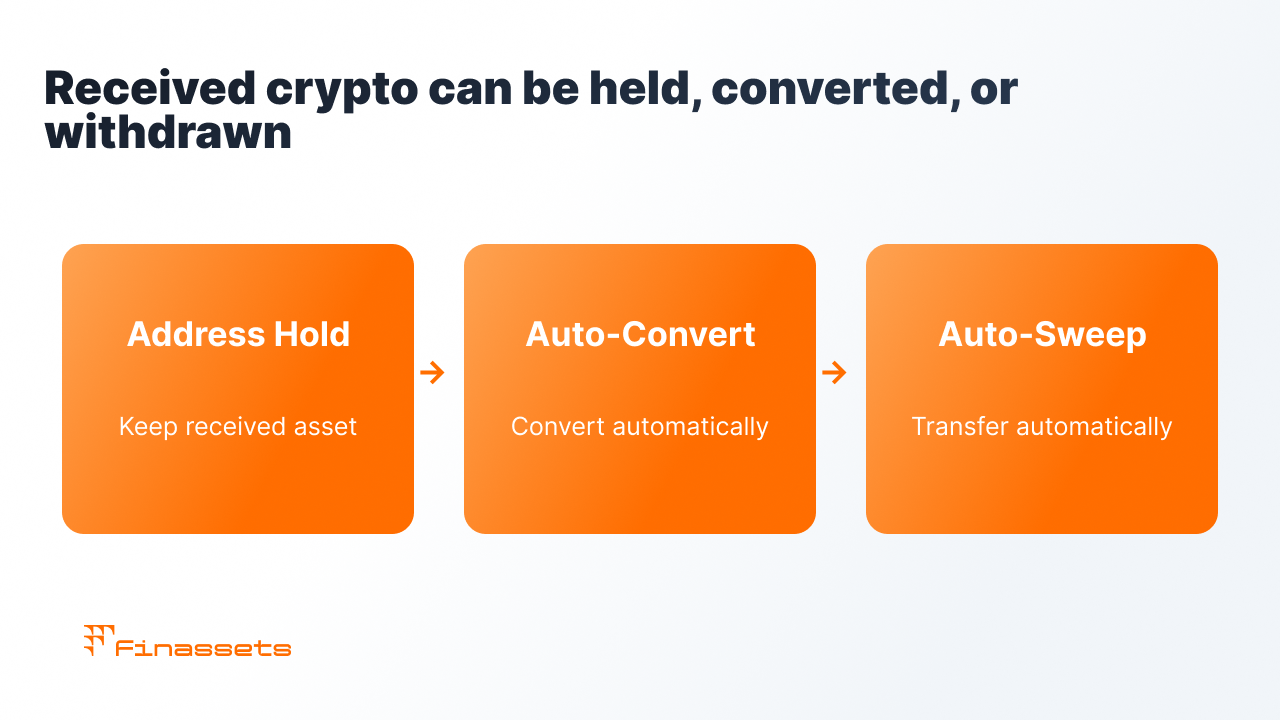
After payment, the funds arrive on the merchant's balance in whichever asset the buyer used.
- Holding. The funds stay on the balance until withdrawal or conversion.
- Auto-Convert. One asset can be automatically exchanged for another, for example BTC for a stablecoin.
- Auto-Sweep. Funds can be automatically transferred to a previously added address.
All operations show up in Back Office. There you can see amounts, assets, and statuses, and export a report with the filters you need.
A crypto provider's fee is usually lower than card processing
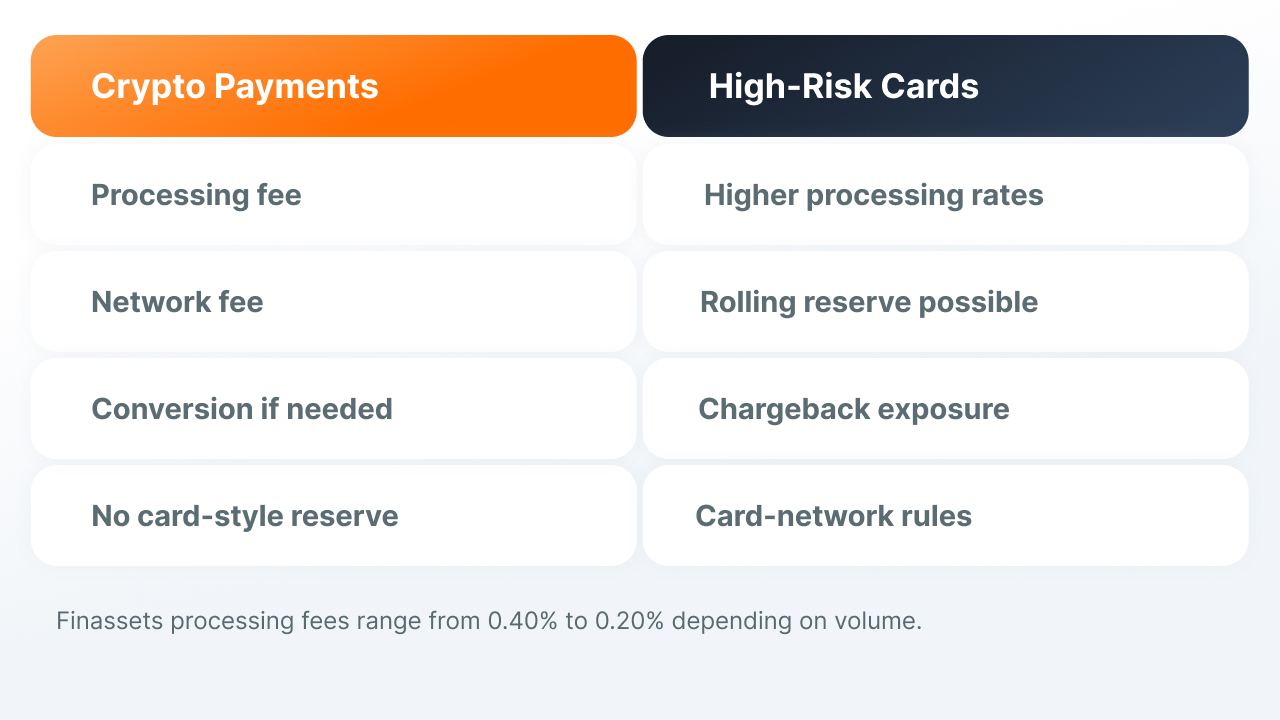
According to Finance Magnates' estimate, crypto providers' stated fees usually range from 0.4% to 1.5% (Finance Magnates, How to Choose a Crypto Payment Gateway and Processor).
For high-risk eCommerce, card processing can cost from 4% to 8% per transaction. A rolling reserve of 5% to 10% of revenue, held for 6 to 12 months, can also apply (TechBullion, High-Risk E-Commerce Payment Solutions 2026).
At Finassets, the fee ranges from 0.40% down to 0.20% depending on volume. Terms are fixed in the contract.
The total cost can include:
- a processing fee, a percentage of the payment;
- conversion, Auto-Convert costs 0.2%;
- a network fee, which can be paid by the store or the buyer.
For TRC20, Finassets uses the TRON Energy Saving System. Depending on Energy availability and network conditions, costs can drop by more than 50%.
A refund is made as a separate transfer to the buyer
A crypto transfer can't be reversed through a bank once it's sent.
If a buyer needs a refund, the store creates a separate transfer to their address. So it's best to define refund rules in advance.
Crypto payments lower costs and fit an audience that already uses cryptocurrency
What the store gets:
- no card chargebacks;
- no card-style rolling reserve;
- a fee that's clear in advance;
- the ability to accept payments from users with a crypto wallet;
- blockchain networks running around the clock.
What's worth keeping in mind:
- the buyer needs cryptocurrency or a way to get it;
- a refund is made as a separate transaction;
- the company goes through KYB before connecting;
- working with payments requires meeting security and compliance requirements.
Demand for crypto payment is highest among crypto-native and international audiences
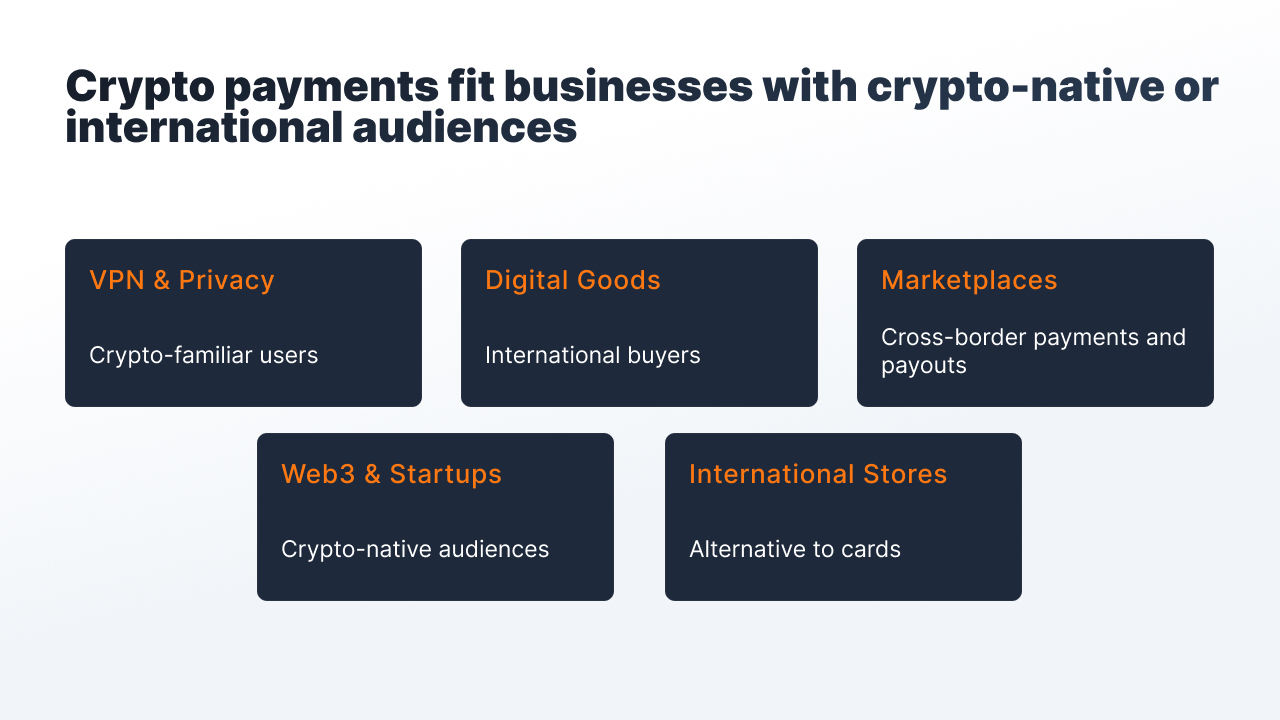
Crypto payments are especially useful where buyers already use digital assets or run into card payment limitations.
- VPN and privacy services. This audience often already uses cryptocurrency.
- Digital goods, vouchers, and gift cards. There are many international buyers here, and a higher risk of card disputes.
- Marketplaces and P2P platforms. They need payments and payouts across different countries.
- Startups and Web3 projects. Their audience often already works with cryptocurrency.
- Stores with an international audience. Crypto payment can give an additional payment method to users without a suitable international card.
If your business is high-risk, you can read more on connection criteria in the article on crypto payments for high-risk businesses.
Crypto payment makes sense if your audience will actually use it
Before connecting, it's worth assessing real demand from buyers.
Crypto payments may see little use if:
- buyers don't use cryptocurrency;
- the store only operates in a local market with convenient card and local payment methods;
- the business critically needs a mechanism for reversing a payment through a bank;
- the company isn't yet ready to go through KYB and set up compliance processes.
In many stores, it's convenient to launch cryptocurrency as an additional payment method alongside existing options. That way, demand can be tested on real orders. For a crypto-native audience, this channel can take a significant share of payments.
Crypto payment can be connected via Payment Button, API, or invoices
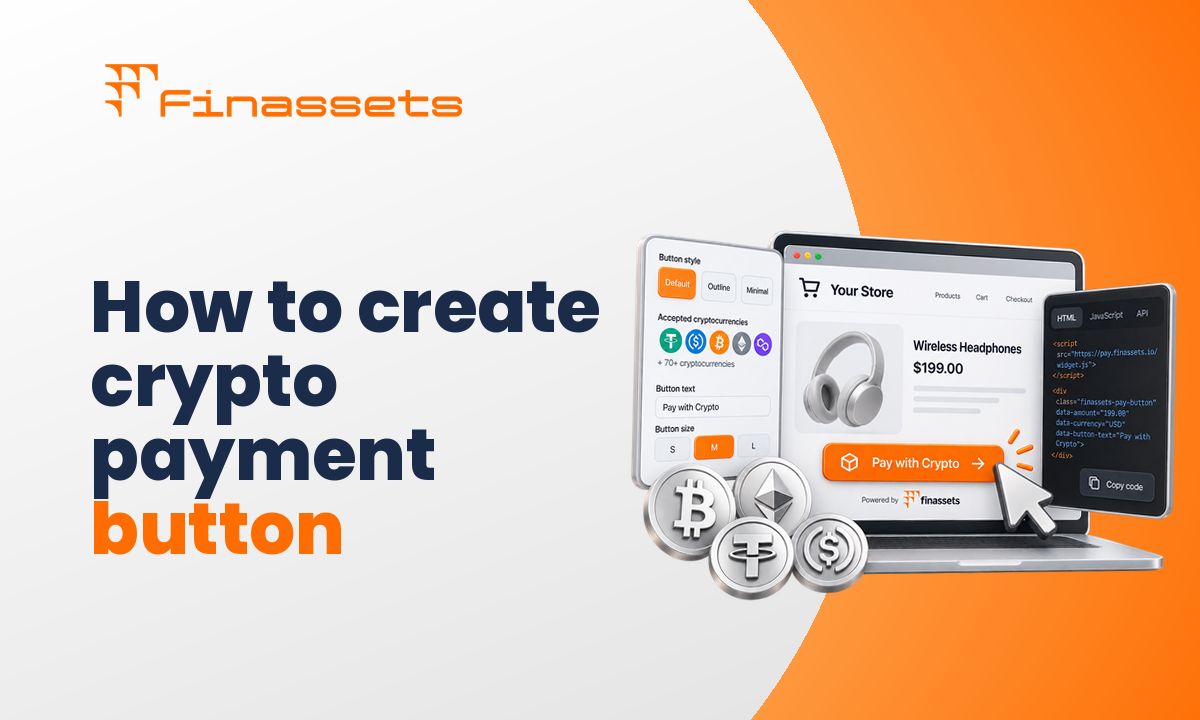
- Payment Button. Ready-made code for the site, usable on platforms that support inserting a script. How Payment Button works
- API. Fits a custom checkout with automatic status delivery via webhook. Payment gateway API
- Invoices. An invoice by link or email for B2B and off-site orders. Crypto invoicing
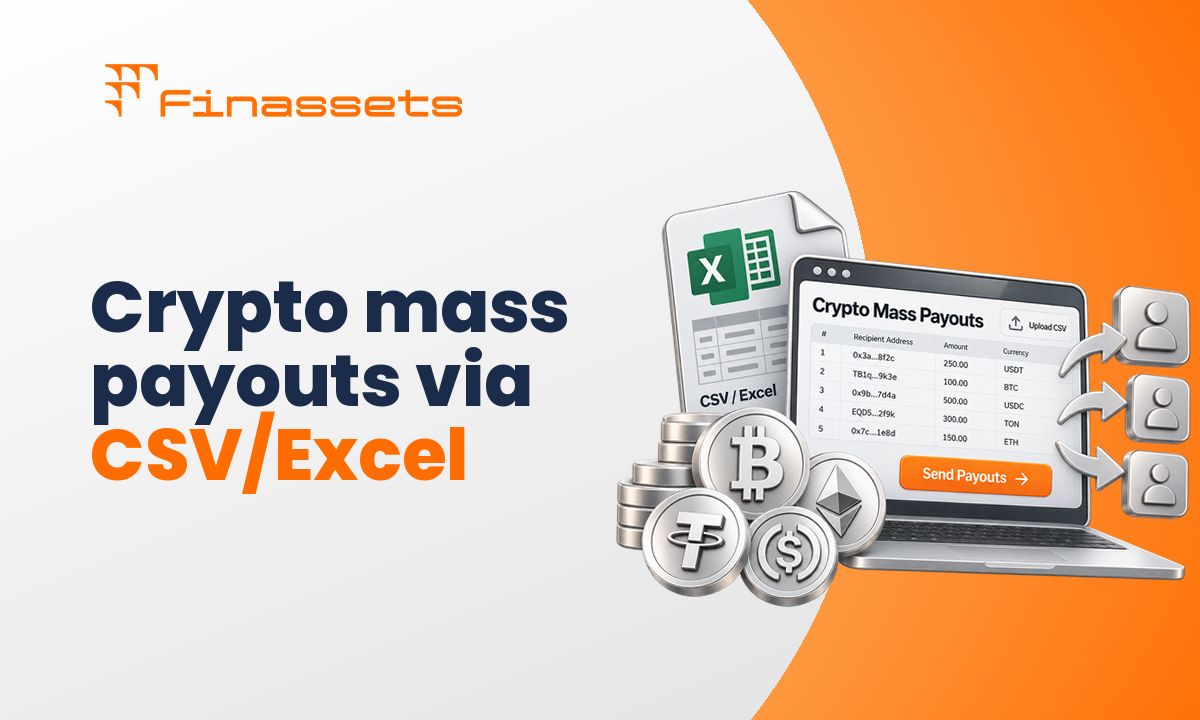
- Mass Payouts. Bulk payouts to sellers, partners, and contractors. Mass Payouts
More on specific scenarios:
- how to accept crypto in an online store, from registration to the first payment;
- plugin, API, or hosted checkout: how to choose a connection method;
- what to do if your platform barely supports crypto;
- what to look at when choosing a crypto provider;
- guides to WooCommerce and Shopify, as well as USDC payments on Shopify;
- accepting stablecoins on your site.
BuySellVouchers cut payment processing costs by up to 50%
BuySellVouchers has been operating since 2015 and sells digital vouchers and gift cards. The platform's turnover is around $12 million a month.
The company connected Finassets while scaling and entering new markets.
After switching over:
- acquiring costs dropped by up to 50%;
- payments started processing more stably;
- transaction statuses became more transparent for the team.
"As our volumes grew, processing costs and transaction predictability became critical. Finassets removed payments as a bottleneck, which directly improved realized turnover and simplified day-to-day operations. This is infrastructure we can confidently scale on."
Sergei B., CEO, BuySellVouchers
Read the full case study · All case studies
What's changed over the past 12 months
- Major platforms are adding stablecoins natively. Shopify Payments supports USDC in certain regions and networks.
- Coinbase Commerce shut down for merchants outside the US and Singapore on March 31, 2026. According to MoonPay, the migration affected more than 8,000 merchants.
Accept 70+ crypto assets with a fee starting at 0.20%
Finassets lets you add crypto payments to an existing eCommerce project.
- Payment Button, API, and invoices for different payment scenarios.
- 70+ crypto assets, including USDT and USDC across several networks.
- Fee from 0.40% down to 0.20% depending on volume. Terms are fixed in the contract.
- Back Office with payment statuses and report exports.
- AML/KYT screening, 2FA, and user roles.
- Onboarding from 2 to 7 business days. The timeline depends on KYB and compliance review.
- Registered in Panama.
See the Finassets solution for eCommerce
Add crypto payment as an additional payment method
After registration, a Finassets manager will help you choose a connection method and set up a project for your store.