By Katerina V., payments content, covering crypto processing for iGaming and eCommerce operators.
Updated: 2026-07-07
Crypto payments feel unpredictable to merchants and buyers alike when they're bolted onto a business without structure, not because the underlying blockchain is unreliable. Traditional payment infrastructure can work reliably until restrictions appear: in high-risk industries, Stripe and PayPal may stop their services for compliance reasons, and chargebacks make the situation harder still, since up to 80% of eCommerce fraud cases involve friendly fraud, where a customer disputes a legitimate purchase. If chargeback thresholds are exceeded, the payment processor may limit or close the account.
This article covers why simply adding crypto payments isn't enough on its own, and what a structured crypto checkout needs to include to actually feel as predictable as a card processor.
The main user drop-off happens at the deposit stage
Most problems with crypto payments aren't related to the blockchain itself; they're about how the crypto payment process is set up. The transaction is confirmed, but the order hasn't updated. The customer sent less than required, and it isn't clear what to do next. The finance team is reconciling payments manually.
This is a typical operational picture when crypto is connected without a structured checkout. The gateway accepts the payment, but everything else falls on the merchant's team. A proper checkout does more than accept a payment; it also handles part of the payment management that would otherwise land on staff.
Crypto payments work better when they're built like familiar payment methods
When working with crypto payments, it helps to build the process so it feels as clear and predictable as familiar payment methods such as Stripe or PayPal, rather than treating it as a fundamentally different kind of payment.
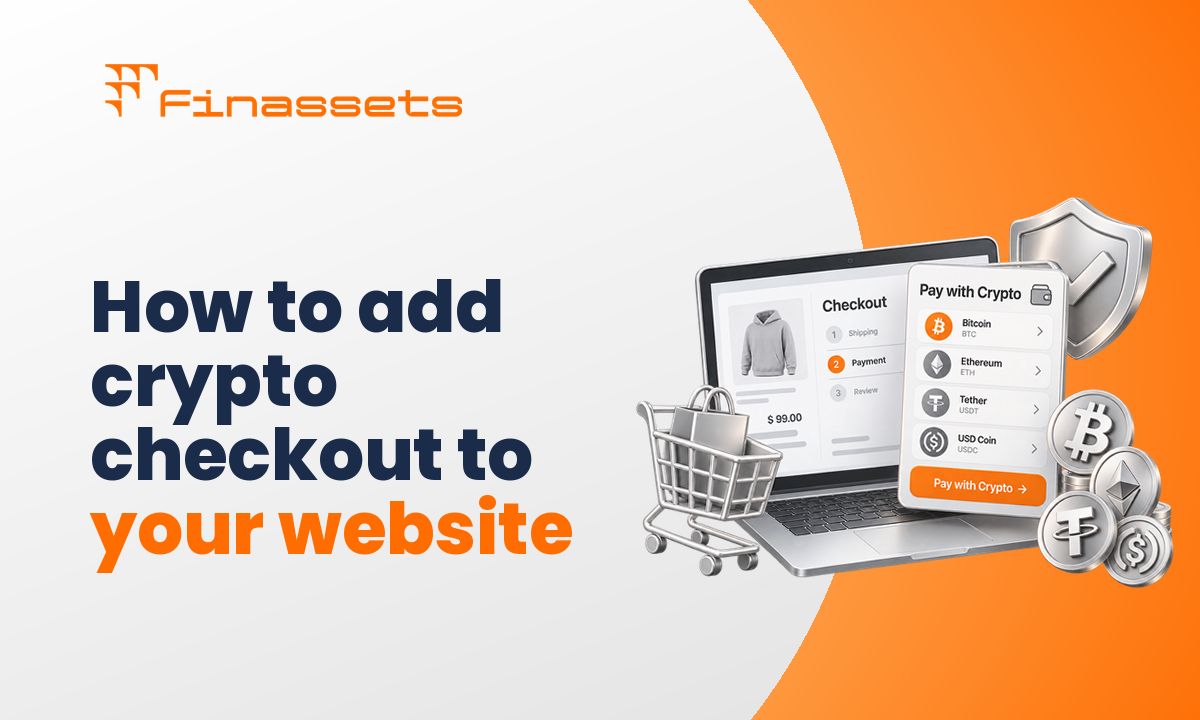
A unique address for each session means each checkout creates a separate payment session with its own address, which allows payments to be matched to orders automatically. Real-time statuses mean the buyer sees the transaction status on the payment page, and the team sees the same data in the Back Office: sessions, statuses, amounts, and the transaction hash. Handling partial payments means if less than the required amount is sent, the session stays active with an "Underpaid" status, and the merchant can see the difference and decide what to do. Predictable fees come from a model using pre-purchased Energy on the TRON network, which makes transaction costs more stable and easier to plan for. Fast payment confirmation on the TRC-20 network typically updates status within about 30 seconds, which reduces the number of incomplete payments.
The business gets full control over payments in one interface. Operationally, this means payments are automatically matched to orders, transaction status is visible without checking the blockchain directly, payments are managed in one interface, and the amount of manual reconciliation is reduced.
A clear payment process increases payment completion
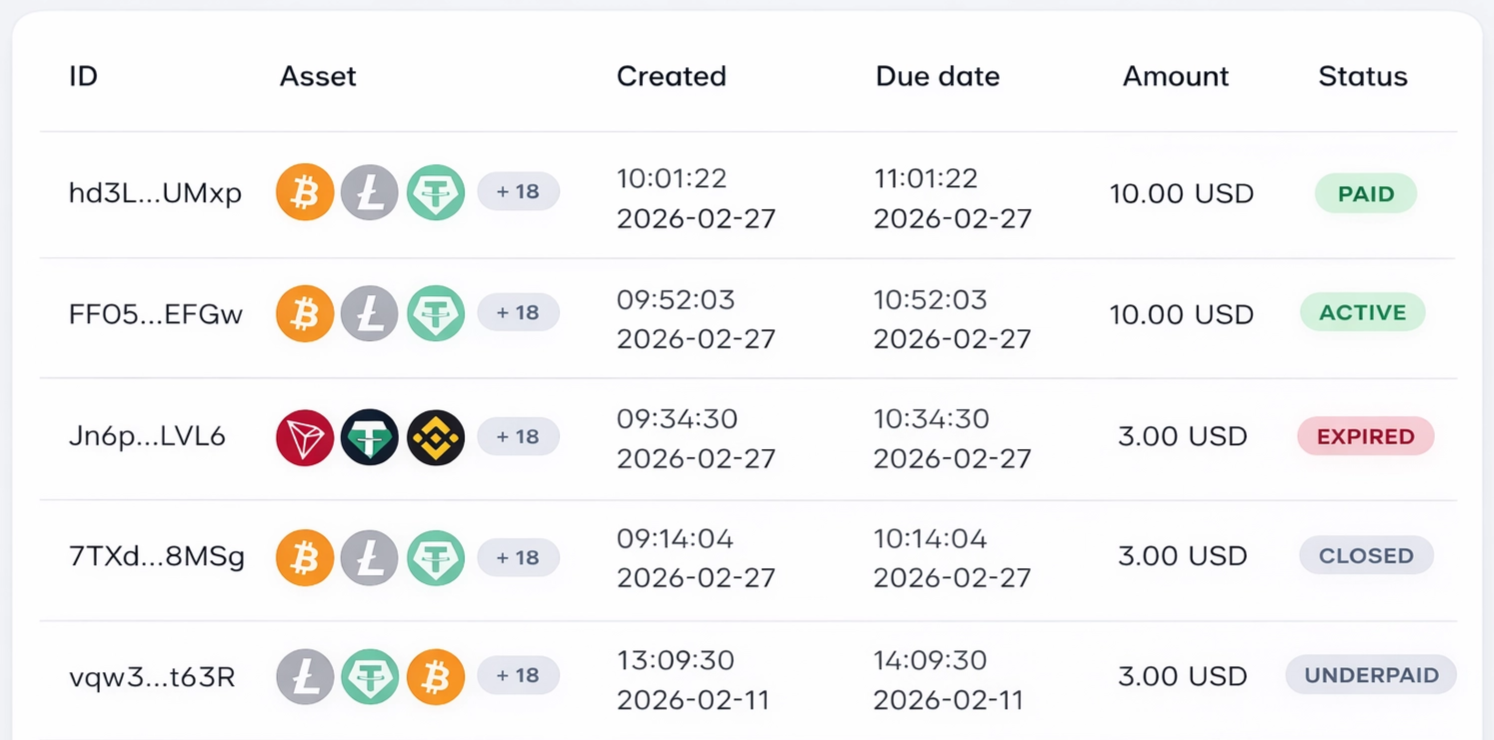
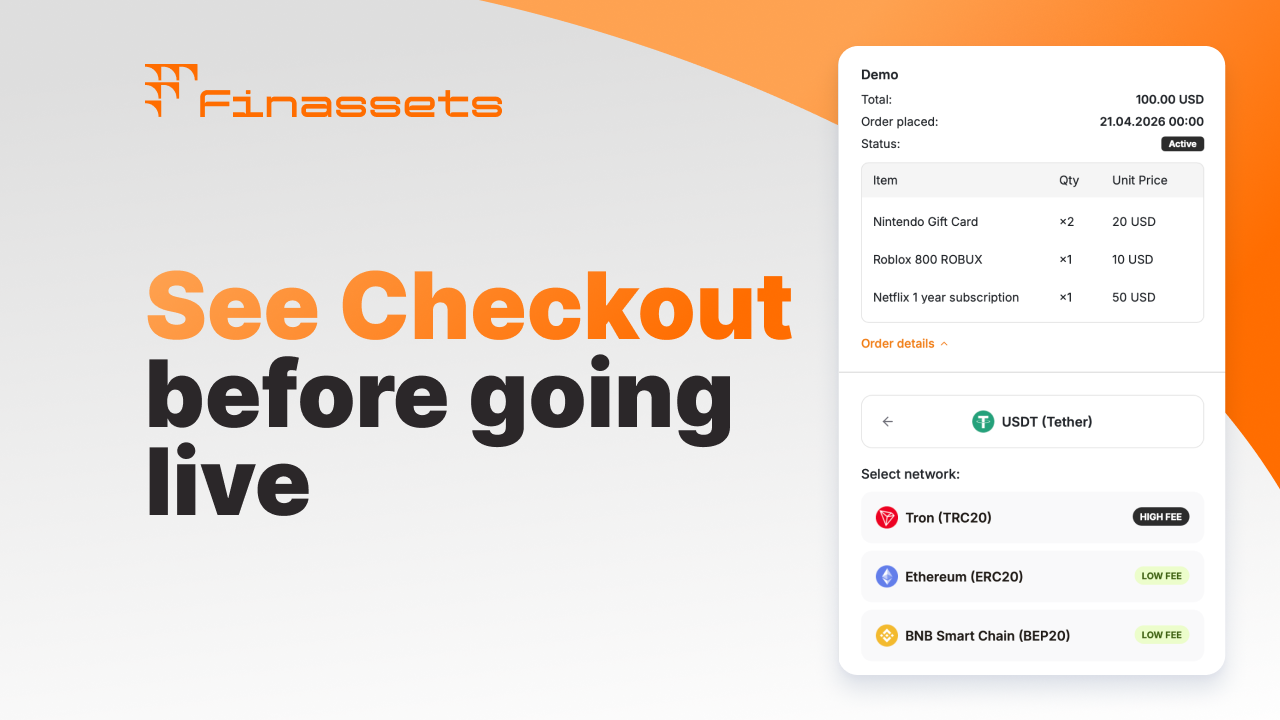
From the buyer's side, the process becomes easier to understand: a simple payment flow for choosing a currency and network, real-time status display, and fewer reasons to contact support. As a result, the number of incomplete payments decreases, which is the practical metric that structure actually improves, not just the buyer's subjective experience.
Where this doesn't apply
This structure solves problems that come from poor checkout architecture: unmatched orders, invisible statuses, manual reconciliation. It doesn't solve problems that come from a mismatched audience; if a merchant's buyers don't hold crypto wallets, no amount of checkout polish will produce meaningful conversion, since the checkout has nothing to do with whether a buyer can pay in crypto in the first place. It's also not a substitute for card processing where card processing already works well; it's most useful as a complement when traditional rails create friction, not as a wholesale replacement.
Finassets crypto checkout can complement traditional payment methods
For some businesses, adding crypto payments becomes a practical step when traditional payment methods create operational friction or processing limitations. The effectiveness of crypto payments depends not only on which assets are supported, but on how the payment flow itself is structured.
The Finassets checkout infrastructure is designed to help businesses integrate crypto payments with clear transaction visibility and manageable operational workflows.
If you have questions about integration or want to discuss your specific case, get in touch with us.
FAQ
Why do crypto payments feel less predictable to a finance team than card payments? Usually because the checkout wasn't built with the same structure a card processor provides by default. A card payment comes with an order match, a clear status, and a defined dispute process built in. A bare crypto payment address gives none of that automatically, so the team ends up manually matching transactions to orders and checking blockchain explorers to confirm status, which feels far less predictable even though the underlying payment itself settled correctly.
What does a structured crypto checkout actually add compared to a plain wallet address? A unique address per checkout session, so payments match to orders automatically instead of manually. Real-time status visible both to the buyer and in the merchant's Back Office. Explicit handling for partial payments, so an underpaid session stays open and visible rather than silently failing. And predictable fees, typically through pre-purchased network resources rather than a fee that's only known after the transaction confirms.
How long does a TRC-20 crypto payment take to confirm? Status typically updates in about 30 seconds on the TRC-20 network under normal conditions, which is fast enough to keep a checkout flow feeling responsive rather than making the buyer wonder whether the payment went through. That speed is also what reduces the number of incomplete or abandoned payment sessions.
What happens if a customer sends less than the requested crypto amount? With a structured checkout, the session stays active with an "Underpaid" status instead of silently failing or requiring a support ticket to resolve. The merchant can see exactly how much was received versus requested and decide how to handle the difference, rather than discovering the mismatch only when a customer complains that their order never processed.
Does a good crypto checkout replace the need for card payments? No. It works best as a complement where card processing creates friction, restrictions, chargebacks, or processing limitations, not as a universal replacement. Businesses with buyers who don't hold crypto wallets won't see meaningful crypto adoption regardless of how well the checkout itself is built, since the checkout only affects the experience of buyers who are already trying to pay in crypto.
Why does a clearer payment process actually increase completed payments? Because buyers abandon payments when they're uncertain what's happening, not usually because the payment method itself is slow. A simple flow for choosing currency and network, a visible real-time status, and fewer moments of ambiguity all reduce the number of buyers who give up partway through, which shows up directly as fewer incomplete payments and fewer support tickets asking "did my payment go through."