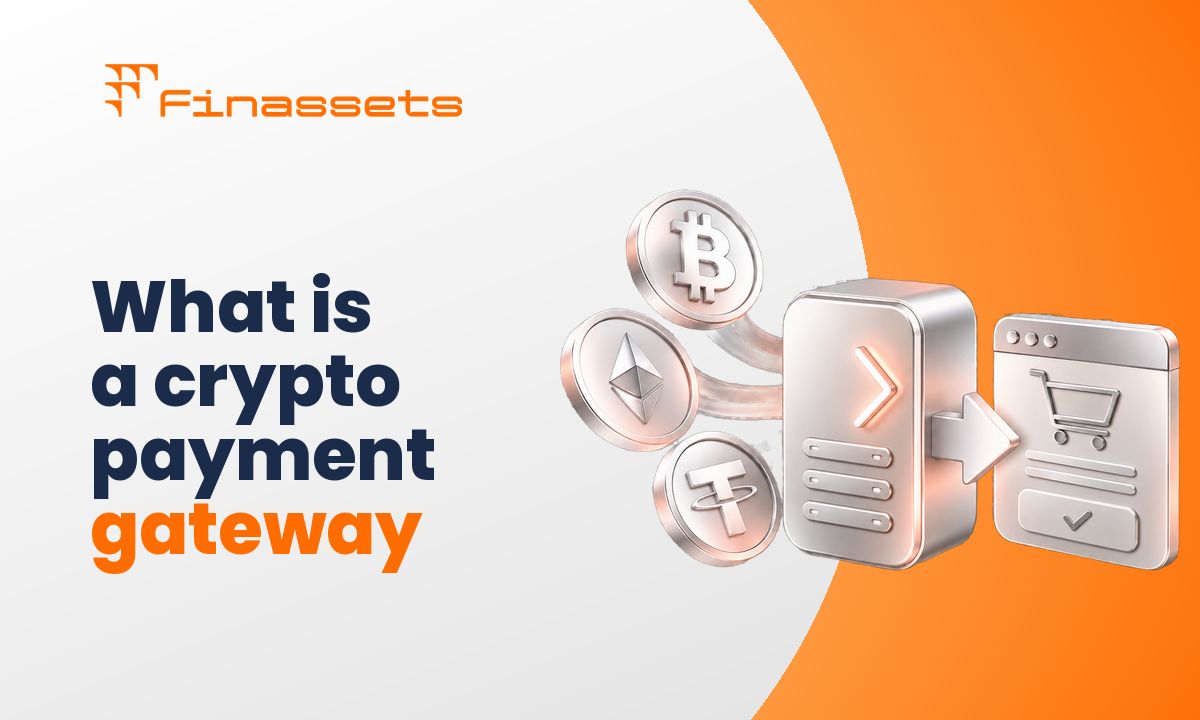
What is a stablecoin payment gateway? A stablecoin payment gateway is payment infrastructure that allows businesses to accept stablecoins such as USDT and USDC online. It connects a website or checkout with supported blockchain networks to process, track, and confirm stablecoin payments.
A stablecoin payment gateway allows your business to accept digital currency payments without relying only on cards, bank transfers, or other traditional payment methods.
Here's a quick example to ground this. Imagine an eCommerce store based in Singapore. A customer in Brazil wants to pay using USDC. At checkout, they select "Pay with USDC," choose Solana as the network, scan a QR code, and send the amount. Once the transaction is confirmed, the gateway credits the merchant’s crypto account. Alternatively, it can convert USDC to EUR and transfer the funds to the merchant’s bank account. The exact payment flow depends on the gateway’s configuration.
With Finassets low-fee crypto payment gateway, you can create a payment project, select USDT and USDC, choose the required blockchain network, configure settlement settings, and add a payment button to your website using generated embed code.
Your customers can then select a supported stablecoin and complete the payment from a compatible crypto wallet.
This guide explains how to accept stablecoin payments, how stablecoin payments work, how to add them to your website, what fees can apply, and what businesses should consider before implementing stablecoin acceptance.
How stablecoin payment gateways work (end-to-end flow)
So how do gateways actually work? They sit between merchants, customers, and blockchains to abstract away complexity. Payment gateways handle technical complexities behind stablecoin transactions: wallet infrastructure, on-chain monitoring, compliance (KYC/AML, sanctions screening), and settlement.
.png "stablecoin settlement")
Here's how a typical stablecoin transaction moves from a customer's wallet to merchant settlement-using USDC on Solana as an example:
- Checkout selection - Customers pay by choosing "Pay with Stablecoins" alongside traditional payment methods like cards and bank transfers.
- Amount quotation - The gateway quotes the exact amount in the selected digital currency based on current rates.
- On-chain transfer - The customer sends funds to a gateway-controlled deposit address or smart contract, generated uniquely per order across multiple blockchains.
- Blockchain confirmation - The network confirms the transaction-typically 3–10 seconds on Solana or Polygon. Every stablecoin transaction is recorded on the blockchain for full transparency.
- Reconciliation - The gateway maps the incoming transaction back to the specific invoice or order.
- Settlement - Funds settle in crypto or automatically convert to fiat currency. Stablecoin transactions settle in minutes, unlike traditional methods.
Most enterprise gateways in 2026 expose this flow via REST/GraphQL APIs and hosted checkout widgets, so developers can integrate stablecoin payments in days rather than building blockchain infrastructure from scratch.
What are stablecoins and why do businesses accept stablecoin payments?
Stablecoins are digital assets pegged 1:1 to fiat currencies like the US Dollar or Euro, designed to maintain a stable value and minimize the volatility that makes Bitcoin and Ether impractical for everyday commerce. Stablecoins reduce price volatility risks for businesses compared to cryptocurrencies like Bitcoin and Ethereum.
USDT (Tether) and USDC (USD Coin) are prominent examples of US dollar-referenced stablecoins.
For payments, stablecoins combine blockchain-based transfers with greater price stability than cryptocurrencies whose market prices can fluctuate substantially.
Businesses may accept stablecoin payments for several reasons:
- Adds another payment option: Customers can pay with USDT or USDC from a compatible crypto wallet.
- Supports cross-border payments: Blockchain networks can transfer digital assets between wallets across different countries.
- Reduces exposure to crypto price volatility: Fiat-backed stablecoins aim to maintain their peg instead of fluctuating like many other digital assets.
- Supports online payments: Businesses can integrate stablecoin acceptance into a website or online checkout.
- Provides on-chain transaction records: Blockchain transactions generate transaction data that businesses can use for payment tracking and reconciliation.
- Supports digital-asset customers: Merchants can serve customers who already hold stablecoins or other cryptocurrencies.
Stablecoins do not remove the need for payment infrastructure. A business still needs a way to create payment requests, identify incoming funds, track transaction status, reconcile payments, and manage settlement.
A stablecoin payment gateway provides this connection between the merchant, customer, and blockchain payment rails.
How to accept stablecoin payments on your website
You can accept stablecoin payments on your website by creating a Finassets payment project, selecting USDT and USDC, choosing the blockchain network and settlement settings, and embedding the generated payment button into your website.
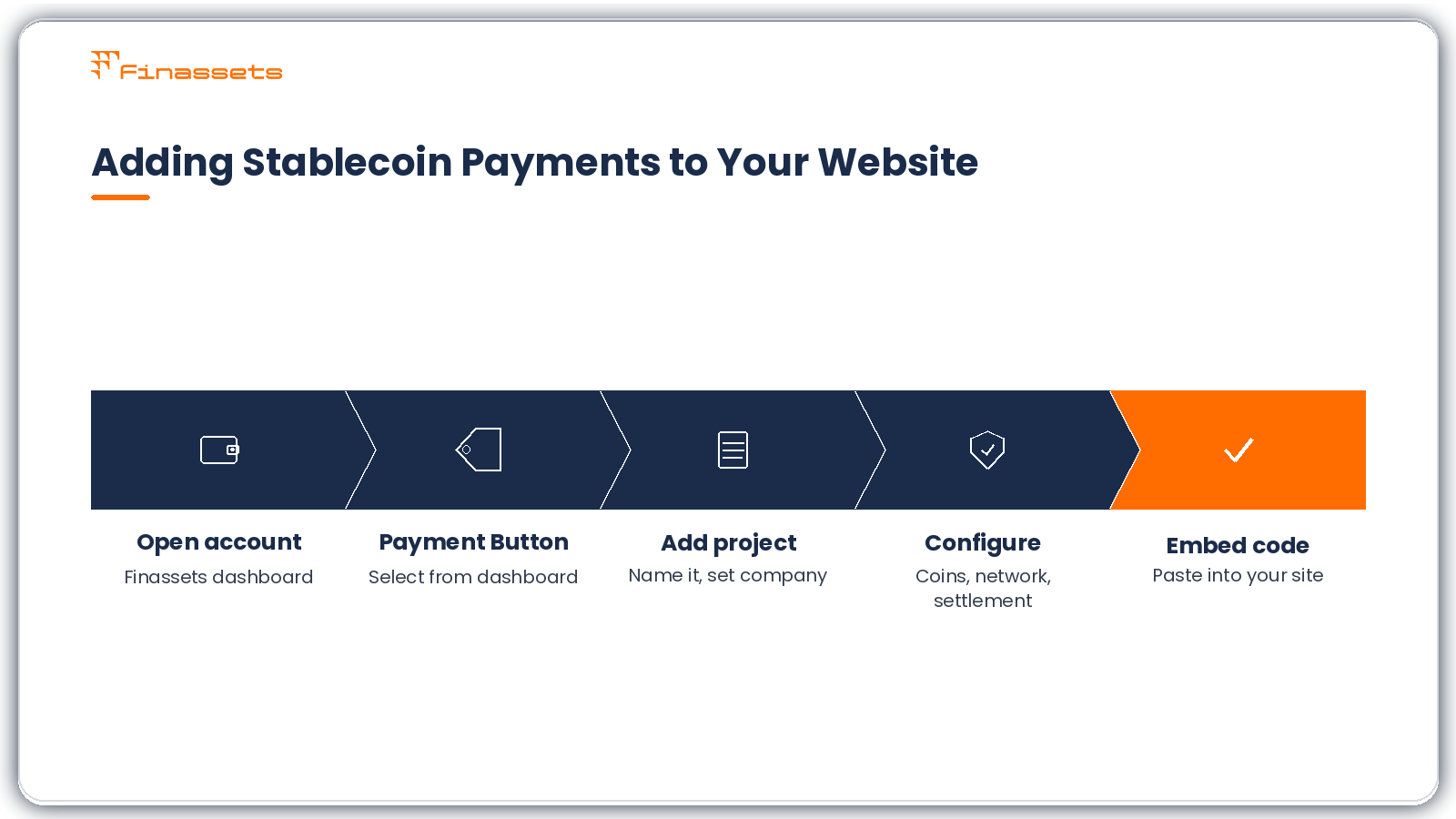
Here is the process step by step.
Step 1: Open your Finassets business account
Open your Finassets business account and access the main dashboard.
The dashboard provides the payment tools required to configure your stablecoin acceptance. From here, you can create a payment project for your website.
Step 2: Select the "Payment Button" section
Select “Payment Button” from the Finassets dashboard.
The Payment Button section allows you to configure the stablecoin payment option that you will later embed into your website.
Step 3: Click “Add Project”
Click “Add Project” to create your payment project.
Enter your:
- Project name
- Company name
These details identify the payment project associated with your business and website.
Step 4: Configure your stablecoin payment settings
Complete the project form and configure how your business will accept stablecoin payments.
Set the following options:
- Select USDT and USDC as cryptocurrency payment options.
- Choose the blockchain network for USDT and USDC payments.
- Choose the settlement currency for your project.
- Decide who pays the transaction fees: Merchant or Customer.
- Set the invoice payment time period.
- Set the rate update interval.
- Enter the website URL where you will use the payment button.
Pay particular attention to the blockchain network.
USDT and USDC are tokens, while blockchain networks provide the rails that transfer those tokens. The sender must use a compatible supported network for the payment.
Review your selections before creating the project.
Step 5: Create the stablecoin payment project
Click “Add” after completing the project configuration.
Finassets creates the payment project using your selected stablecoins, network, settlement currency, fee preferences, and other payment settings.
Step 6: Copy the payment button embed code
Copy the generated payment button embed code after creating your project.
The embed code connects your website to the configured Finassets payment gateway without requiring your business to develop blockchain payment infrastructure from scratch.
Step 7: Add the stablecoin payment button to your website
Paste the generated code into the relevant location on your website.
Customers can then select an available stablecoin payment option and complete the transaction using a compatible crypto wallet.
Your website is now configured to accept USDT and USDC payments through the Finassets crypto payment gateway.
How do stablecoin payments work?
A stablecoin payment transfers digital tokens such as USDT or USDC from the customer's crypto wallet through a supported blockchain network.
A typical stablecoin payment flow works as follows:
- The customer selects a stablecoin as the payment option.
- The payment gateway creates the payment request.
- The customer pays from a compatible crypto wallet.
- The selected blockchain network processes the transaction.
- The blockchain records the token transfer.
- The transaction receives blockchain confirmation.
- The payment status updates according to the transaction process.
- The merchant manages the received payment according to the configured settlement options.
An on-chain transaction receives a transaction hash, also called a transaction ID or TxID. This unique identifier allows the transaction to be located using a compatible blockchain explorer.
The exact transaction speed, finality, and network fee depend on the blockchain network used for the payment.
Here's how stablecoin rails compare:
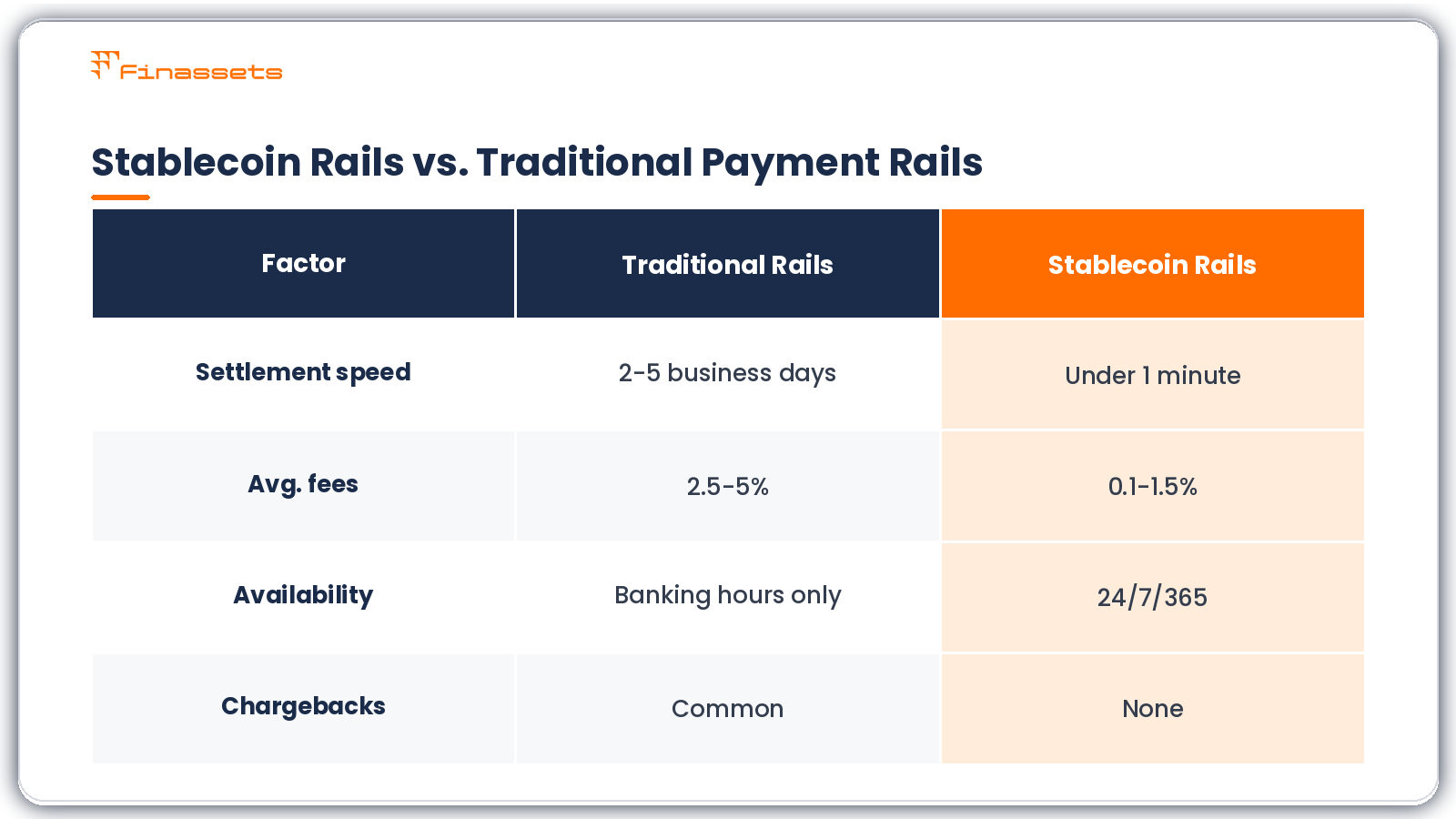
Stablecoin payments can involve payment processing fees and blockchain network fees.
The blockchain network fee covers the cost of processing the on-chain transaction. The exact cost varies by network and current network conditions.
Finassets also allows the business to select whether the Merchant or Customer pays the transaction fees when configuring the payment project.
Businesses should therefore consider:
- payment gateway processing fees;
- blockchain network fees;
- transaction volume;
- selected blockchain network;
- settlement requirements;
- and any relevant currency conversion costs.
Stablecoins can reduce exposure to cryptocurrency price fluctuations, but they do not make payment processing free. Businesses should compare total transaction costs rather than considering a single fee in isolation.
What is a stablecoin payment gateway API?
A stablecoin payment gateway API provides a programmatic connection between business software and stablecoin payment infrastructure.
An API integration is useful when a business needs a more customized payment flow than a ready-made payment button.
Payment APIs can support functions such as payment creation, authentication, payment status monitoring, transaction data exchange, callbacks, and webhooks.
Finassets provides API access for custom implementations alongside ready-made payment integration options.
Businesses considering a stablecoin payment gateway API should review the relevant developer documentation for available endpoints, authentication requirements, payment notifications, webhook implementation, and other technical integration details.
Who can benefit from accepting stablecoin payments?
Businesses with international customers or customers who already hold digital assets can use stablecoin acceptance as an additional payment method.
Potential use cases include:
- eCommerce businesses that want additional online payment options.
- Digital service providers serving customers who use crypto.
- International businesses processing cross-border transactions.
- Online platforms adding crypto payments alongside card payments and other payment methods.
- B2B businesses that need additional payment rails for customers or partners.
- Crypto-focused businesses whose customers already hold USDT or USDC.
- High-volume merchants evaluating blockchain-based payment infrastructure.
Whether stablecoin payments fit a company ultimately depends on its business model, customer preferences, markets, transaction size, compliance requirements, and existing payment operations.
Stablecoin payment use cases across the customer journey
Stablecoin payment gateways now cover the full lifecycle of money movement: pay-ins, treasury operations, and pay-outs to users, partners, and vendors.
- Customer checkout - Add a "Pay with Stablecoins" option alongside cards and wallets. Stablecoin payments do face user experience friction during checkout-clear UX design around network selection and wallet connection helps reduce friction.
- Recurring billing - Current blockchain systems lack instant refunds and recurring subscriptions natively, but gateways are building invoice links and automated reconciliation tools to address this.
- Global payouts - Companies send mass payouts in USDC or local currencies using stablecoin rails. Airtm processed $1.2 billion in stablecoin volume in 2024 serving remote workers across Latin America.
- Treasury and cross-border trade - Treasurers move funds between regions in minutes, then convert into local currencies. Stablecoin transactions can incur high correspondent banking fees on the fiat off-ramp side, so choosing partners with efficient banking networks matters.
- Financial institutions - Banks and PSPs embed stablecoin rails under the hood, connecting on-chain liquidity with legacy payment schemes without exposing crypto complexity to end customers.
Stablecoin payments vs. other crypto and fiat payment methods
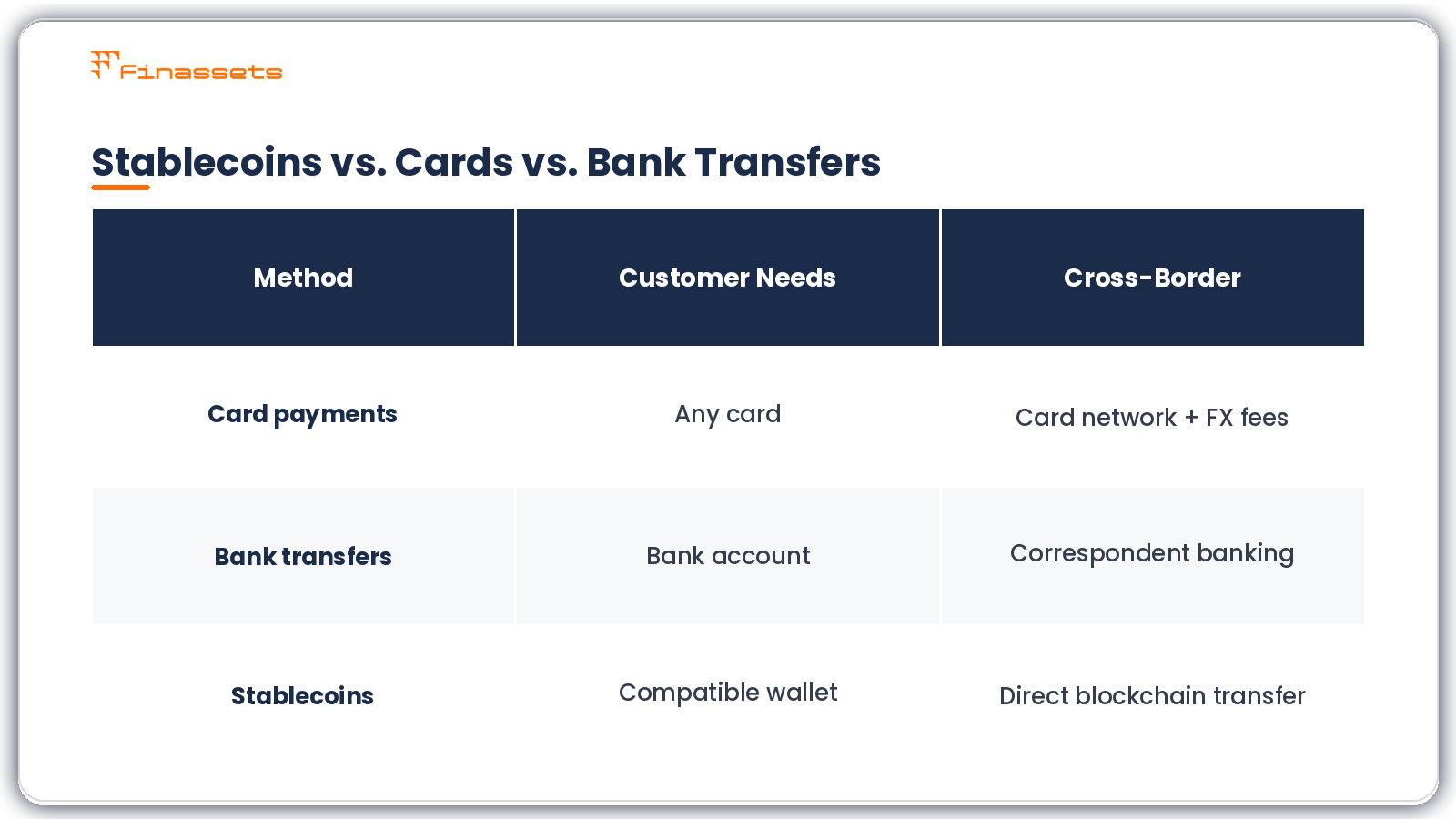
Stablecoin payments differ from both volatile cryptocurrencies and traditional payment rails.
Stablecoins vs. Bitcoin and Ethereum: BTC and ETH prices can change substantially relative to fiat currencies. Stablecoins such as USDT and USDC aim to maintain a reference value, making payment amounts more predictable in fiat terms.
Stablecoins vs. card payments: Card payments provide a familiar customer experience and broad consumer adoption. Stablecoins require customers to hold suitable digital assets and use a compatible crypto wallet.
Stablecoins vs. bank transfers: Bank transfers operate through banking infrastructure. Stablecoin transfers use blockchain rails and can support cross-border transactions without relying on the same correspondent banking process.
Stablecoins vs. fiat settlement: Receiving stablecoins and receiving fiat into a bank account are different settlement models. Businesses should determine whether they want to retain digital assets or use available conversion and settlement options.
For many merchants, stablecoins can complement rather than replace card payments, bank transfers, and other established payment methods.
What should you consider before accepting stablecoins?
Businesses should evaluate network selection, transaction costs, stablecoin risks, security, accounting, settlement, and regulatory obligations before accepting stablecoin payments.
Important considerations include:
- Blockchain network: Confirm that the sender uses the correct supported network for USDT or USDC.
- Transaction costs: Network fees vary across blockchain networks and network conditions.
- Issuer risk: Fiat-backed stablecoins depend on their issuer, reserve structure, redemption arrangements, and other operational factors.
- Payment security: Protect business accounts, API credentials, authentication methods, and sensitive wallet information.
- Transaction monitoring: Maintain accurate payment records for reconciliation and payment operations.
- Accounting: Stablecoin transactions can create bookkeeping and tax requirements.
- Compliance: KYC, KYB, AML, sanctions screening, transaction monitoring, and other compliance requirements can apply depending on the business and jurisdiction.
- Regulatory landscape: Rules for stablecoins and other digital assets vary between countries and can change over time.
Businesses operating across multiple jurisdictions should determine which regulatory obligations apply to their specific activities and obtain professional legal or accounting advice where required.
Test stablecoin payment setup using the Finassets free demo
You can test the Finassets payment flow before configuring stablecoin payments for a live website.
👉 Try the Finassets free crypto payment gateway demo.
The demo allows you to explore the payment setup and Finassets dashboard without making a financial commitment. No credit card or identity verification is required for demo access.
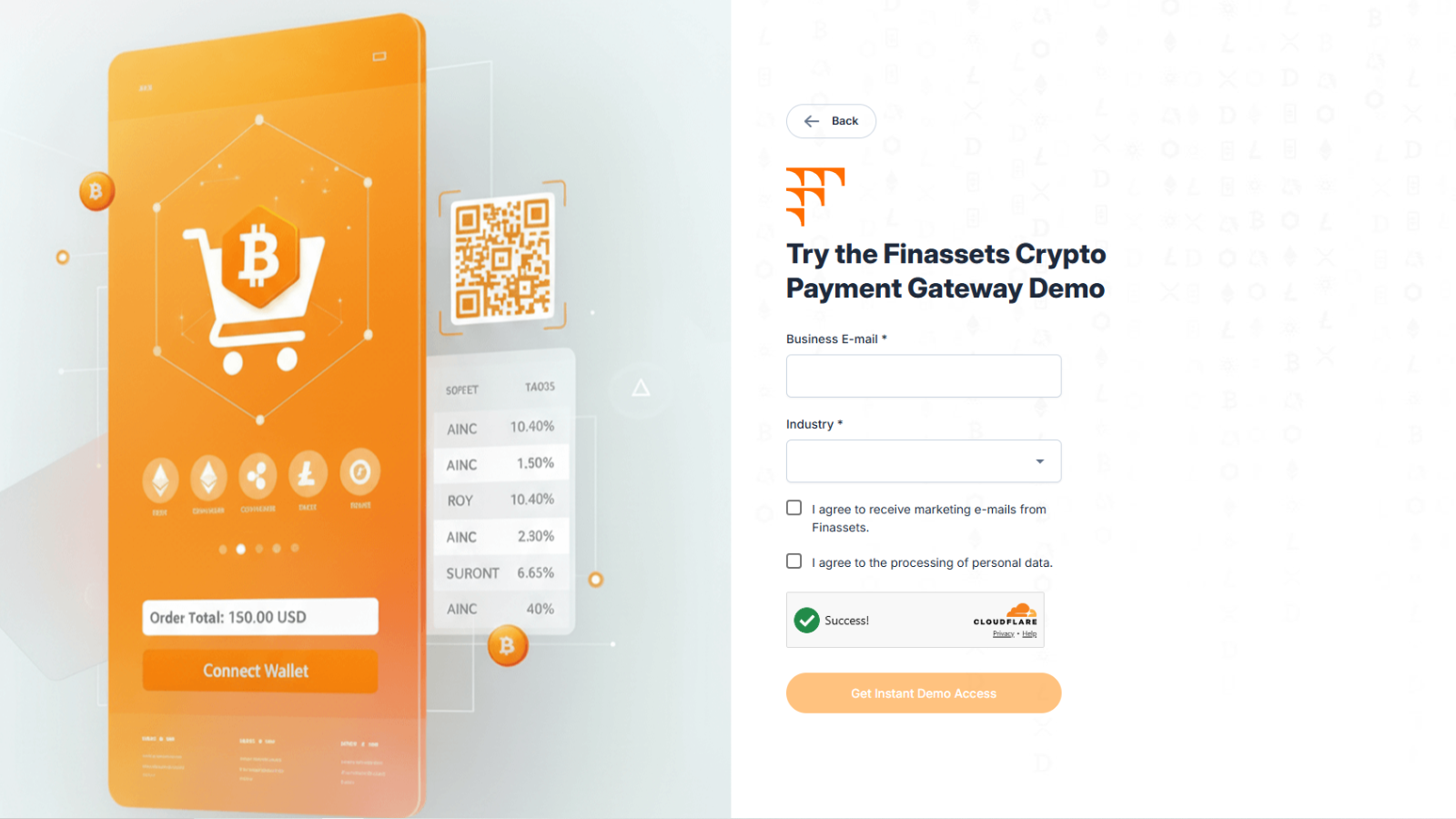
Enter your email to receive login credentials and explore the payment process before implementing USDT and USDC payments on your website.
Why Finassets could be the best stablecoin payment gateway in 2026?
Finassets combines ready-made integration options with business-focused crypto payment infrastructure. Businesses can use the platform to accept stablecoin payments without developing an entire blockchain payment system internally.
|
Feature |
Business benefit |
|
USDT and USDC support |
Accept major stablecoins from customers |
|
Multiple blockchain networks |
Provide different blockchain rails for supported stablecoin payments |
|
Different payment solutions |
Use payment buttons, crypto invoices, mass payouts, B2B exchange, and crypto checkout |
|
Low fees |
Transaction fees range from 0.4% to 0.2% for higher volumes |
|
Enterprise security |
Use MPC wallet technology and two-factor authentication |
|
Easy integration |
Add ready-made crypto payment solutions to your website |
|
Real-time notifications |
Use webhook support for payment updates |
|
Payment management |
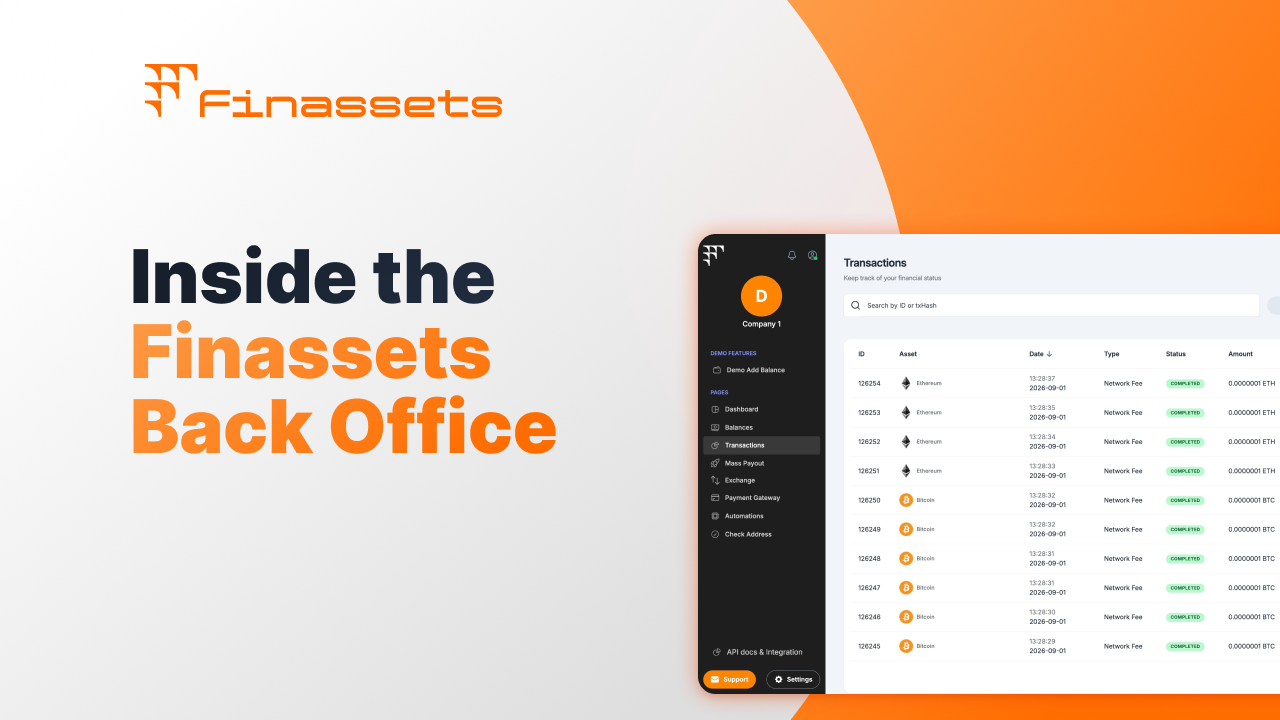
Monitor payments and transaction data through a professional dashboard |
|
Build custom payment integrations using API access |
|
|
Compliance measures |
AML and KYB measures support business compliance requirements |
|
TRON Energy Optimization System |
Cut USDT TRC-20 network fees by over 50% with Finassets’ TRON Energy optimization. Estimate your USDT TRC-20 fee savings with the TRON Energy Calculator. |
These features provide businesses with infrastructure for stablecoin acceptance, payment processing, transaction monitoring, settlement management, and custom integrations.
Finassets stablecoin payment fees & supported cryptocurrencies
What are the fees for accepting stablecoin payments?
Finassets charges payment processing fees based on payment volume. Businesses should also account for the applicable blockchain network fee when calculating the total transaction cost.
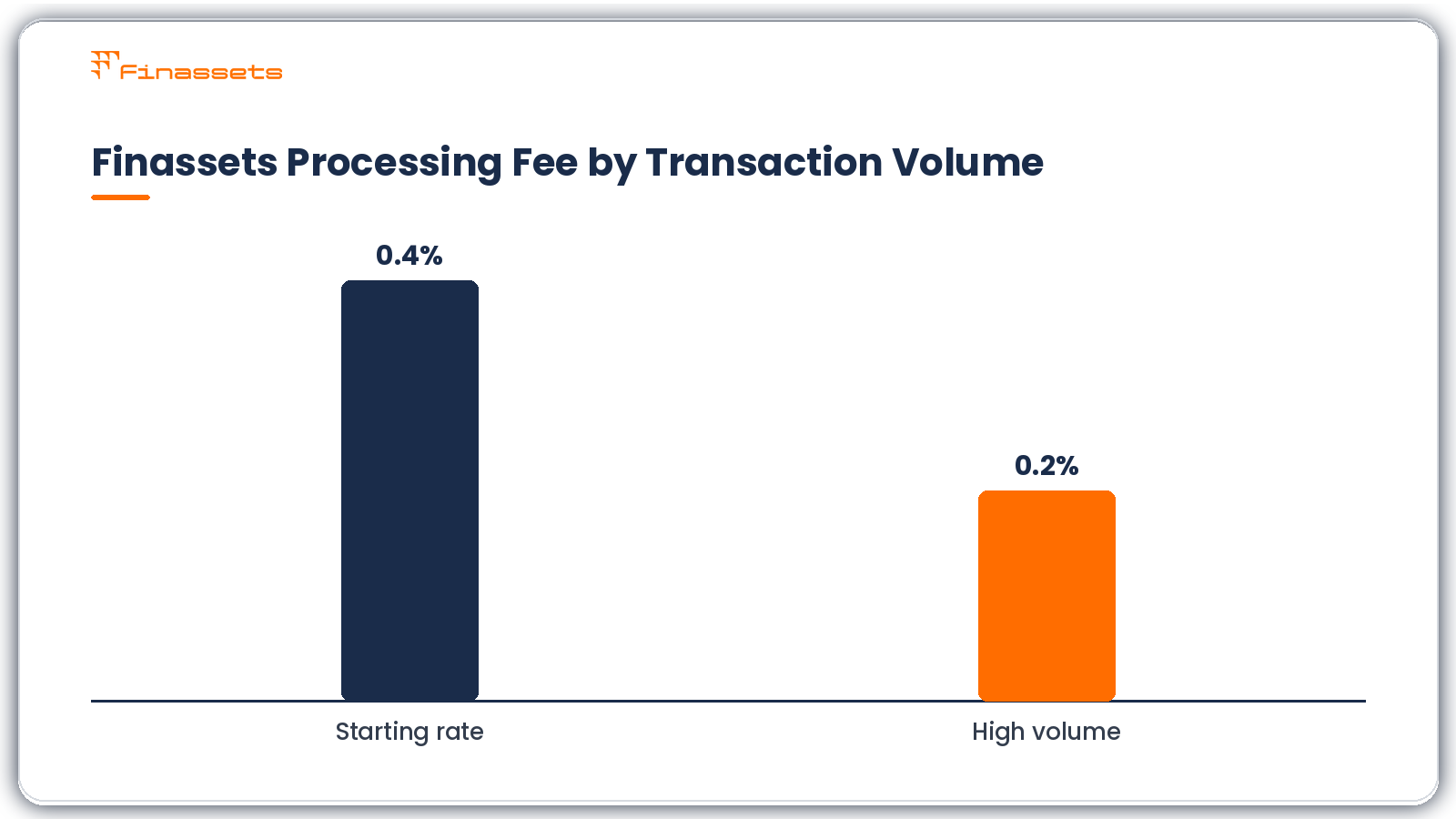
The network selected for a stablecoin transfer can influence transaction costs. Businesses processing large transaction volumes should therefore consider both the payment gateway pricing and blockchain costs when evaluating their payment stack.
Which stablecoins and cryptocurrencies does Finassets support?
Finassets supports 70+ cryptocurrencies, including major stablecoins and cryptocurrencies.
Supported digital assets include:
- Tether (USDT)
- USD Coin (USDC)
- Bitcoin (BTC)
- Ethereum (ETH)
- Solana (SOL)
- Tron (TRX)
Stablecoin support covers major blockchain networks, including:
- Ethereum (ERC20)
- Tron (TRC20)
- BNB Smart Chain (BEP20)
- Solana
Multi-network support gives businesses more flexibility when accepting stablecoin and crypto payments. Merchants can provide payment options according to supported networks and customer preferences rather than relying on one digital asset or blockchain.
Start accepting stablecoin payments with Finassets
Finassets provides businesses with a straightforward way to accept stablecoin payments on a website through a configurable payment button, API, crypto invoices, and crypto checkout.
Open your business account, select Payment Button, create a project, choose USDT and USDC, select the required blockchain network, configure your settlement and transaction fee settings, and add your website URL.
Finassets then generates the embed code required to add the stablecoin payment option to your website.
This setup allows your business to accept stablecoin payments through a payment gateway without developing the underlying blockchain payment infrastructure from scratch.
👉 Create a Finassets business account and configure your stablecoin payment project.
Article details
- Last updated: September 23, 2026
- Published by: Finassets
- Author: Alena K., Crypto Payment Solutions Specialist
- Category: Stablecoin payment gateway, stablecoin payment solutions for businesses
- Reading time: 7–10 minutes
- Content type: Educational guide
- Audience: Businesses, merchants, SaaS companies, developers, and e-commerce owners exploring stablecoin payment solutions.
Editorial policy
This article is reviewed periodically to ensure the information remains accurate and reflects the latest developments in cryptocurrency payments, blockchain networks, stablecoins, and payment gateway technologies. Content is based on publicly available documentation, industry best practices, and practical payment infrastructure knowledge. It is intended for informational purposes only and does not constitute financial, legal, or investment advice.