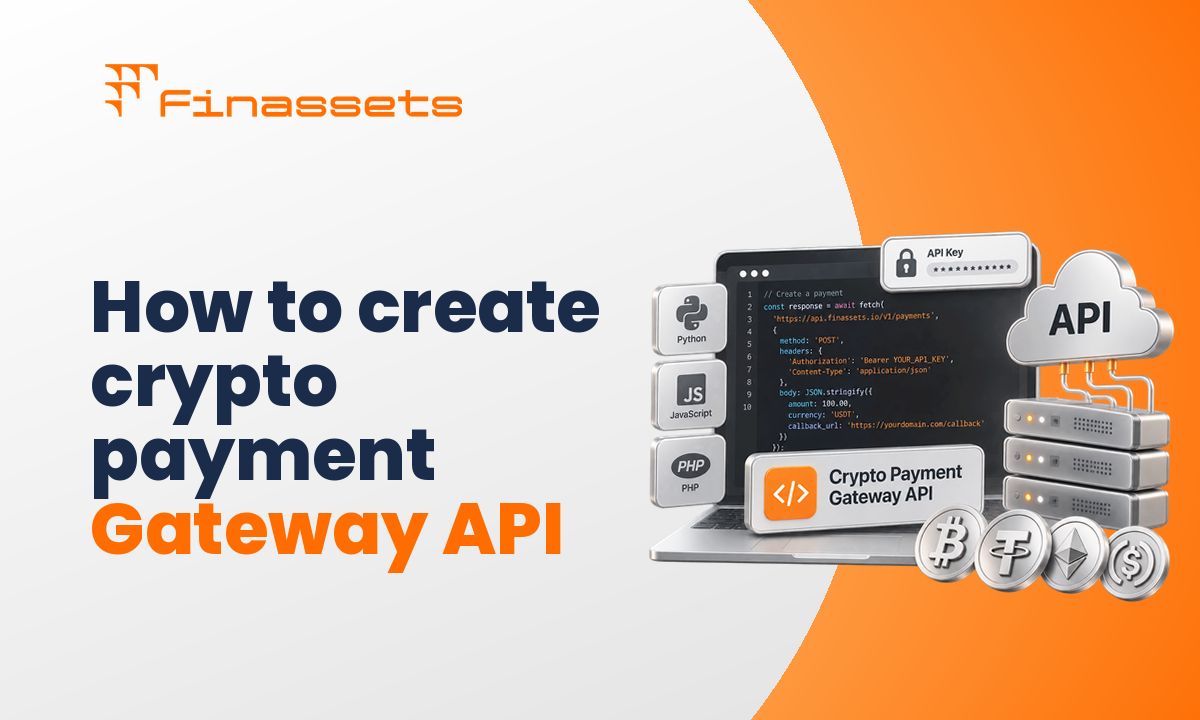
What is crypto payment gateway development? Crypto payment gateway development is the process of building infrastructure to accept, confirm, and settle cryptocurrency payments on behalf of merchants. It includes blockchain monitoring, wallet address generation, currency conversion, API integration, and AML compliance tooling. Businesses can build a proprietary gateway, use white-label infrastructure, or integrate an existing provider's API.
Build or buy crypto payment gateway services in 2026?
Choosing between custom crypto payment gateway development and ready-made solutions affects control, cost, integration flexibility, and long-term scalability. The right approach depends on your budget, technical requirements, timeline, and how much customization you need for your payment infrastructure.
This article provides a practical decision checklist, a full overview of the development process, side-by-side comparison, and realistic timelines and cost ranges for both paths.
Below is a practical comparison of building vs buying crypto payment gateway solutions.
Custom development vs ready solutions: key differences
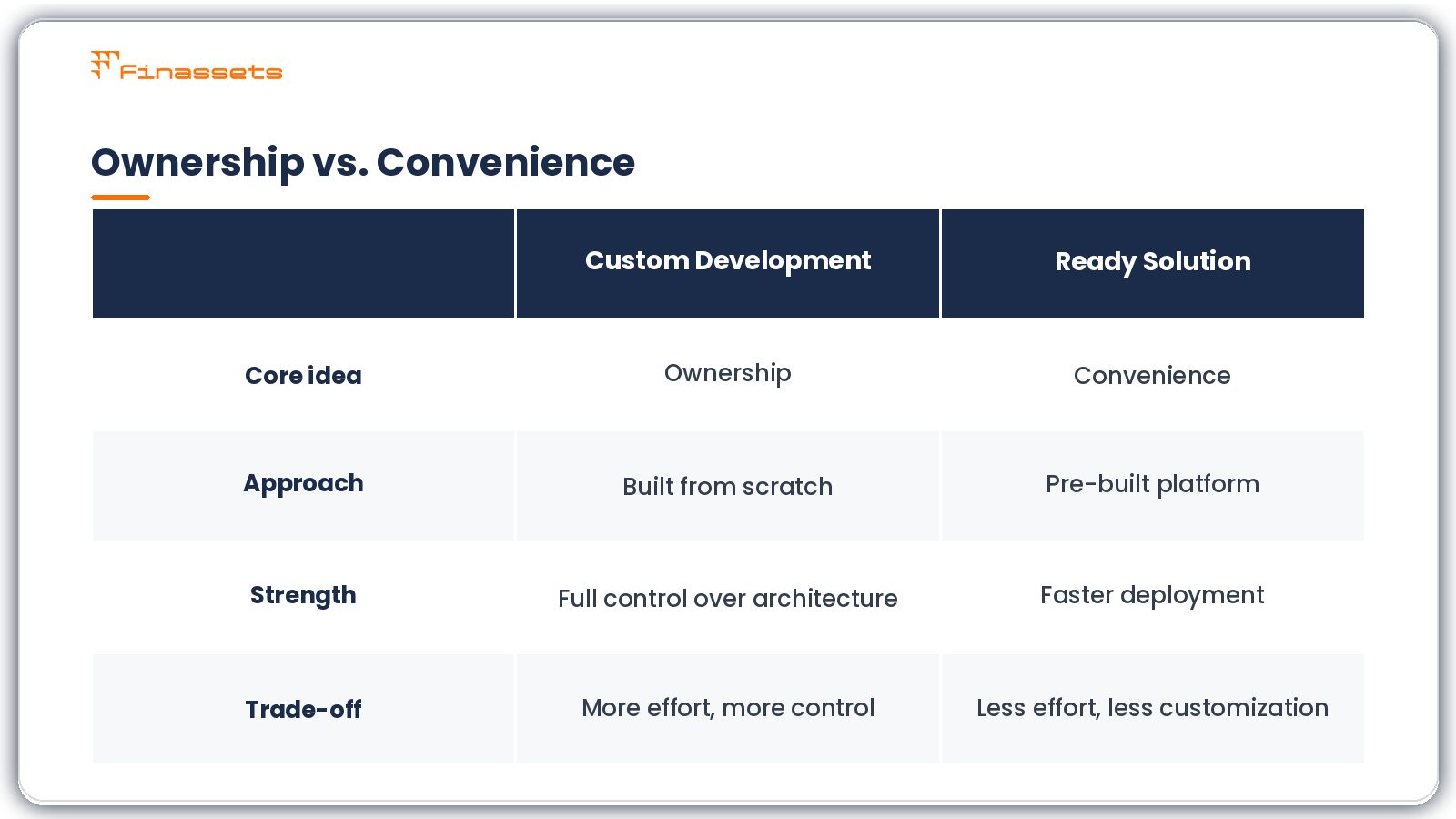
The main difference comes down to ownership versus convenience:
- Custom crypto payment gateway development focuses on building tailored payment infrastructure from scratch with full control over features, architecture, and payment flows.
- Ready solutions provide pre-built platforms with faster deployment but limited customization options for how you accept crypto payments.
- Both approaches can successfully process payments in cryptocurrencies, but the development experience and business outcomes differ significantly.
A crypto payment gateway processes transactions in cryptocurrencies, acting as the intermediary between the customer's wallet, blockchain networks, and the merchant's settlement account. Whether you build or buy, the core function is the same - but the path to getting there shapes nearly every business decision that follows.
What is a crypto payment gateway and how does it work?
.png "How crypto payment gateway works")
At checkout, a crypto payment gateway creates an invoice tied to the merchant's order. The system specifies the amount in fiat (say $99 USD for a SaaS subscription), lets the customer pick a supported asset and network (USDT on Ethereum, USDC on Solana, etc.), and generates a unique wallet address. Once the customer sends funds, the gateway monitors the blockchain for confirmations, verifies the payment, and triggers settlement - either converting the crypto to the merchant's preferred currency or holding it. Webhooks notify merchant systems in real time.
Blockchain integration allows gateways to verify transactions in real-time, and, in many cases, blockchain payments are processed faster than traditional banking systems.
Both custom-built and ready-made solutions need these core components:
- Blockchain connectivity - self-hosted nodes or third-party RPC providers to monitor on-chain activity.
- Payment engine - links orders to on-chain transactions, manages confirmation thresholds, handles underpayments and invoice expiry.
- Wallet infrastructure and key management - hot/cold wallets, HSM or MPC-based key management. Wallet integration is necessary for securely handling digital assets.
- Monitoring and reconciliation - balancing ledger entries, tracking fees, flagging anomalies. Transaction monitoring catches issues before they compound.
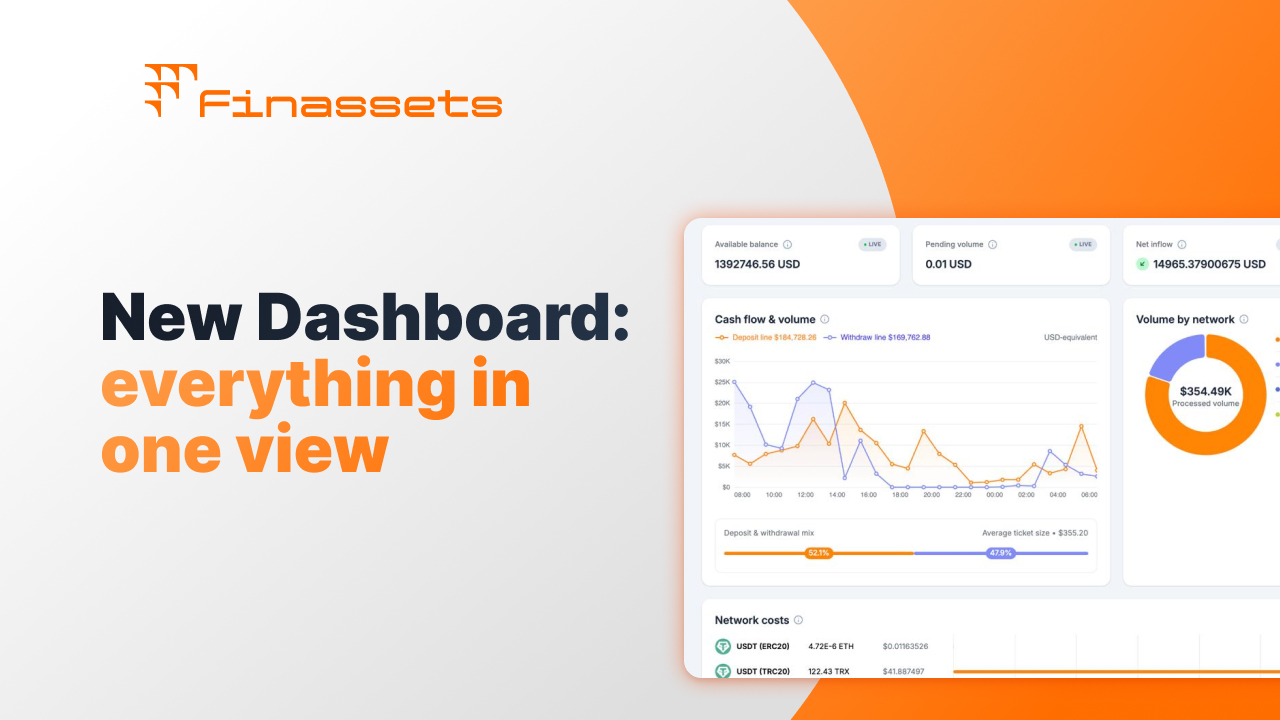
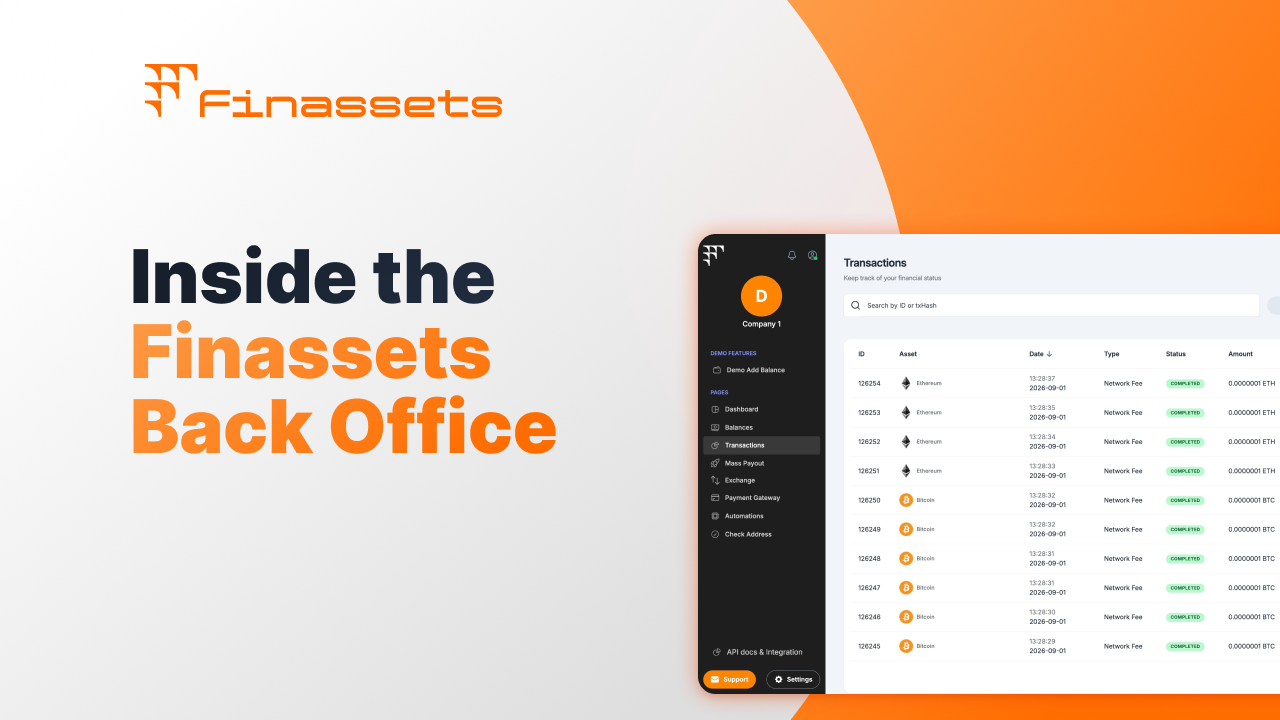
- Merchant dashboard and reporting - merchant dashboards provide real-time insights into transactions, settlement summaries, and dispute tools.
- Compliance - KYC/AML checks, KYT screening, sanctions lists, travel rule messaging.
- Developer tools - REST api endpoints, SDKs, webhooks, sandbox environments, and api documentation.
A quick terminology note: crypto payment processors typically focus on processing and settlement conversion, while a fiat-to-crypto gateway handles card-to-crypto flows. A full cryptocurrency payment gateway covers on-chain payment detection, optional custody, and conversion - enabling merchants to accept crypto payments without manually monitoring wallets. The difference between custom and ready solutions lies in how much control and flexibility you retain over those payment flows.
Here, you can read more about what a crypto payment gateway is and how it works.
Ready-made crypto payment gateways: What you get out of the box
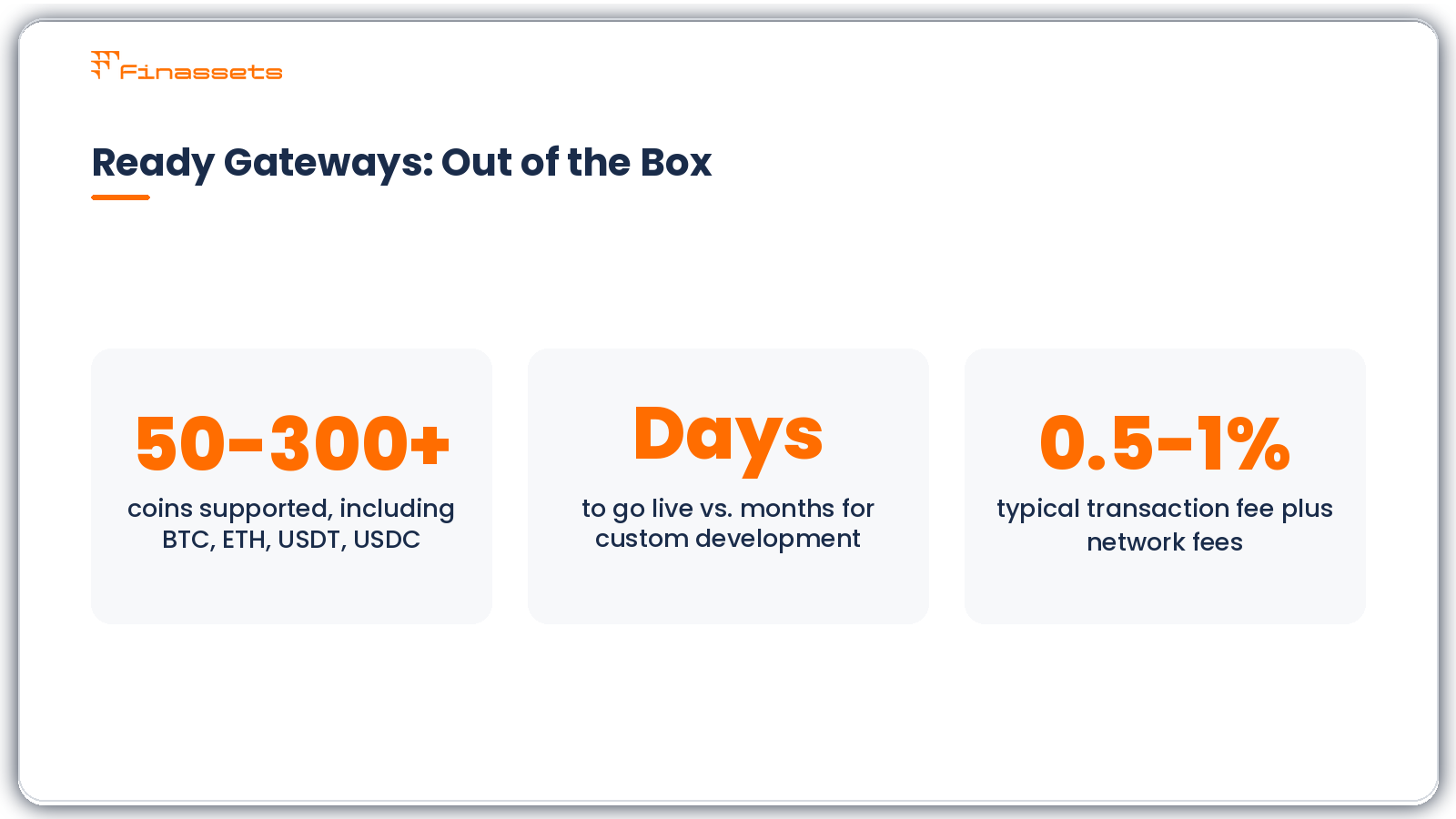
The "ready solution" path means integrating an existing crypto payment processor through a plugin (WooCommerce, Shopify, Magento), widget, or direct REST API call. You skip the heavy lifting and go live with crypto payments in days.
In 2026, established crypto payment gateway solutions typically offer:
- Support for 50–300+ coins including BTC, ETH, USDT, USDC, and many altcoins. Crypto payment gateways support multiple cryptocurrencies like Bitcoin and Ethereum out of the box.
- Settlement options in fiat (USD, EUR, GBP), stablecoins, or retained crypto. They enable real-time currency conversion to protect against volatility.
- Prebuilt plugins for major eCommerce platforms and popular eCommerce platforms - WooCommerce, Magento, Shopify, PrestaShop, Wix, WHMCS. API plugins simplify crypto payment integration with existing systems.
- Invoicing, payment links, QR-based on-chain payments, and in some cases POS terminals.
- Multi-currency support enhances global payment acceptance for merchants operating across borders.
Payment gateways can integrate with e-commerce platforms seamlessly, and integration methods include pre-built plugins, HTML code snippets, or direct API calls.
Non-custodial models route funds directly to the merchant's wallets - the provider never holds assets. Custodial models let the provider manage wallets, convert to fiat currency, and pay out to the merchant's bank account. Cryptocurrency payment gateways enable instant conversion to fiat currency, simplifying treasury operations for merchants who prefer not to hold digital assets.
Typical pricing runs in the 0.5%–1% transaction fee range plus network fees, with no large upfront development cost. Many providers are licensed in the EU (often Estonia or Lithuania under MiCA), the US as Money Service Businesses, and parts of Asia.
Good out-of-the-box API documentation includes clear authentication, versioned endpoints, code examples in JavaScript, PHP, and Python, webhook specifications, and sandbox environments - all critical for fast integration with existing systems.
Pros and cons of ready crypto payment gateways
Ready-made gateways offer a well-trodden path, but they come with trade-offs. Here's a balanced breakdown.
Pros:
- Fastest way to accept crypto payments - integration in days rather than months, even for teams with limited blockchain experience.
- Minimal upfront cost. You pay per transaction instead of funding full development. Crypto payment gateways often reduce transaction fees compared to traditional payment methods like credit cards.
- Mature security features, card-style chargeback protection, and anti-fraud tooling refined over years. Payment gateways can process thousands of simultaneous transactions without buckling.
- Built-in compliance for many markets - licensed entities handle KYC/AML, sanctions screening, and travel rule obligations.
- Battle-tested infrastructure for handling volume spikes in online payments.
- Broad crypto coverage with auto-conversion to local currency or stablecoins. Businesses can reach a global customer base without bank restrictions, enabling borderless transactions.
Cons:
- Limited control over the roadmap, fee structures, and settlement schedules. The provider dictates terms.
- Dependency risk: if the provider changes pricing, geo-coverage, or policies, your business must adapt on short notice.
- Constraints on UX - checkout flows, branding, and wording are often fixed or semi-fixed, limiting your ability to deliver a smooth payment experience.
- Reduced flexibility for custom business models such as complex revenue splits or multi-party crypto payouts.
- Potential payment data access limitations - you see only what their APIs expose, not full internal logs.
- Regulatory risk concentration: you're relying on one or two third-party licenses and AML programs.
Here, you can find an article on how to evaluate and choose the right crypto payment gateway services.
Custom crypto payment gateway development: When you build your own
Cryptocurrency payment gateway development means designing and implementing your own full-stack payment system - wallets, node infrastructure, payment engine, compliance workflows, and operational tooling - instead of relying on a third-party provider.
Typical scenarios where custom crypto payment gateway development makes sense:
- Very large marketplaces needing custom fee logic, sub-account routing, or multi-tenant merchant onboarding.
- Regulated fintechs or PSPs wanting to own licenses, treasury logic, and direct customer relationships.
- Enterprises with strict security, compliance, or data residency requirements.
- Companies whose business model requires deep wallet control, on-chain programmability, or smart contracts for automated settlement.
Developing a crypto payment gateway requires secure wallet integration, and KYC/AML compliance is essential in crypto payment gateway development. Custom gateways allow internal policies for settlements and fees, giving you full control over the payment process.
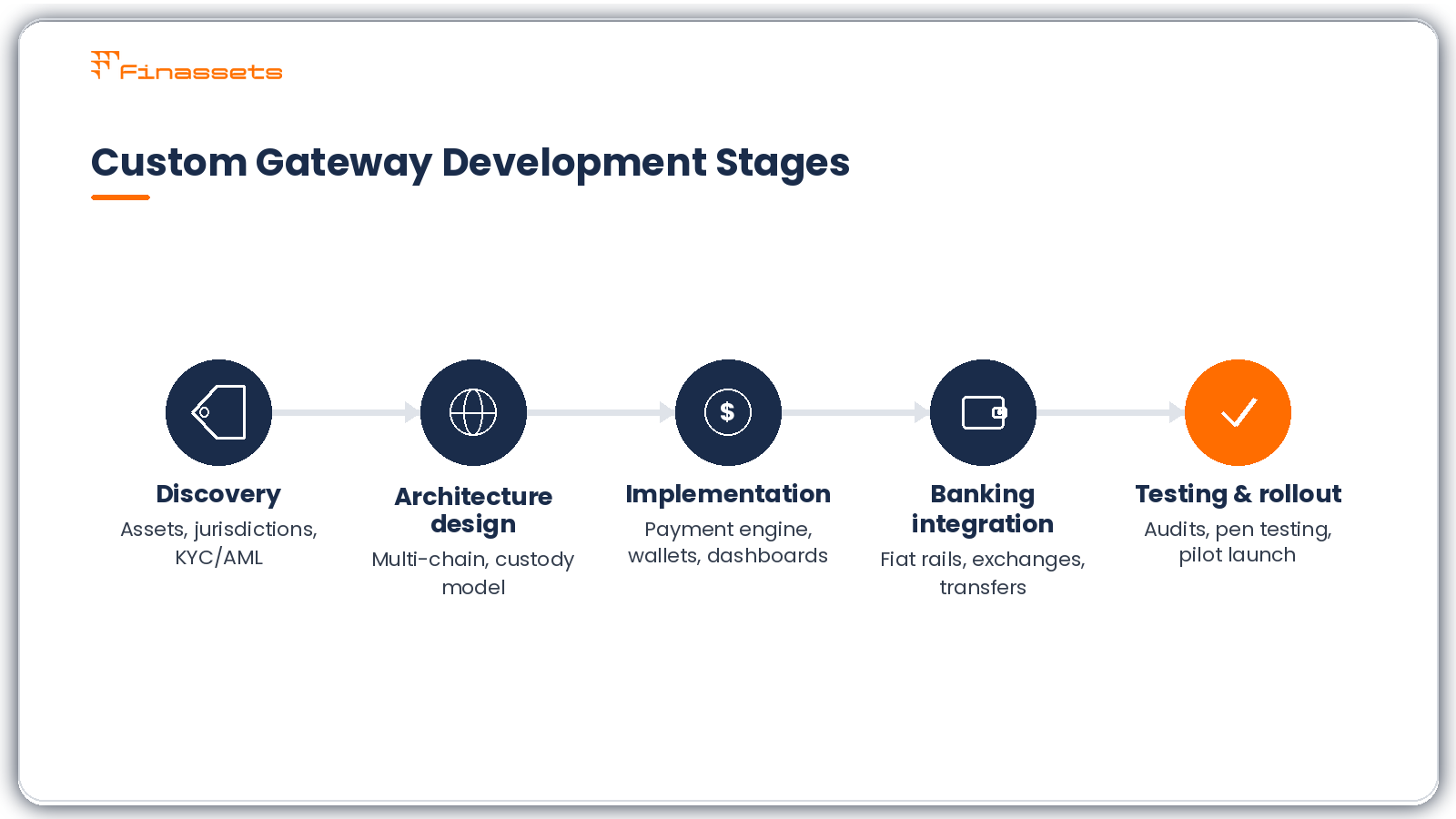
The high-level development process typically follows these stages:
- Discovery and requirements - supported assets, jurisdictions, KYC/AML rules, settlement models.
- Architecture design - multi-chain strategy, custody model (HSM, MPC), scaling approach.
- Implementation - payment engine, wallet services, KYT integration, dashboards, reporting.
- Banking and liquidity integration - crypto-to-fiat conversion rails, exchange integrations, bank transfers.
- Testing, audits, and phased rollout - security reviews, penetration testing, pilot launch.
This path requires specialist blockchain engineers familiar with UTXO and account models, security and cryptography expertise, compliance, and legal requirements. Ongoing DevOps for nodes, monitoring, and incident response is non-negotiable.
Custom gateways can be built from scratch or by extending open-source components, but both paths still demand significant engineering and security hardening.
Pros and cons of custom crypto payment gateway development
Custom development is more demanding, but it can align tightly with long-term strategy when crypto payments are central to your product.
Pros:
- Full control over payment logic, fees, and settlement flows - instant settlement to different wallets or bank accounts based on merchant, region, or asset.
- Tailor-made UX and checkout flows aligned with your brand and conversion optimization. Customers pay through a smooth transactions experience you design end-to-end.
- Deep integration with internal systems like ERP, accounting, risk engines, and tax reporting. You can track payments at whatever granularity your operations require.
- Ability to encode complex business model features: tiered pricing, dynamic routing, on-chain discounts, loyalty tokens, even programmable refunds via smart contracts.
- Better leverage of data - detailed on-chain and off-chain telemetry, custom analytics, payment data ownership.
- Potential long-term cost advantage at scale once transaction volumes justify the upfront investment. Lower fees per transaction at high volume compared to paying a third-party's percentage.
- Blockchain transactions are immutable and protect merchants from card-syle chargebacks, and with a custom build you control exactly how that benefit is implemented.
- KYC/AML compliance can be integrated into the payment workflow precisely as your regulatory requirements demand.
Cons:
- High initial investment - design, development, security audits, and legal work can easily exceed six figures. Enterprise-grade multi-chain builds run $80,000–$300,000+, sometimes over $1M for large, regulated setups.
- Longer time-to-market, often 6–12 months from specification to stable production. Enterprise versions with full compliance can stretch to 18 months.
- Operational burden of running nodes, infrastructure monitoring, incident response, and 24/7 support for crypto operations.
- Regulatory complexity - licensing as a VASP or money transmitter, implementing KYC/AML, and adapting to the travel rule across jurisdictions.
- Security risk concentration: any bug in wallet or key management code can be catastrophic. This demands regular security audits.
- Need for continuous updates as blockchain networks, regulations, and wallet standards evolve.
Business model impact: Who should build and who should buy?
.png "Crypto payment gateway development vs ready services")
The right crypto payment gateway approach depends heavily on your business model, projected transaction volume, geography, and risk appetite.
Here's how different business types typically align:
- Small and mid-sized e-commerce stores or content platforms: Usually better served by ready crypto gateways. Thorough market research matters, but the priority is speed and low complexity. A ready gateway lets you accept cryptocurrency payments and start generating cash flow quickly.
- SaaS platforms and marketplaces handling recurring crypto payments or multi-party payouts: Start with a ready solution, but plan for custom cryptocurrency payment gateway development if volumes and product complexity grow. Frequent transactions at scale start eroding margin through third-party fees.
- Payment service providers, neobanks, and fintechs: Strong case for custom development. These businesses need to own infrastructure, compliance, and treasury operations. They often seek a payment gateway development company or build in-house teams. They can also offer payment gateway development services to other merchants, turning infrastructure into a profit center.
- High-risk or high-volume verticals (gaming, FX, iGaming): Need custom risk controls, on-chain analysis, and treasury logic. Hybrid models are common here, where the payment processing service is partially outsourced and partially custom.
Revenue and margin considerations matter. Transaction-fee shares with third-party gateways erode margin; capturing full economics via an in-house gateway makes financial sense at high volume. Custom gateways also support multi-asset, multi-currency strategies - accepting 20+ coins but settling in specific stablecoins or fiat per region - which can be difficult with rigid ready solutions.
Map your priorities: speed, control, compliance, cost, innovation. The answer will point you toward the right path.
Cost, timeline, and development process comparison
Cost and time-to-market are often the deciding factors. Here's an honest comparison.
Ready crypto gateway integration:
|
Dimension |
Ready solution |
|
Timeline |
1–4 weeks including testing |
|
Upfront cost |
Near zero (no license fee) |
|
Ongoing cost |
0.5–1% per transaction + network fees |
|
Maintenance |
Minimal internal dev time |
Custom crypto payment gateway development:
|
Dimension |
Custom build |
|
Timeline |
4–12 months (MVP to full production) |
|
Upfront cost |
$80,000–$300,000+ (enterprise grade) |
|
Ongoing cost |
15–25% of initial build per year |
|
Maintenance |
Dev/DevOps team, audits, compliance staff |
The custom development process breaks down into stages that each add cost and time:
- Discovery and regulatory analysis - scoping assets, jurisdictions, and licensing obligations.
- Solution and architecture design - custody model, multi-chain strategy, scaling approach.
- MVP build - basic checkout, limited assets, simple settlements. Enough to validate with real crypto users.
- Security reviews and penetration testing - including robust error handling mechanisms and edge-case validation.
- Pilot launch with selected merchants, then full rollout across regions.
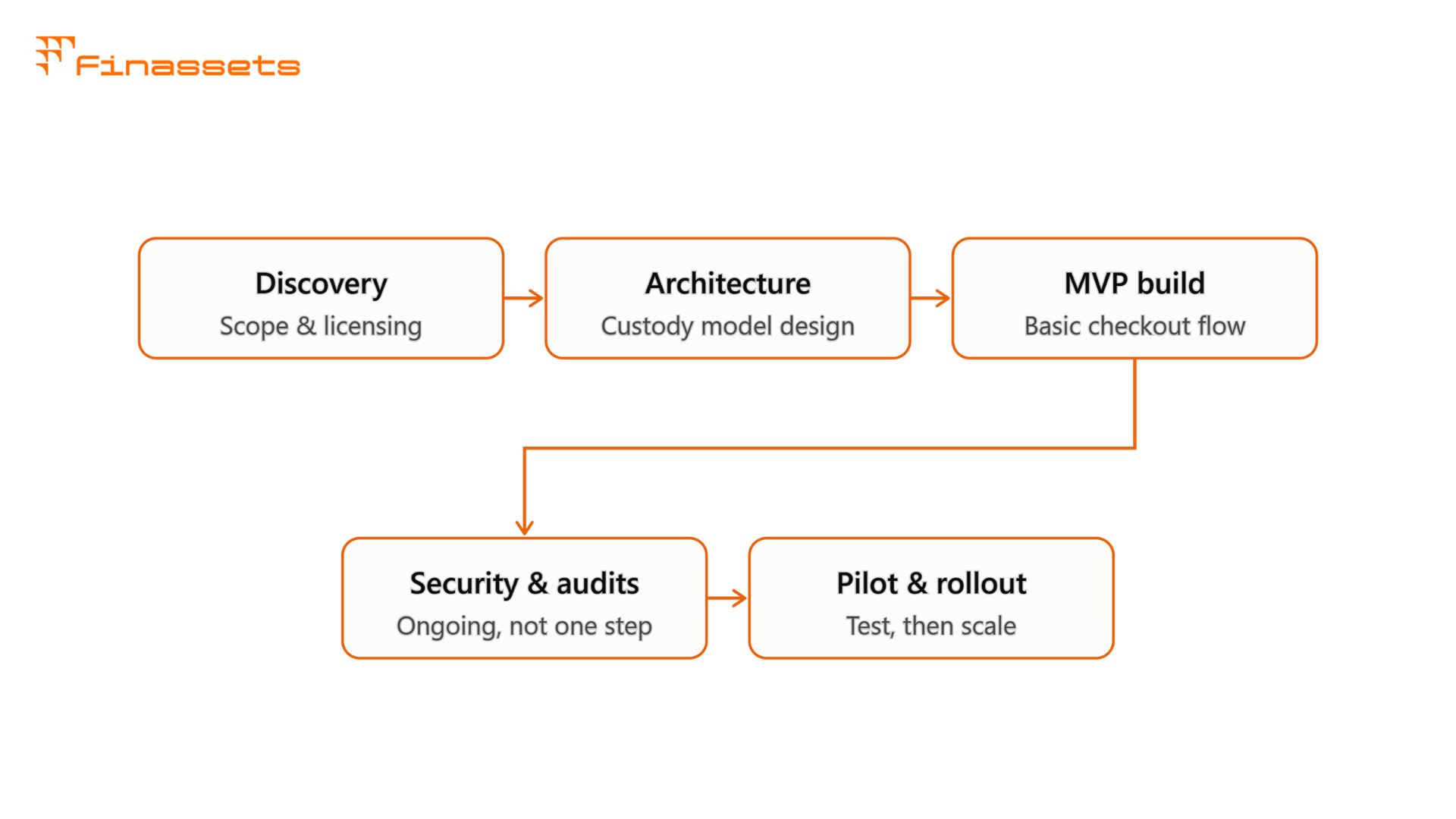
For organisations leaning toward custom, a phased approach reduces risk. Start with a narrow MVP covering 1–2 assets and a single region. Validate with real usage, then extend asset support, settlement options, and merchant tools based on actual demand. This avoids over-investing before you've confirmed product-market fit for your digital payments offering.
Ongoing maintenance costs are often underestimated. Budget for infrastructure (nodes, hosting), legal updates, gas fees, incident response, and dependency patches. These hidden costs add up to roughly 15–25% of the initial build annually.
Security, compliance, and risk: Evaluating both paths
Crypto payment flows involve irreversible digital currency transactions. A single key management flaw can drain wallets. A compliance gap can trigger enforcement action. Both paths demand serious attention to security and regulatory requirements.
Ready crypto payment gateways typically handle:
- Payment gateways must comply with PCI DSS standards, and many hold SOC 2 or ISO/IEC 27001 certifications.
- Key management and custody through HSMs, MPC, and cold storage procedures. Top-tier security protocols protect funds in cryptocurrency transactions.
- KYC/AML checks ensure compliance in crypto payment gateways, including sanctions screening and travel rule messaging.
- Transaction monitoring (KYT) and suspicious activity reporting. Compliance minimizes unauthorized activity in payment workflows.
Custom gateway obligations include:
- Selecting and implementing secure authentication mechanisms and key management (HSM, MPC, or custodial partner).
- Designing role-based access controls, segregation of duties, and audit trails. Multi-layered security controls enhance transaction safety.
- Building KYC/AML workflows, integrating KYT providers, and implementing transaction limits. Regular security audits help identify potential risks before they become breaches.
- Ensuring data protection (GDPR in the EU, other local rules) and enhanced security across all components.
Crypto transactions can be settled in minutes, improving cash flow - but only if the underlying security and compliance infrastructure is sound. Assess your internal security maturity, capacity to pass regulatory audits, and tolerance for operational risk before choosing custom development over a licensed provider. Financial institutions and payment processors with a proven track record in compliance are better positioned for the custom path.
Technical flexibility, API documentation, and developer experience
For technical teams, the decision often hinges on flexibility of APIs, SDKs, and documentation rather than price alone.
Ready crypto gateway APIs typically provide:
- REST-based api endpoints for creating invoices, checking payment status, and managing callbacks/webhooks.
- Limited ability to customize underlying blockchain workflows - fixed confirmation thresholds, fixed supported networks.
- Multi-language SDKs (JavaScript, PHP, Python) and sandbox environments for testing.
- Standardized payment options that work for most use cases but lack depth for edge cases.
Custom gateways offer developers:
- Precisely defined internal APIs tailored to business logic and settlement flows, including custom payment flows for complex scenarios.
- Deep, queryable access to transaction metadata, reconciliations, and logs - full visibility into every international transaction.
- Extension points for new chains, L2s, or tokens without waiting for third-party support. Blockchain integration is on your terms.
- Custom admin tools, merchant dashboards, and role-based access tailored to operational teams managing digital assets.
Regardless of path, high-quality api documentation is non-negotiable: clear authentication schemes, versioning, robust error handling mechanisms, example payloads for main operations (create invoice, verify payment, initiate payout), and uptime SLAs. Teams with strong in-house engineering may outgrow the constraints of standard APIs faster, making a staged move toward custom payment gateway development more attractive over time. Advanced features like programmable settlement and dynamic routing simply aren't possible through most ready-made APIs.
Decision framework: How to choose the right approach today
This section serves as a practical checklist for executives and product teams choosing between a ready crypto payment gateway, full custom crypto payment gateway development, or a hybrid approach.
Side-by-side comparison: Build vs ready crypto payment gateway solutions
|
Factor |
Custom build |
Ready-made solution |
|
Time to market |
4–12+ months |
Days to weeks |
|
Upfront cost |
$150K–$1M+ |
Minimal (transaction fees only) |
|
Ongoing cost |
High (15–25% of build/year) |
Included in per-tx fees |
|
Control & customization |
Full |
Limited by provider |
|
Compliance flexibility |
Tailored per jurisdiction |
Provider's framework |
|
Scalability |
Tunable, no external limits |
Provider-dependent |
|
Supported chains/tokens |
You decide and build |
Provider's roadmap |
|
API flexibility |
Complete ownership of api endpoints |
Constrained to provider SDK |
|
Fee per transaction |
Lower marginal cost at volume |
0.5–1%+ per transaction |
A breakeven example: if you process $50 million annually through a ready gateway charging 0.5%, you pay $250,000 per year in fees. A custom build costing $600,000 upfront plus $150,000 per year in maintenance totals $1.05 million over three years, compared to $750,000 for the ready solution over the same period. At this fee level, the custom solution does not reach breakeven within the first three years and would only become more cost-effective over a longer time horizon or at significantly higher transaction volumes.
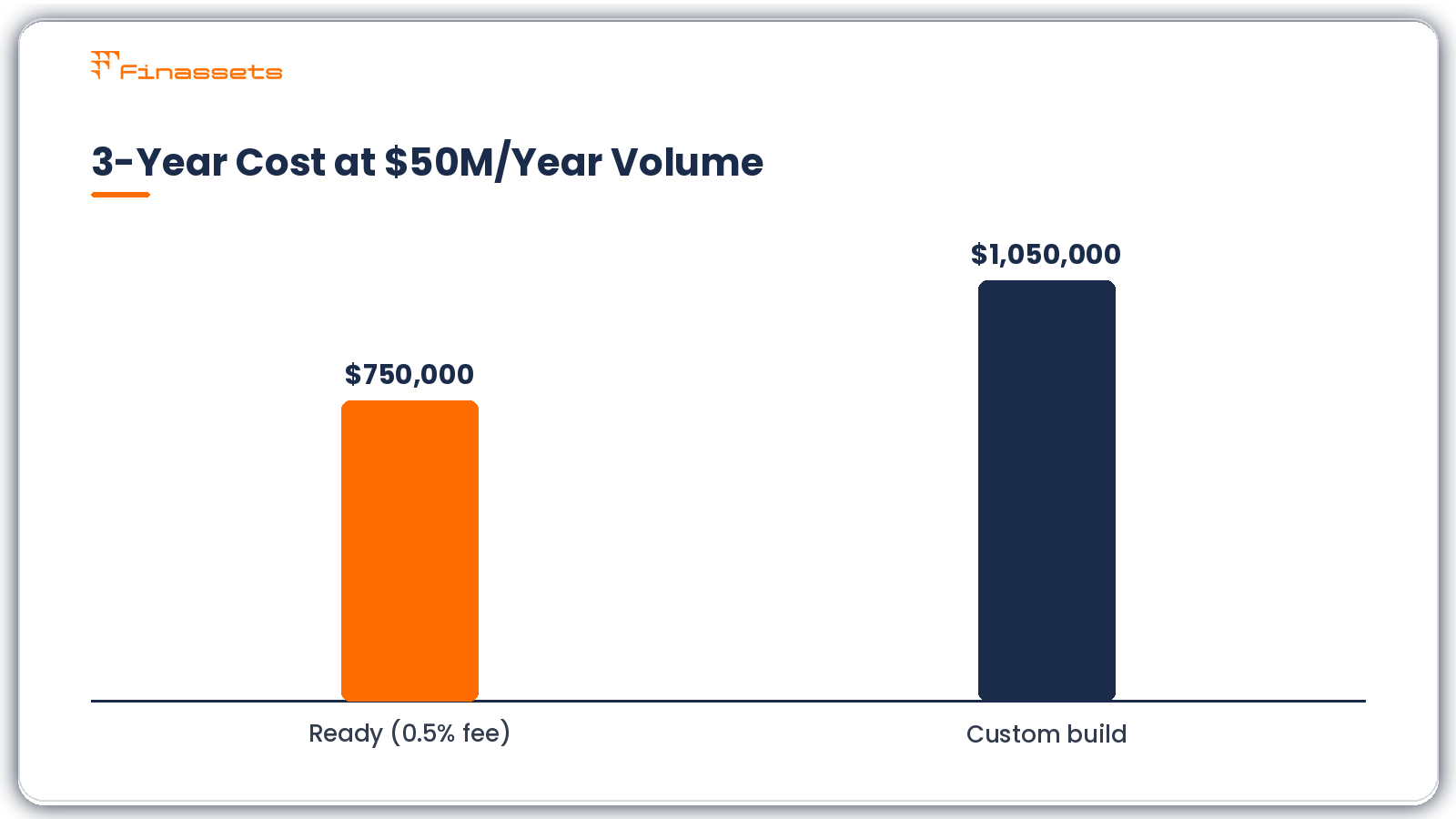
Note: This calculation does not take into account that some ready-made solutions offer a progressive fee structure. For example, Finassets reduces its transaction fee to as low as 0.2% as transaction volume increases.
Evaluate these dimensions:
- Transaction volume and projected growth - low/medium volume with uncertain growth favors ready solutions. High volume with clear trajectory justifies custom investment.
- Regulatory complexity - single-country operations with straightforward rules lean ready. Multi-region with MiCA, FinCEN, and FATF obligations lean custom or hybrid.
- Required feature depth - simple acceptance of digital currencies with minimal fees? Ready. Multi-merchant routing, crypto payouts, treasury features, and programmable refunds? Custom or hybrid.
- Time-to-market pressure - weeks favor ready solutions. Quarters of lead time make custom viable.
- Internal resources - do you have engineering, compliance, security, and product management capacity? If not, a ready gateway or a payment gateway development company fills the gap.
- Strategic importance - is accepting crypto a peripheral payment option, or core to your value proposition? The right crypto payment gateway choice follows from this answer.
Decision rules:
- Low/medium volume + limited compliance footprint + time-critical → ready solution.
- Crypto payments core to product + high volume + complex flows → custom or hybrid.
- Brand differentiation relies on unique on-chain behavior (programmable refunds, NFT-based access, token rewards) → custom or extended hybrid.
Document a 12–24 month roadmap. Define your initial integration choice, set trigger thresholds for revisiting build vs. buy (e.g., monthly fees exceeding $X, new regulatory requirements, merchant demand for features the vendor can't deliver), and establish milestones for expanding or refactoring your payment stack.
There is no one-size-fits-all answer. Timeline is a critical factor when choosing between custom development and ready-made solutions, especially in a market where the global crypto payment market is projected to reach $5.37 billion by 2032.
What matters is matching your choice to your business requirements, risk profile, and growth trajectory.
Start with a structured evaluation today. Whether you choose to build, buy, or blend, the businesses that win will be the ones that made that decision deliberately - not by default.
Key takeaways
- Custom crypto payment gateway development gives you maximum control over your business model, compliance architecture, and checkout UX, but demands significant upfront investment (mid-five to low-seven figures) and 4–12+ months of build time.
- Ready-made crypto payment gateway solutions let you accept crypto payments in days or weeks with minimal engineering, though you trade flexibility and margin control for speed.
- By 2026, most serious organizations pursue a hybrid approach: a third-party cryptocurrency payment gateway to launch quickly, then a phased custom build for core payment flows and treasury operations.
- The right path depends on concrete factors: transaction volumes, regulatory exposure, required chains and digital currencies, need for exchange integrations, and your in-house engineering capacity.
Ready crypto payment solutions for businesses: Why companies choose Finassets
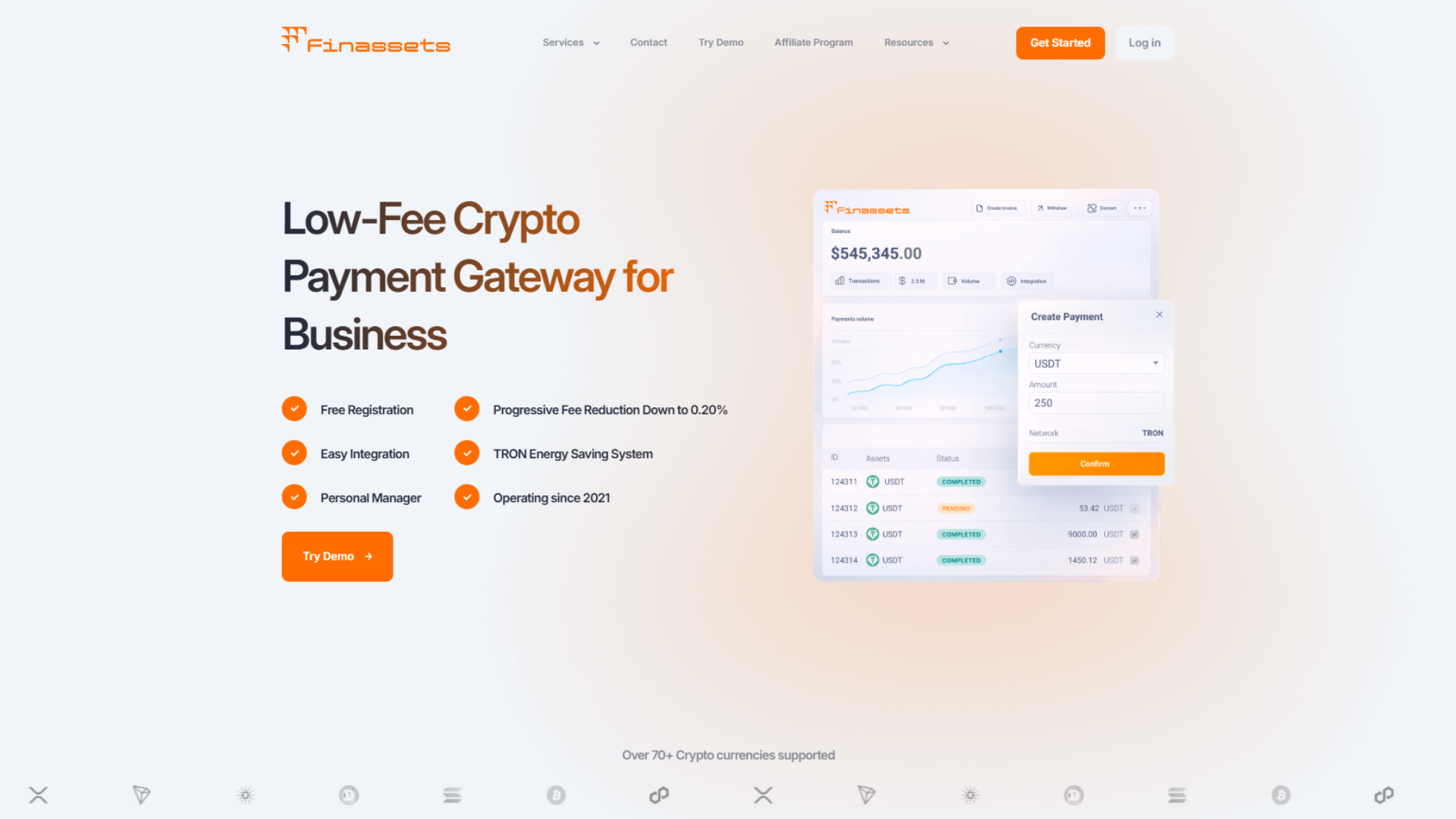
For businesses that prefer a ready-made crypto payment gateway instead of building custom infrastructure, evaluating providers goes beyond transaction fees. Integration options, settlement flexibility, supported assets, security, and operational features all play an important role.
Finassets is one example of a crypto payment platform designed for companies that want to accept digital asset payments without developing their own payment infrastructure.
Flexible ways to accept crypto payments
Finassets offers several crypto payment methods that can be adapted to different business models and customer journeys.
Available options include:
- Crypto Checkout for online checkout pages
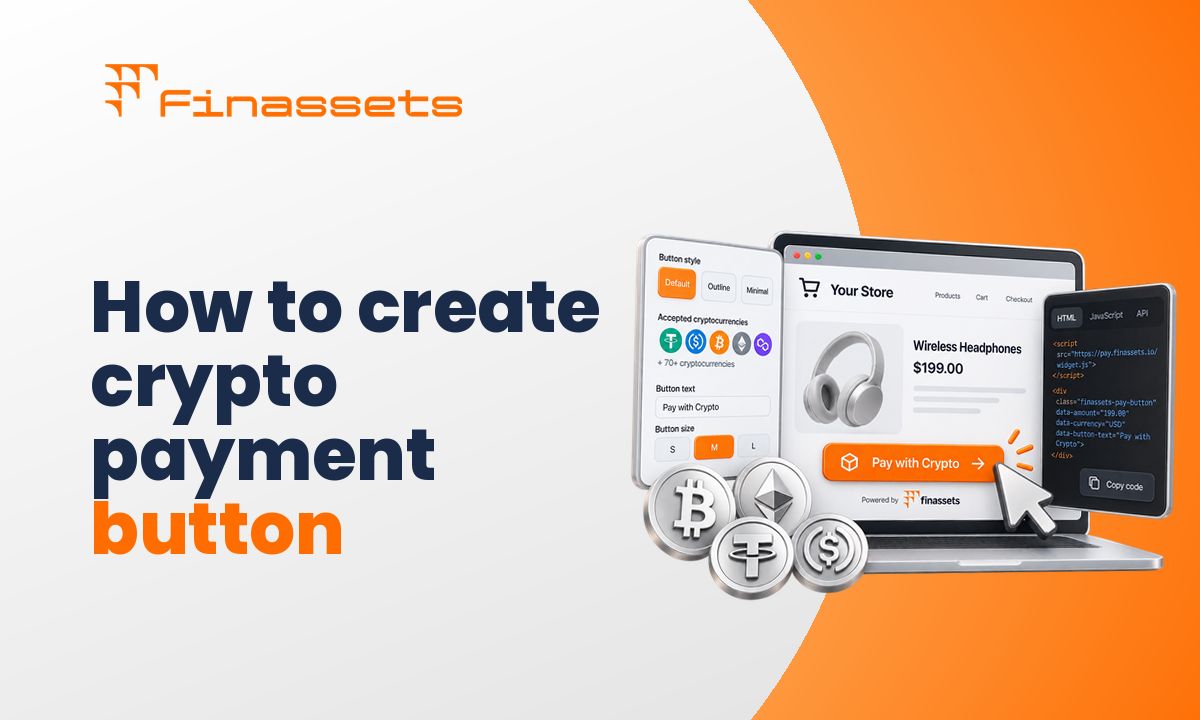
- Payment Buttons for websites and landing pages
- Payment Links for direct payment requests
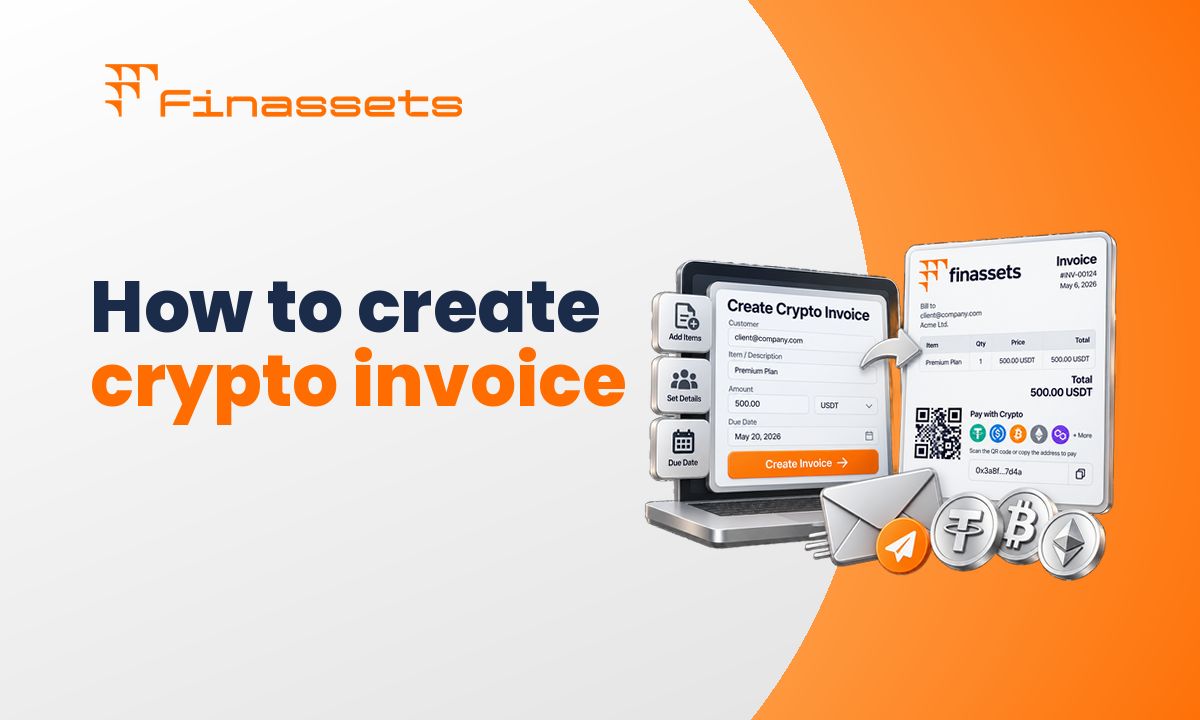
- Crypto Invoicing for billing and recurring payment workflows
- API Integration for custom applications, marketplaces, and software platforms
These tools allow businesses to integrate cryptocurrency payments into websites, SaaS products, marketplaces, and other digital services without building payment infrastructure from scratch.
Settlement options and wallet infrastructure
Every business has different treasury requirements. Some prefer holding cryptocurrency, while others aim to minimize price volatility through automatic conversion.
Finassets supports automatic conversion of incoming cryptocurrency into stablecoins based on merchant preferences, with the rate confirmed at the moment of conversion. Auto-Convert is executed via a third-party exchange partner — Finassets does not provide exchange services directly.
The platform also includes wallet infrastructure with security controls and approval workflows for active settlement flows.
More than payment collection
For companies handling larger transaction volumes, payment acceptance is often only one part of the process.
Finassets also includes features such as:
- Crypto-to-stablecoin Auto-Convert (via a third-party exchange partner; Finassets does not provide exchange services directly)
- Mass crypto payouts
- Multi-recipient payment distribution
These capabilities can support marketplaces, payroll operations, affiliate programs, partner settlements, and businesses that regularly send digital asset payments to multiple recipients.
Supported cryptocurrencies
The platform supports more than 70 digital assets, including widely used cryptocurrencies such as Bitcoin (BTC), Ethereum (ETH), Tether (USDT), and USD Coin (USDC). This gives merchants access to the payment methods most customers already use.
Fee structure
Finassets applies a volume-based pricing model. Transaction fees begin at 0.4% and decrease to 0.2% as monthly processing volume increases.
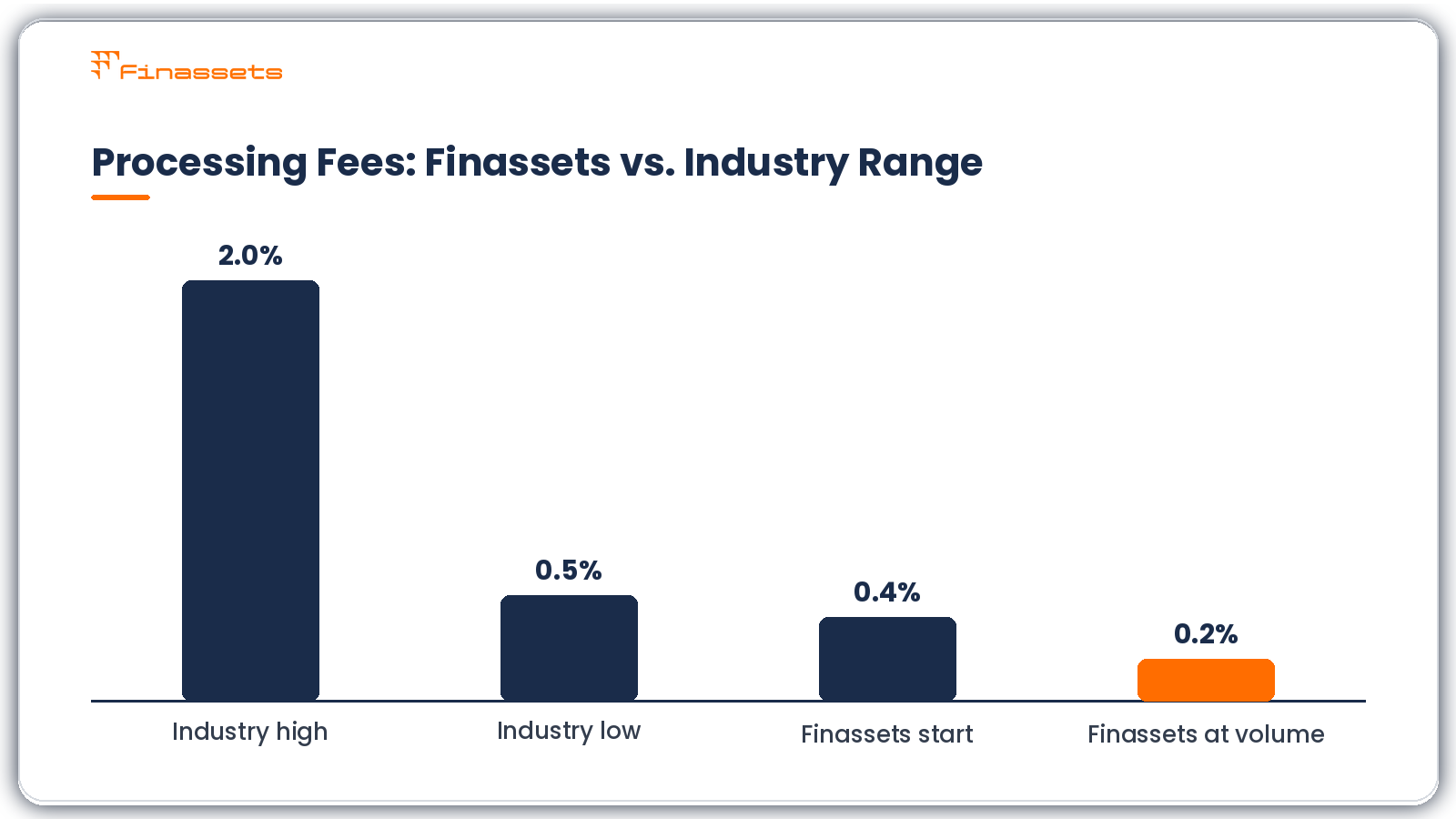
For comparison, many crypto payment providers charge between 0.5% and 2% per transaction. Businesses can also estimate their expected processing costs using the fee calculator available on the Finassets website.
Platform features
Additional features available through the platform include:
- Automatic crypto-to-stablecoin conversion
- REST API with published developer documentation
- MPC wallet technology with 2FA and role-based access controls
- KYB onboarding supported by customer due diligence, sanctions screening, and risk assessment
- Real-time payment notifications
- 24/7 customer support
- Interactive demo environment available without registration
- Affiliate program offering a 20% lifetime commission on referred client transaction fees
- TRON energy optimization system that can reduce USDT (TRC20) network fees by up to 50%, depending on Energy availability and network conditions
Which businesses is Finassets designed for?
Finassets is primarily positioned for online businesses that process recurring or high-volume cryptocurrency payments. Typical use cases include eCommerce stores, SaaS companies, iGaming operators licensed under recognised regimes (Curaçao, Anjouan, Kahnawake, etc.), fintech providers, travel services, and digital marketplaces.
Businesses looking for predictable pricing, multiple payment integration options, and operational tools beyond simple payment acceptance may find it a practical alternative to developing a custom crypto payment gateway. Its tiered fee structure can also become increasingly cost-effective as transaction volumes grow.
Conclusion
The right crypto payment gateway depends on your business priorities. If speed, lower upfront costs, and ease of integration are your main goals, a ready-made solution is often the smarter choice. It allows you to start accepting cryptocurrency payments quickly while benefiting from established security, compliance, and ongoing support.
If you've decided that a ready solution best fits your business, Finassets provides a secure and scalable crypto payment gateway with flexible integration options, support for multiple cryptocurrencies, and reliable payment processing to help you get started with confidence.
Article details
Last updated: September 16, 2026
Published by: Finassets
Author: Alena K., Crypto Payment Solutions Specialist
Category: Crypto Payment Gateway Development, How to create a crypto payment gateway
Reading time: 7–10 minutes
Content type: Educational guide
Intended audience: Businesses, merchants, SaaS companies, developers, and e-commerce companies evaluating cryptocurrency payment gateway development companies, services, and ready solutions.
Editorial policy
Finassets reviews this article periodically for accuracy and relevance. Updates may reflect changes in cryptocurrency payment technologies, blockchain networks, stablecoins, payment infrastructure, and applicable industry practices. Our content draws on primary documentation, reputable industry sources, and practical knowledge of cryptocurrency payment infrastructure. Where appropriate, we reference original documentation and sources so readers can verify technical and factual claims. This article is provided for educational and informational purposes only. It does not constitute financial, investment, legal, tax, or regulatory advice.