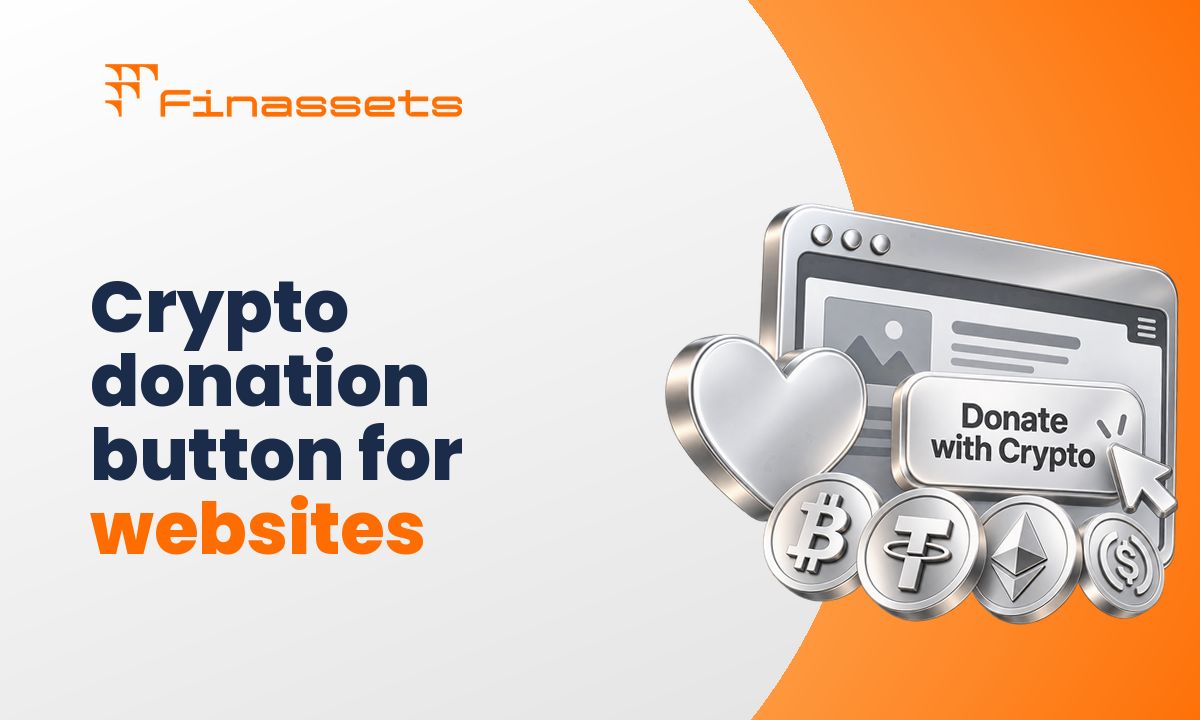
What is a crypto donation button? A crypto donation button is an embeddable element that allows websites and organisations to receive cryptocurrency contributions directly from visitors. When clicked, it displays a payment address or QR code for the donor's wallet. It requires no payment intermediary — donations go directly to the recipient's wallet or through a gateway that handles fiat conversion.
A nonprofit organization launches a fundraising campaign for international supporters. Some donors want to contribute using Bitcoin, USDT, or Ethereum instead of traditional bank cards. Card donations may be unavailable in certain regions because of processor policies, operational limitations, or local banking conditions, while international wire transfers create delays and additional costs. Instead of building a custom crypto checkout system, the organization adds a crypto donation button directly to its website.
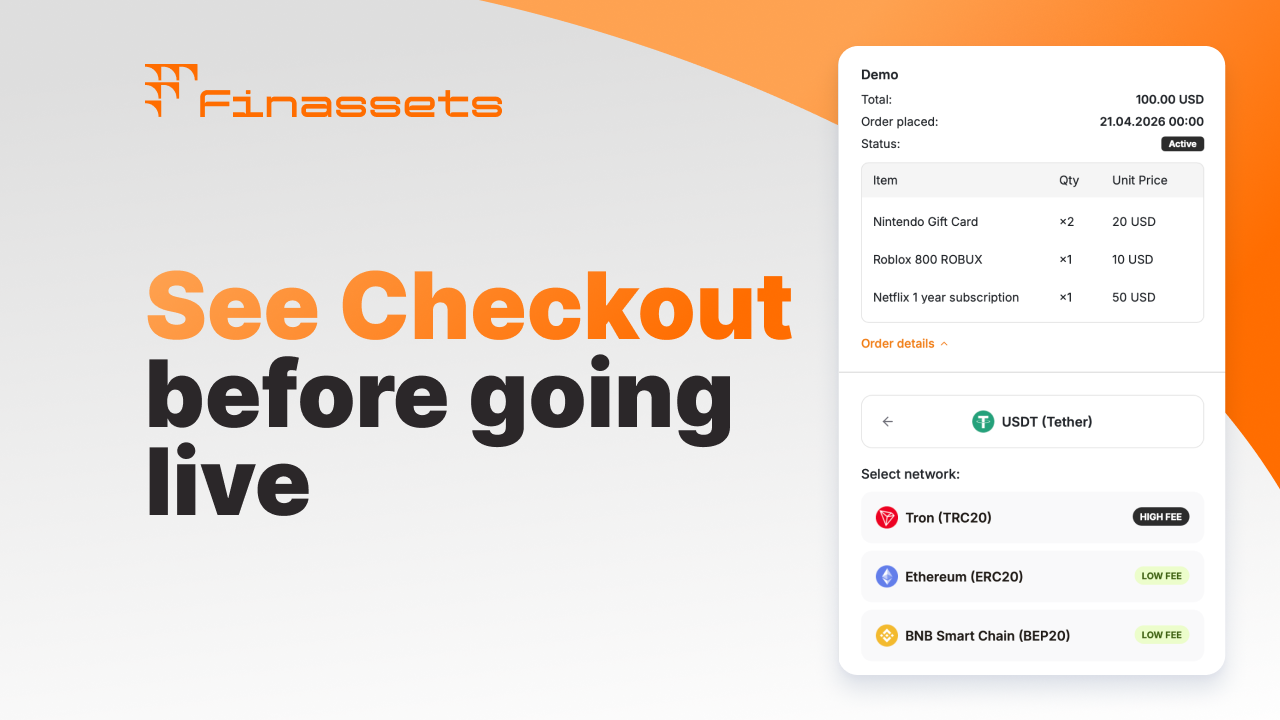
The donation flow becomes simpler operationally. A donor clicks the cryptocurrency donation button, opens a hosted donation page, scans a QR code from a crypto wallet, and completes the blockchain payment. The organization receives transaction visibility through the dashboard and can track blockchain confirmations without managing a complex payment infrastructure.
This is where a crypto donation button fits operationally. It helps organizations, digital platforms, content creators, crowdfunding campaigns, and crypto-native fundraising projects accept crypto donations through a hosted payment flow. In this guide, you will learn how crypto donation buttons work, how to create a crypto donation button using Finassets, what operational problems they solve, and where this payment method works best.
What is crypto donation button?
A crypto donation button typically is a clickable widget or HTML element that enables crypto payments directly from a donor’s crypto wallet to your organization’s wallet address. Unlike traditional PayPal or credit card donation buttons, these tools process transactions through blockchain technology rather than banking networks.
Organizations use crypto donation buttons to:
- Accept donations in Bitcoin, Ethereum, and stablecoins
- Reach donors across eligible international markets
- Reduce transaction fee costs compared to bank transfers
- Process cross-border payments without banking delays
When a donor initiates a transaction, the payment broadcasts to the blockchain network. Validators confirm the transaction through blockchain confirmations, creating an irreversible record on a public ledger. For Bitcoin, expect approximately 10 minutes for the first confirmation, with 6 confirmations (about 60 minutes) providing high assurance. Tether (USDT) transactions confirm faster, typically within seconds.
Common cryptocurrencies supported include:
- Bitcoin (BTC)
- Ethereum (ETH)
- Stablecoins like USDT (Tether) and USDC (USD Coin)
- Additional altcoins depending on platform support
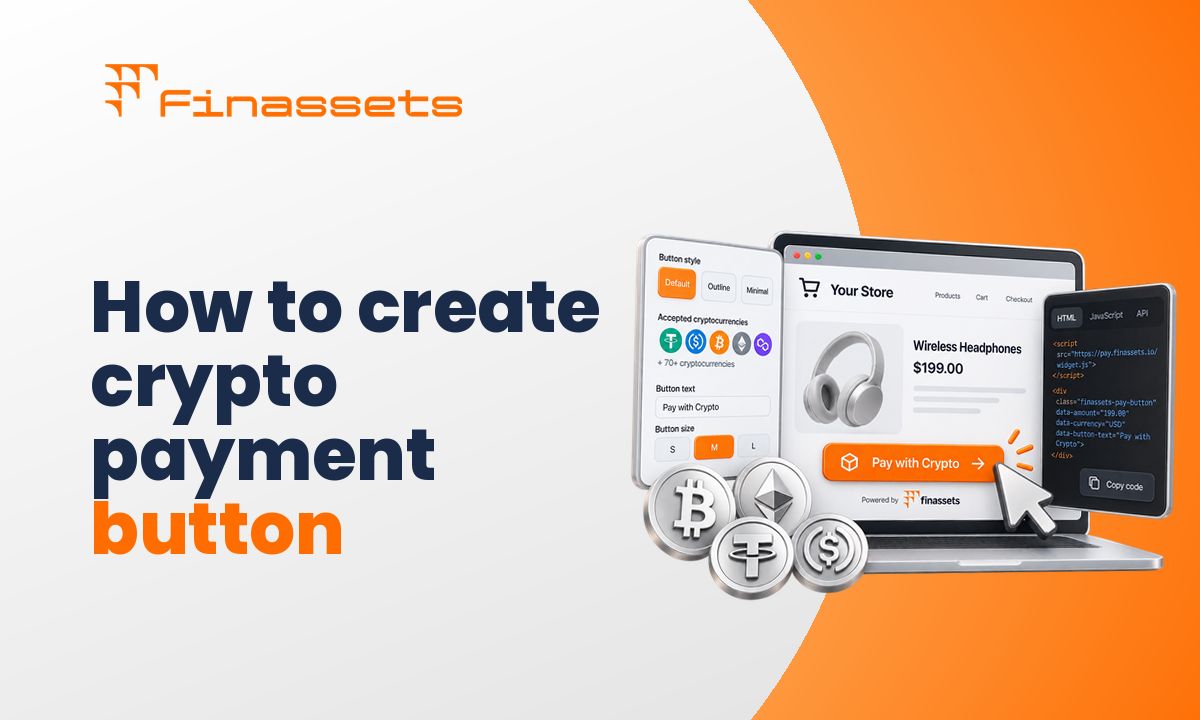
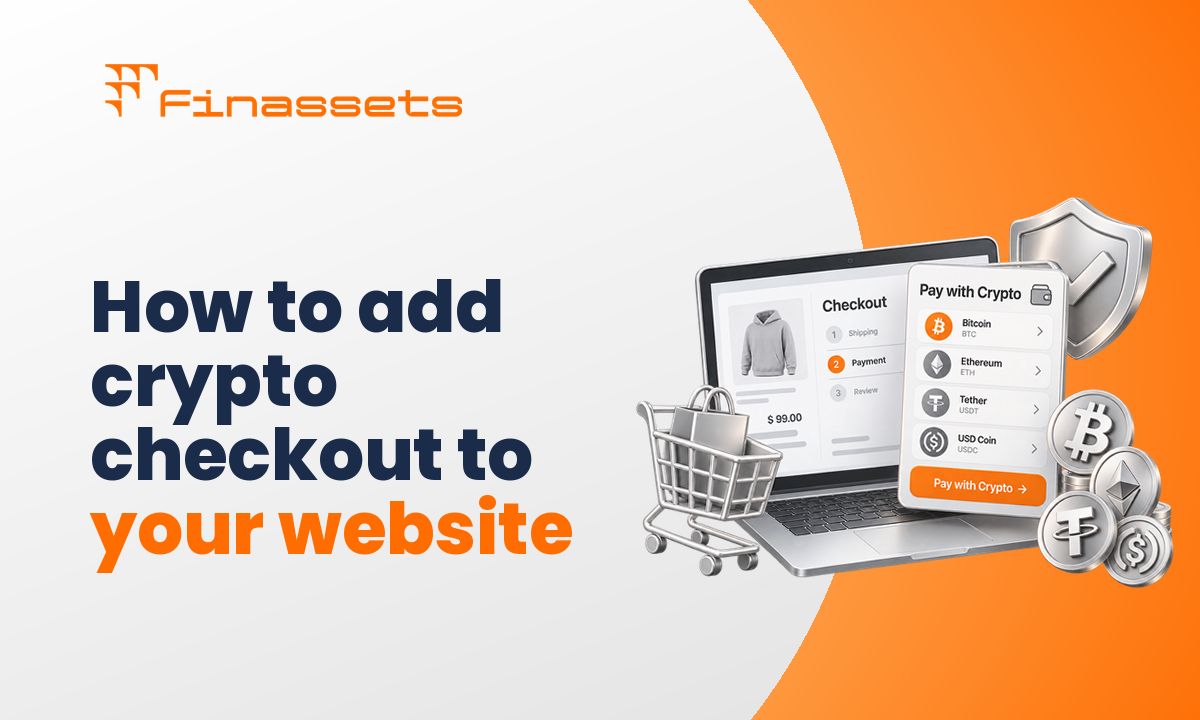
A donation widget allows organizations to embed a customizable donation form directly on their website, enabling donors to contribute without leaving the site, while a donation button typically redirects users to a separate page for processing donations.
How the crypto donation process works
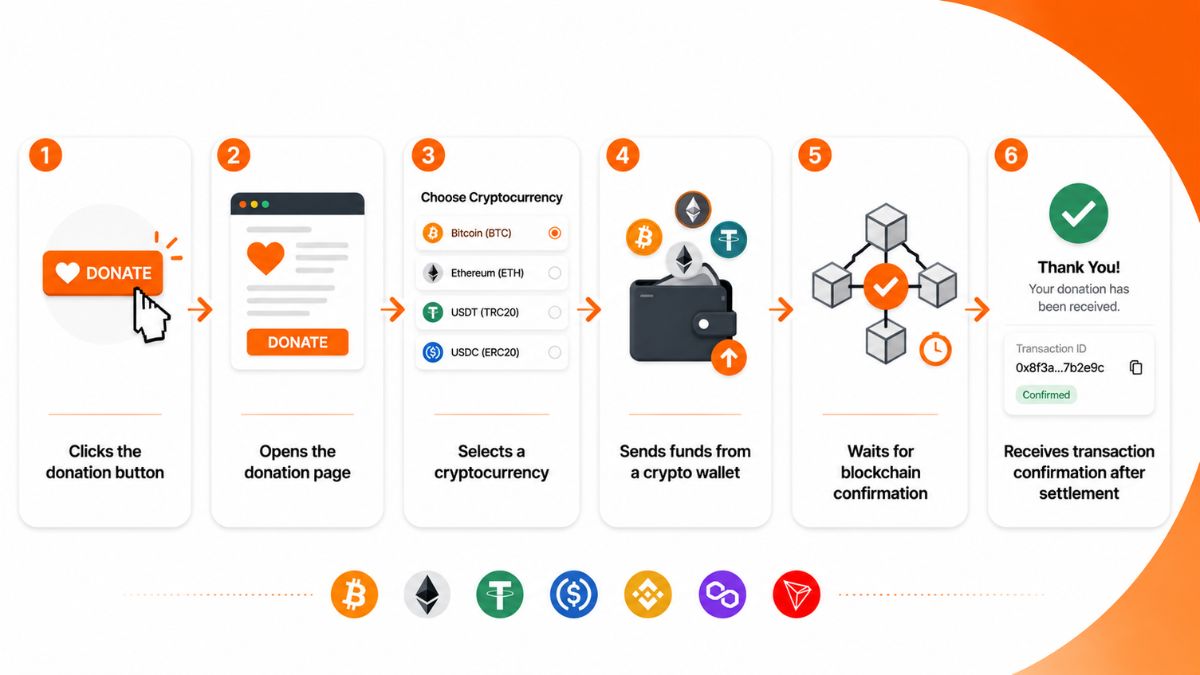
A crypto donation button is a hosted payment tool connected to a blockchain payment flow. Instead of requesting card details or bank information, the system generates a donation checkout linked to a wallet address and supported blockchain networks.
The donor typically:
- Clicks the donation button
- Opens the donation page
- Selects a cryptocurrency
- Sends funds from a crypto wallet
- Waits for blockchain confirmation
- Receives transaction confirmation after settlement
Where crypto donation buttons fit in modern fundraising:
- Alternative payment method alongside traditional options
- Cross-border donation capability without banking restrictions
- Appeal to tech-savvy and younger donor demographics
- Transparent blockchain transactions that build donor trust
The crypto user base is expanding rapidly, growing at a rate similar to Internet adoption in the 1990s. This presents a growing opportunity for organizations to tap into this demographic for donations.
How to create crypto donation button
The Finassets setup process is designed for organizations and businesses that want to accept crypto donations through an embedded payment button. To create a crypto donation button, follow the steps below:
Step 1: Open the "Payment Button" section
Navigate to the Payment Button section inside the Finassets dashboard.
Step 2: Click “Add Project”
Create a new donation project for your organization, campaign, or fundraising initiative.
This project acts as the operational container for:
- Donation processing
- Blockchain transaction tracking
- Payment verification
- Wallet integration
- Donation conversion monitoring
Step 3: Configure the donation button settings
Fill out the project form using your fundraising requirements.
Include:
- Project name
- Company or organization name
- Supported cryptocurrencies
- Donation settlement currency
- Service fee configuration
- Payment expiration time
- Exchange rate refresh interval
- Website URL where the donation button will appear
You can configure multiple cryptocurrency donation options, including:
- Bitcoin
- Ethereum
- USDT
- USDC
- Other supported digital assets
Stablecoin donations may help reduce exchange-rate volatility during fundraising campaigns, although market conditions and blockchain fees still apply.
Step 4: Generate the crypto donation button HTML code
After completing the configuration, click “Add”. The system generates embedded code for donation crypto payment button
This allows organizations to accept crypto donations without building a custom blockchain payment infrastructure.
Step 5: Copy the embed code
Copy the generated HTML code and place it on your website where the donation button should appear.
Typical placement options include:
- Donation pages
- Fundraising campaign pages
- Blog sidebars
- Nonprofit landing pages
- Crowdfunding pages
- Website headers or footers
Step 6: Start accepting crypto donations
Once the crypto donation button is active, donors can complete blockchain payments directly from their cryptocurrency wallets.
The process usually includes:
- Opening the donation page
- Scanning the QR code
- Sending funds
- Waiting for transaction confirmation
- Verifying payment on-chain
Organizations can then monitor:
- Transaction hashes
- Blockchain confirmations
- Donation status
- Settlement visibility
- Payment history
You’ve got the setup process — now the operational side matters.
👉 Create your business’s account and start accepting crypto donations.
Why use a crypto donation button instead of traditional donation methods
Traditional fundraising systems often depend on card processors, banking infrastructure, plugins, or regional payment providers. Crypto donation buttons provide an additional payment rail for crypto-native donors who already use digital assets.
The operational advantage is flexibility. Organizations can collect donations across eligible international markets without requiring a full eCommerce checkout infrastructure.
Crypto donation buttons also support:
- QR code payments
- Peer-to-peer transactions
- Cross-border donations
- Digital fundraising campaigns
- Blockchain transparency
- Additional payment methods for crypto-native users
Based on the latest available information, the average crypto donation is approximately $11,000 — far higher than the typical online card donation of $115–$128 on traditional fundraising platforms.
For organizations serving international communities, blockchain-based donations may reduce some operational friction connected to traditional payment flows. However, crypto payments still require transaction monitoring, wallet management, and compliance controls.
Promoting your new crypto donation link
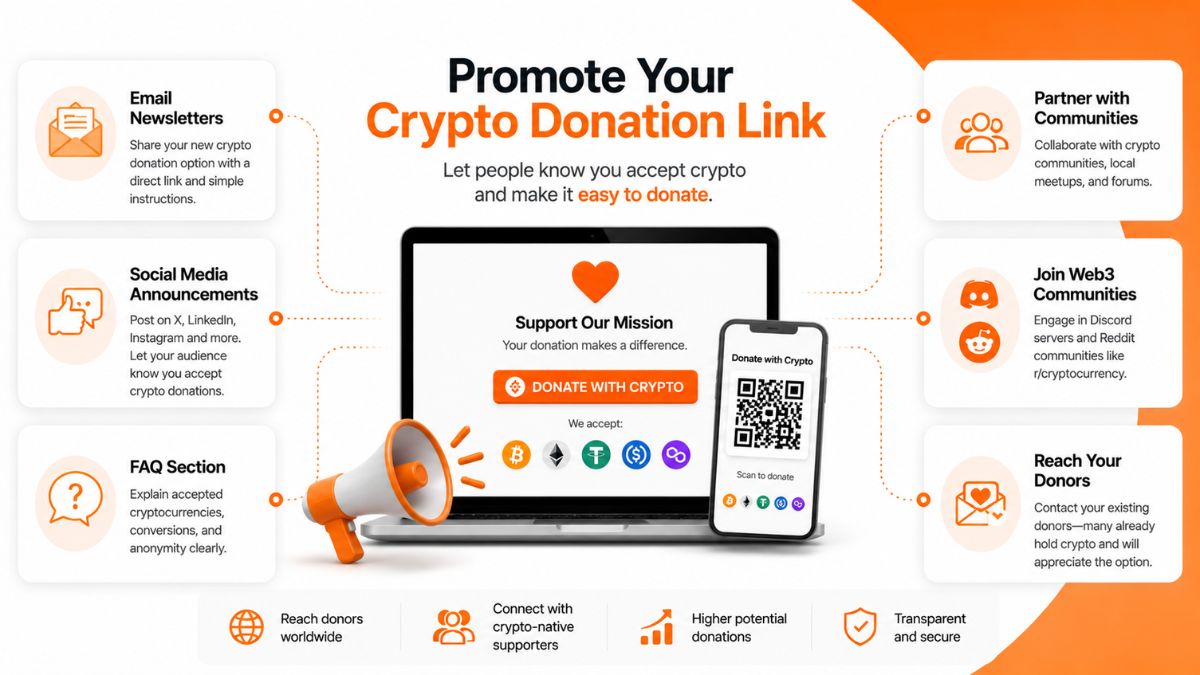
Once your button is live, actively promote that you now accept crypto donations. The button won’t work if nobody knows it exists.
- Announce the new crypto donation option via email newsletters, including a direct donation link and a brief explanation of how to donate crypto
- Post on social media platforms (X, LinkedIn, Instagram) with clear messaging like “We now accept crypto donations” and link to your donation page
- Add a short FAQ section explaining what cryptocurrencies are accepted, how donations are converted, and whether donors can remain anonymous
- Partner with crypto communities, local meetups, and online forums where potential donors may be looking for causes that accept crypto
- Join relevant web3 Discords and Reddit communities (like r/cryptocurrency) to share your mission with a community already holding digital assets
- Contact your existing donor base directly—many may already hold crypto and appreciate the new option
Measuring performance and optimizing your crypto donation button
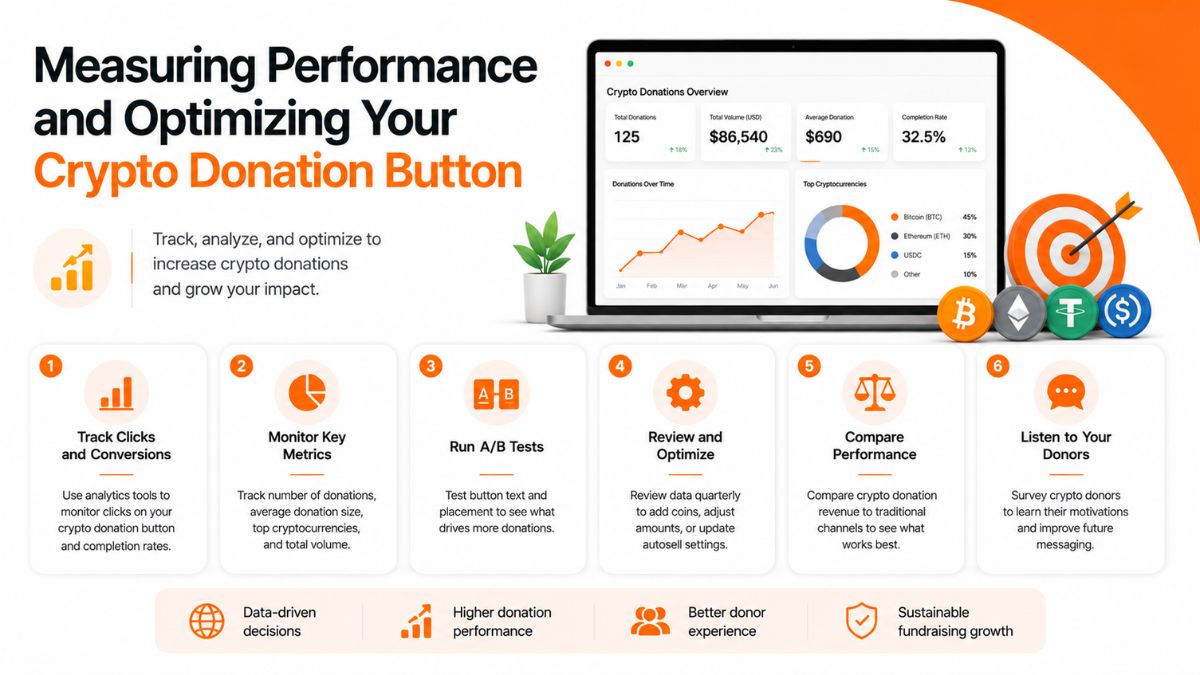
Tracking performance helps you decide where to place buttons, which messages resonate with users, and whether to expand the currencies you accept.
- Use analytics tools (Google Analytics, built-in platform dashboards) to monitor clicks on the crypto donation button and completion rates
- Track key metrics: number of crypto donations, average donation size, most used cryptocurrencies, and total volume per campaign
- Run simple A/B tests on button text (“Donate with crypto” vs. “Give Bitcoin & Ethereum”) and placement (header vs. footer vs. in-content)
- Review data quarterly to decide whether to add additional coins, change default amounts, or adjust autosell settings to manage market volatility
- Compare crypto donation revenue against traditional channels to understand which serves your fundraisers best
- Consider surveying crypto donors to understand why they chose to give—this data can inform future messaging
What to measure
| Metric | What to track | Why it matters |
| Click-through rate | Clicks on donation button | Shows visibility and interest |
| Completion rate | Donations started vs. finished | Identifies UX friction |
| Average gift size | Dollar value per donation | Confirms high-value channel |
| Coin distribution | BTC vs. ETH vs. stablecoins | Guides which assets to prioritize |
| Geographic source | Donor locations | Shows international reach |
What crypto donation buttons solve — and what they don’t
| Gives | Doesn’t give |
| Additional payment rail for crypto-native donors | Does not replace traditional payment methods |
| Blockchain transaction visibility | Does not guarantee higher donation conversion |
| Hosted donation checkout flow | Does not remove compliance obligations |
| Cross-border payment capability | Does not eliminate blockchain network fees |
| QR code donation flow | Does not prevent incorrect wallet transfers |
| Chargeback-resistant blockchain settlement | Does not remove market volatility |
| Multi-currency donation support | Does not guarantee donor adoption |
Operational considerations before accepting crypto donations
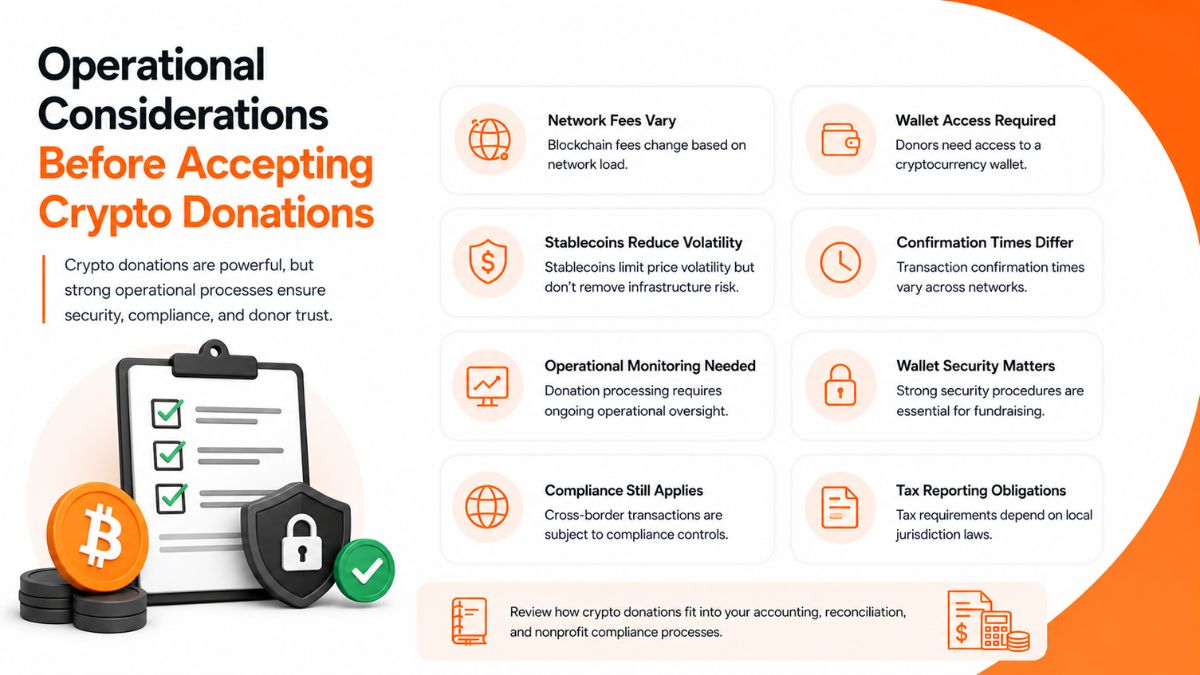
Crypto fundraising infrastructure reduces technical integration requirements, but organizations still need operational processes around blockchain payments and donor management.
Before deployment, consider:
- Blockchain network fees vary depending on network load
- Stablecoin donations reduce volatility exposure but not infrastructure risk
- Donors need access to a cryptocurrency wallet
- Transaction confirmation times differ across blockchain networks
- Donation processing still requires operational monitoring
- Wallet security procedures matter for fundraising operations
- Cross-border crypto transactions remain subject to compliance controls
- Tax reporting obligations depend on local jurisdiction requirements
Organizations should also review how crypto donations fit into their accounting, reconciliation, and nonprofit compliance processes.
Typical components in a crypto donation flow
| Component | Function |
| Crypto donation button | Starts the fundraising payment flow |
| Crypto payment gateway | Processes blockchain payment requests |
| Wallet address | Receives blockchain donations |
| QR code | Simplifies wallet interaction |
| Donation checkout | Handles hosted payment flow |
| Blockchain explorer | Verifies transaction hash (TXID) |
| Transaction monitoring | Tracks payment confirmations |
| Settlement configuration | Controls crypto-to-fiat processing |
Who crypto donation buttons work best for
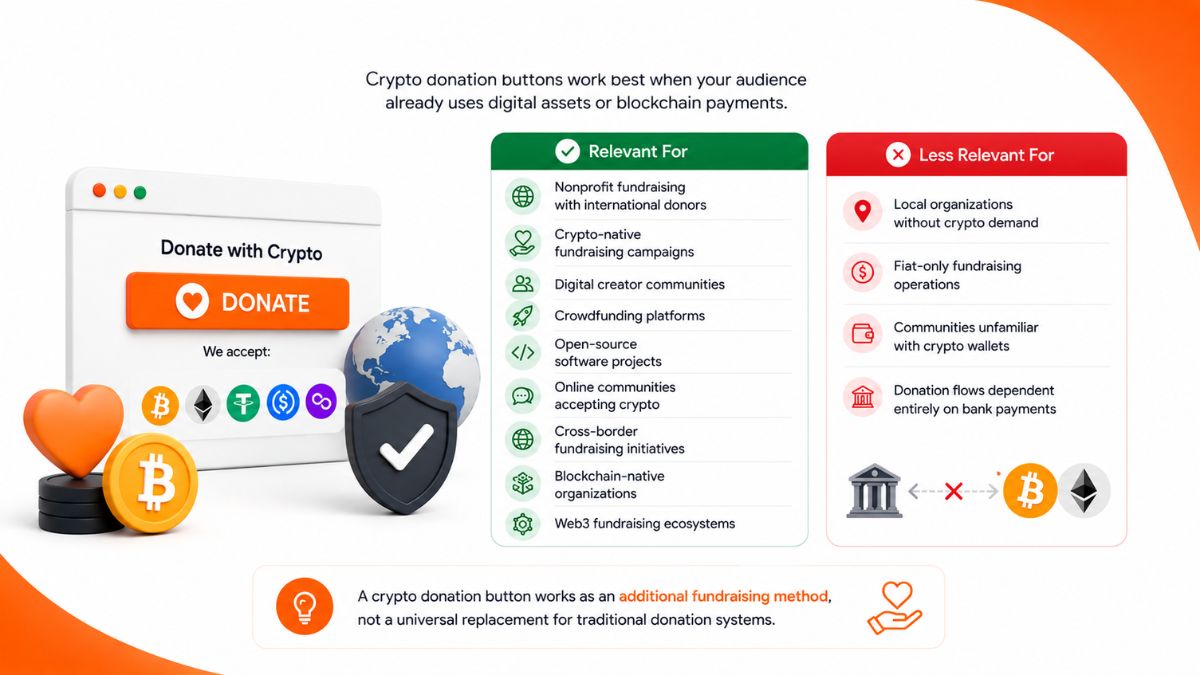
Crypto donation buttons work best when the target audience already uses digital assets or blockchain payments.
Relevant for:
- Nonprofit fundraising with international donors
- Crypto-native fundraising campaigns
- Digital creator communities
- Crowdfunding platforms
- Open-source software projects
- Online communities accepting crypto
- Cross-border fundraising initiatives
- Blockchain-native organizations
- Web3 fundraising ecosystems
Less relevant for:
- Local organizations without crypto demand
- Fiat-only fundraising operations
- Communities unfamiliar with cryptocurrency wallets
- Donation flows dependent entirely on bank payments
A crypto donation button works as an additional fundraising method, not a universal replacement for traditional donation systems.
Crypto donation button security and compliance considerations
Organizations accepting cryptocurrency donations should evaluate both operational security and compliance workflows.
Important considerations include:
- Wallet security controls
- Transaction monitoring
- AML compliance procedures
- KYC verification where applicable
- Payment authentication
- Blockchain verification
- Donor privacy management
- Fraud-prevention controls designed to mitigate risk
Finassets operates risk-based AML/CTF, KYC and sanctions controls aligned with applicable Panamanian law and international standards.
Crypto donations may also require additional accounting and tax review depending on the organization’s jurisdiction.
Supported blockchain networks and assets
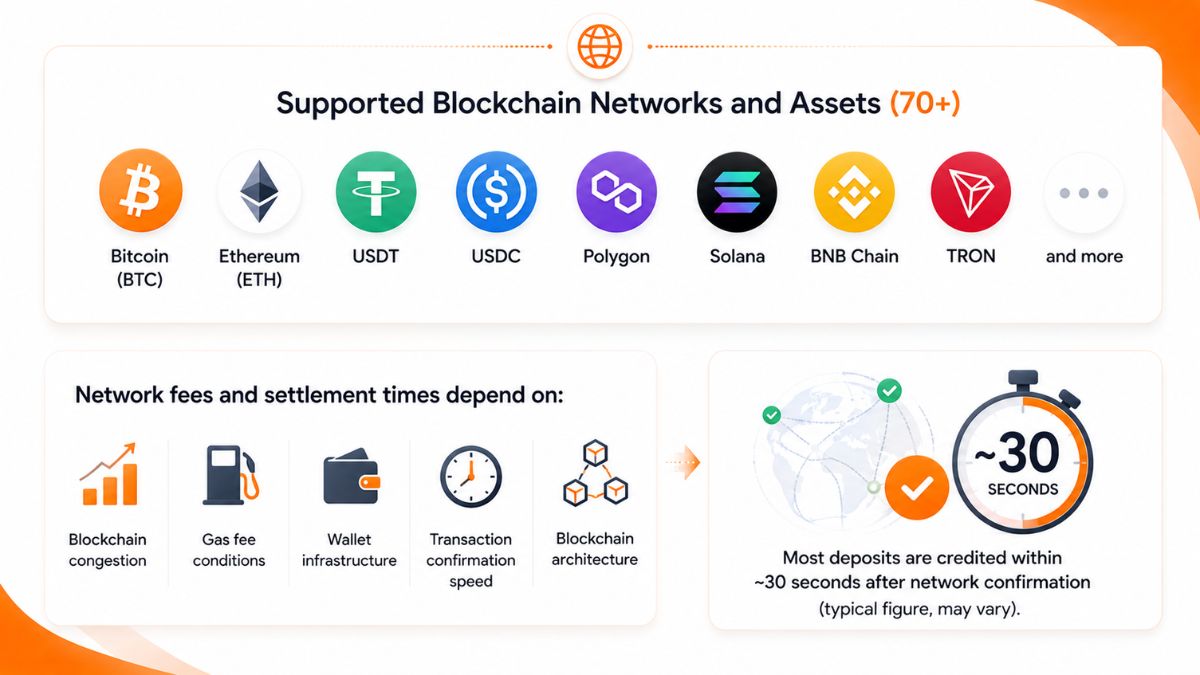
Finassets supports multiple blockchain payment networks and digital assets (70+), including:
- Bitcoin (BTC)
- Ethereum (ETH)
- USDT
- USDC
- Polygon
- Solana
- BNB Chain
- TRON
Network fees and settlement times depend on:
- Blockchain congestion
- Gas fee conditions
- Wallet infrastructure
- Transaction confirmation speed
- Blockchain architecture
Most deposits are credited within ~30 seconds after network confirmation (typical figure, may vary).
Finassets payment processing fee structure
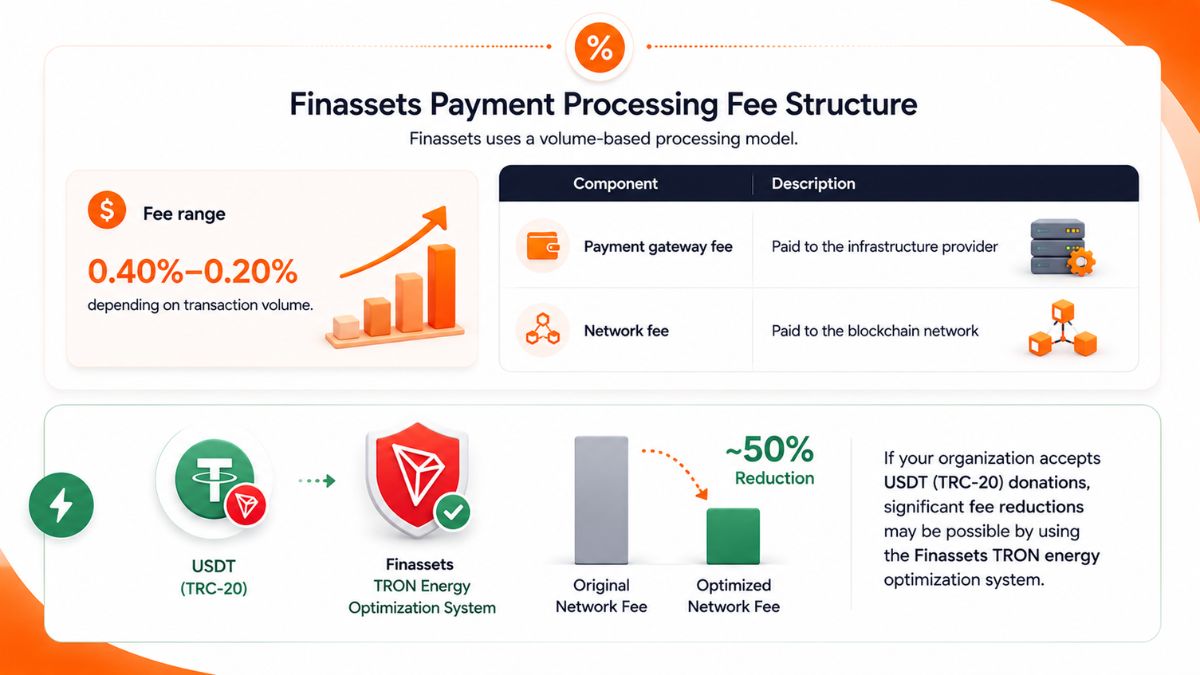
Fee range
0.40%–0.20% depending on transaction volume.
| Component | Description |
| Payment gateway fee | Paid to the infrastructure provider |
| Network fee | Paid to the blockchain network |
If your organization accepts USDT (TRC-20) donations, significant fee reductions may be possible by using the Finassets TRON energy optimization system. It can help reduce network fees by around 50%.
Checklist before you accept crypto donations
- Do your donors already use cryptocurrency?
- Do you need cross-border fundraising support?
- Do you want an additional donation method?
- Can your accounting process digital asset settlements?
- Have you reviewed crypto tax reporting requirements?
- Do you understand blockchain transaction fees?
- Do you need multi-chain payment support?
- Have you reviewed wallet security procedures?
- Do you need hosted checkout instead of custom integration?
- Have you reviewed compliance requirements for your jurisdiction?
Start accepting crypto donations
A crypto donation button helps organizations accept blockchain payments without building a custom crypto payment infrastructure from scratch. For fundraising teams serving crypto-native communities, it provides an additional payment method with blockchain visibility and cross-border fundraising flexibility.
👉 Create your Finassets account and start accepting crypto donations.
Article details
- Last updated: August 10, 2026
- Published by: Finassets
- Author: Alena K., Crypto Payment Solutions Specialist
- Category: Cryptocurrency Payments, Cryptocurrency Payment Gateways
- Reading time: 5–7 minutes
- Content type: Educational guide
- Audience: Businesses, merchants, SaaS companies, developers, and e-commerce owners exploring cryptocurrency payment solutions.
Editorial policy
This article is reviewed periodically to ensure the information remains accurate and reflects the latest developments in cryptocurrency payments, blockchain networks, stablecoins, and payment gateway technologies. Content is based on publicly available documentation, industry best practices, and practical payment infrastructure knowledge. It is intended for informational purposes only and does not constitute financial, legal, or investment advice.