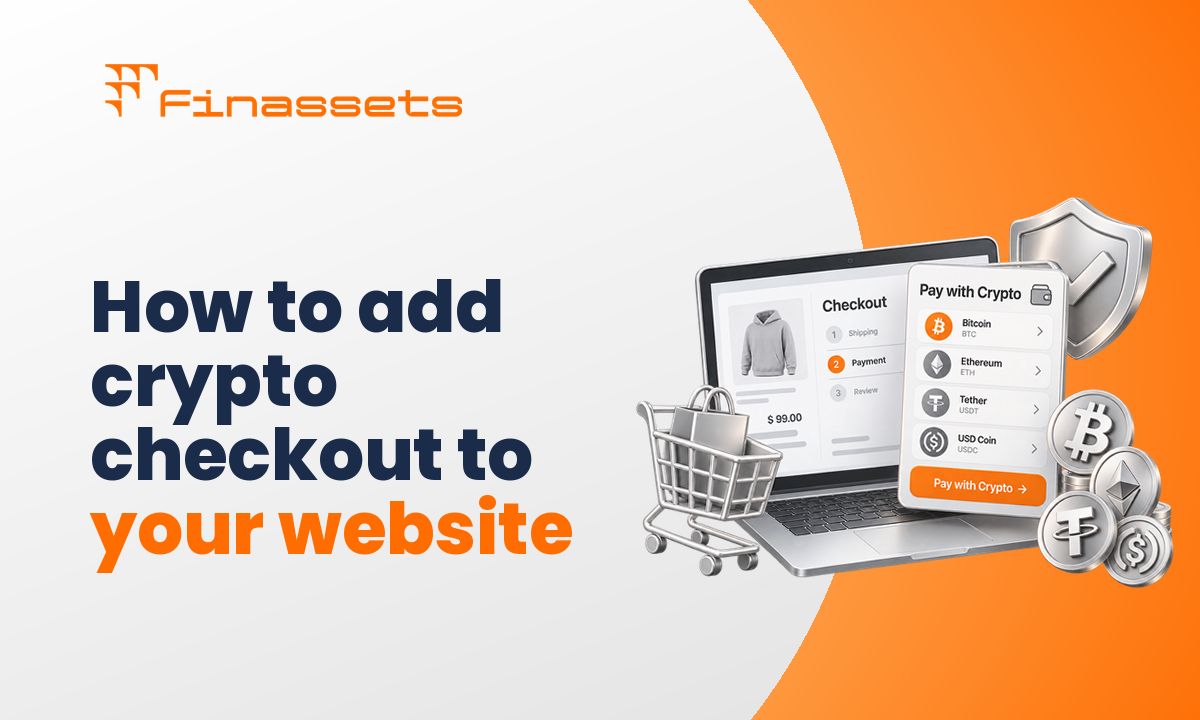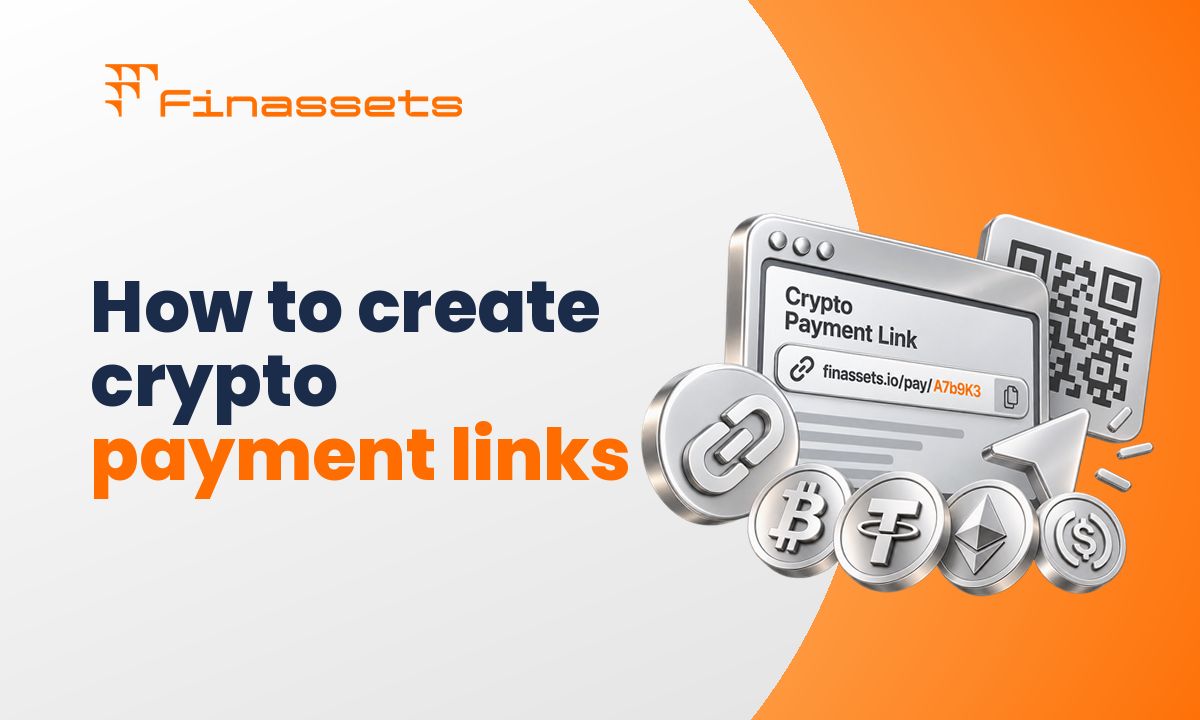
What is a crypto payment link? A crypto payment link is a shareable URL that directs a payer to a hosted page where they can complete a cryptocurrency transaction. It encodes the payment amount, accepted currencies, and merchant reference, and generates a payment address or QR code on open. Payment links are used for invoicing, social media selling, and one-click checkout without a full e-commerce integration.
A customer from another country wants to pay for a digital service in USDT. They do not want to use a bank transfer, and card processing keeps failing because of regional restrictions. Instead of building a full crypto checkout, you send a crypto payment link (crypto invoice)directly through email or messaging apps. The customer opens the payment page, scans a QR code, and completes the transaction from their crypto wallet.
This is where crypto payment links fit operationally. They work as a lightweight payment flow for businesses that need to accept crypto payments without building a full eCommerce checkout infrastructure. Freelancers, SaaS companies, digital goods platforms, and high-risk merchants often use them to receive blockchain payments with predictable tracking and settlement visibility.
In this guide, you will learn how crypto payment links work, how to create a crypto payment link using Finassets, what happens during the transaction process, and where this payment method fits operationally
How do crypto payment links work
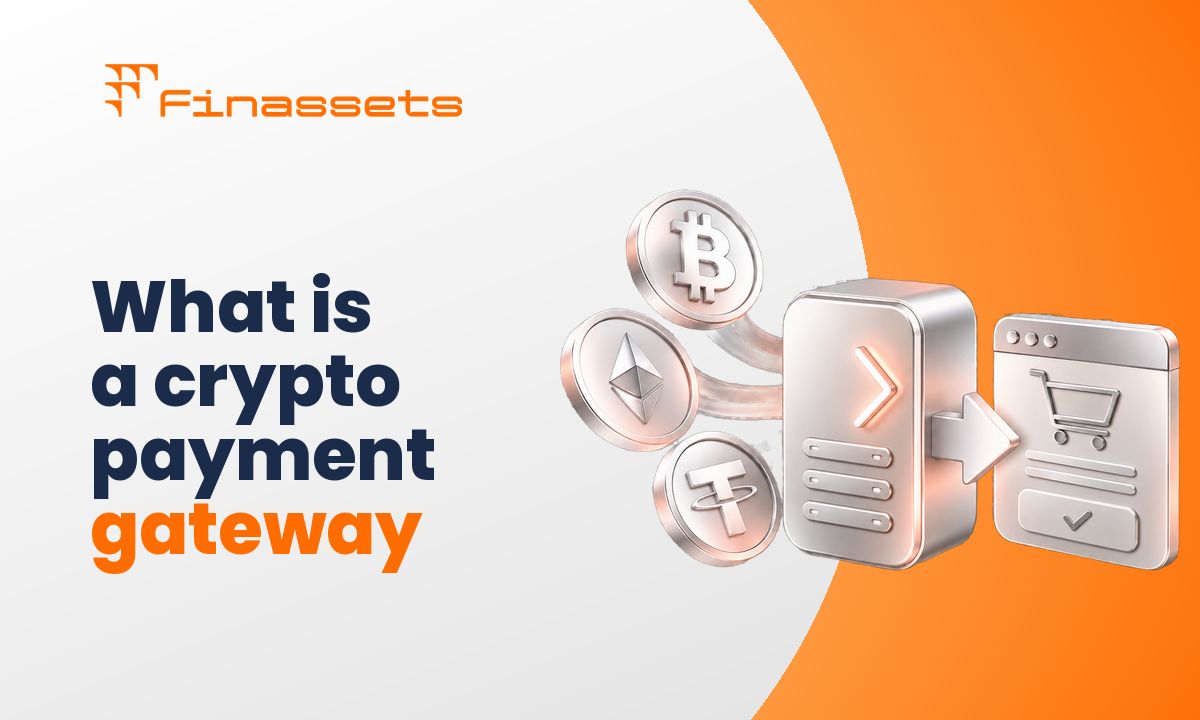
A crypto payment link is a hosted payment URL connected to a crypto invoice or checkout page. Instead of requesting card details, the system generates a payment request tied to a wallet address and blockchain network.
The customer:
- Opens the payment link
- Selects a supported cryptocurrency
- Sends funds from a crypto wallet
- Waits for blockchain confirmation
- Receives payment confirmation after settlement
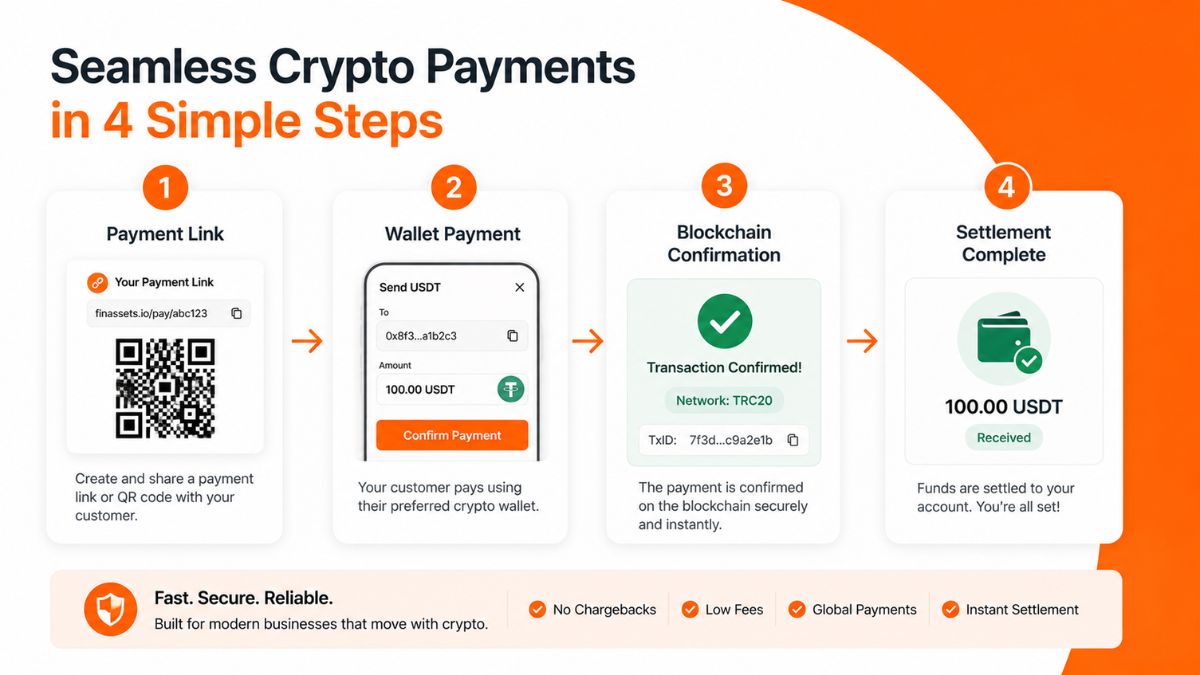
The payment can happen through:
- Bitcoin payment
- Ethereum payment
- USDT payment
- USDC payment
- Solana payment
- BNB payment, etc.
Unlike card authorization, crypto payment processing depends on blockchain confirmation and network validation.
How to create crypto payment link
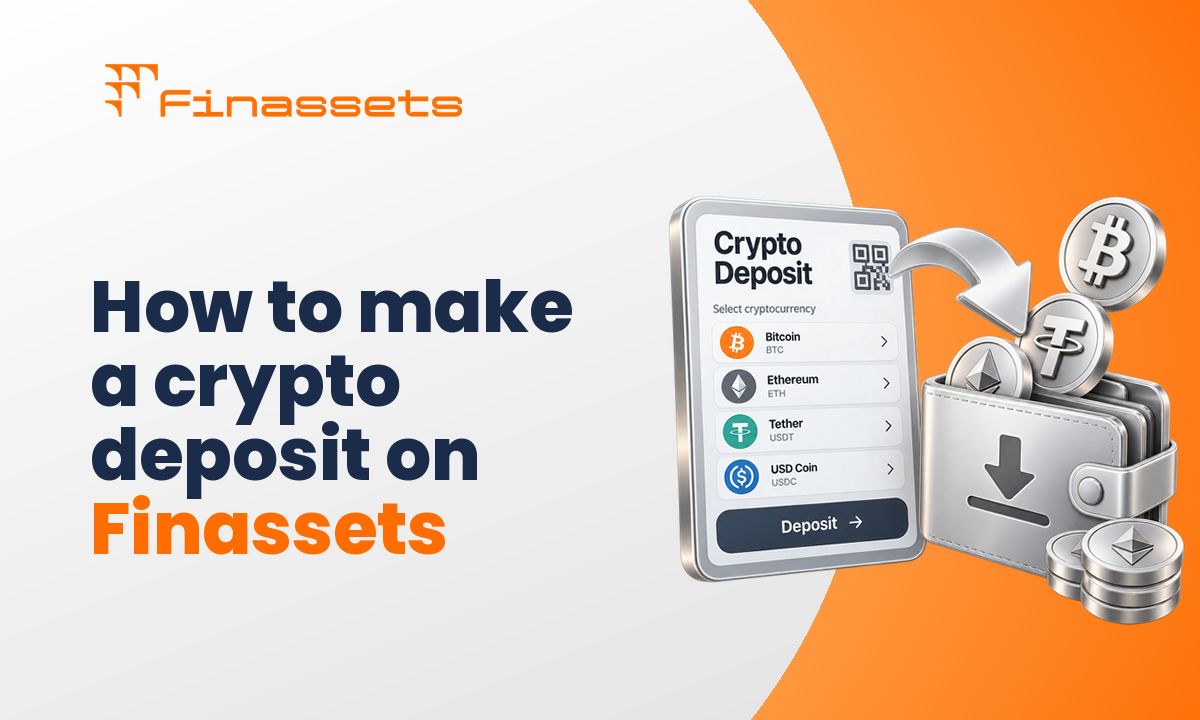
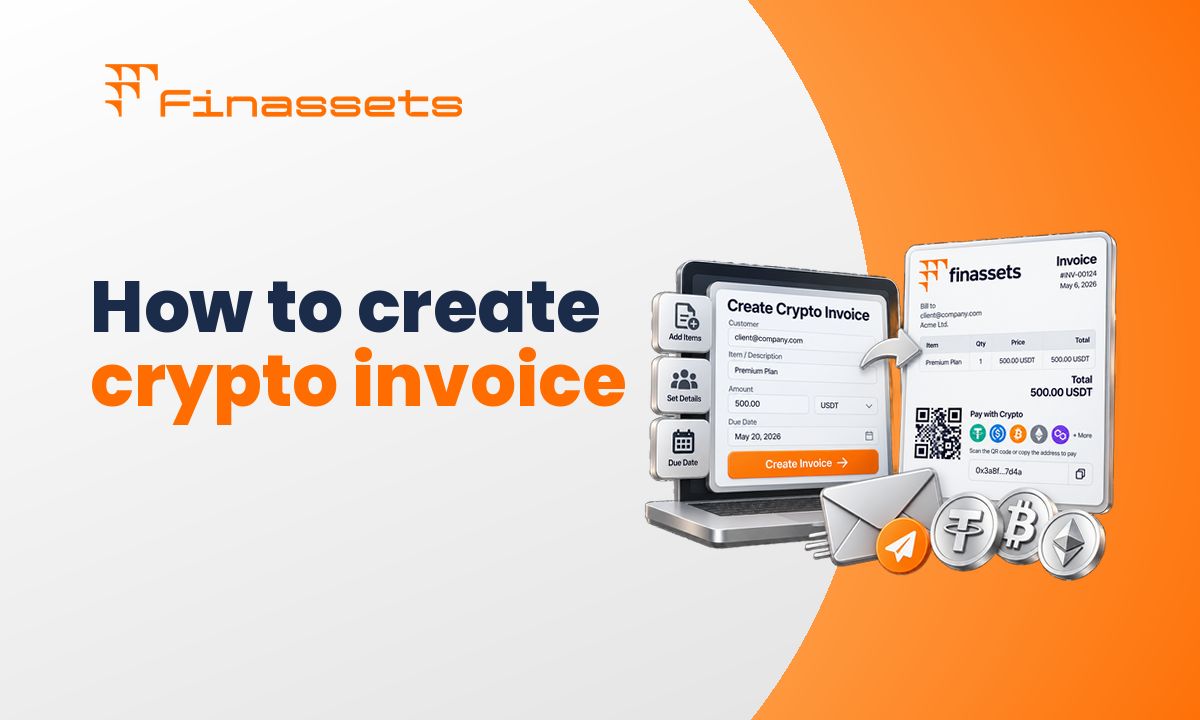
You can create a crypto payment link from the Finassets dashboard without building a custom payment API or crypto checkout integration. To start, go to the “Crypto Invoicing” section and click “Create”. Follow the instructions below:
Step 1: Select the cryptocurrency to accept
Choose which digital assets customers can use:
- Bitcoin (BTC)
- Ethereum (ETH)
- USDT
- USDC
- Other supported cryptocurrencies
You can configure stablecoin payment options to reduce exchange rate volatility during the payment window.
Step 2: Add an invoice ID
Create a unique payment reference for tracking and reconciliation.
This Invoice ID helps:
- Match payments to orders
- Track blockchain transactions
- Verify settlement status
- Monitor payment confirmation
Step 3: Set the invoice due date
Define how long the payment request remains active.
This matters because:
- Blockchain fees fluctuate
- Exchange rates can change
- Payment windows affect operational visibility
Step 4: Enter the recipient’s email
The system can send the crypto payment URL directly to the customer.
Payment links can also be shared through:
- Messaging apps
- Social media
- Invoice pages
- Embedded payment buttons
Step 5: Add items to the invoice
Include:
- Product or service name
- Quantity
- Payment amount
- Settlement currency
This creates a structured crypto invoice instead of a manual wallet transfer request.
Step 6: Send the crypto payment link
Customers simply click the payment link and complete the cryptocurrency payment from their wallet.
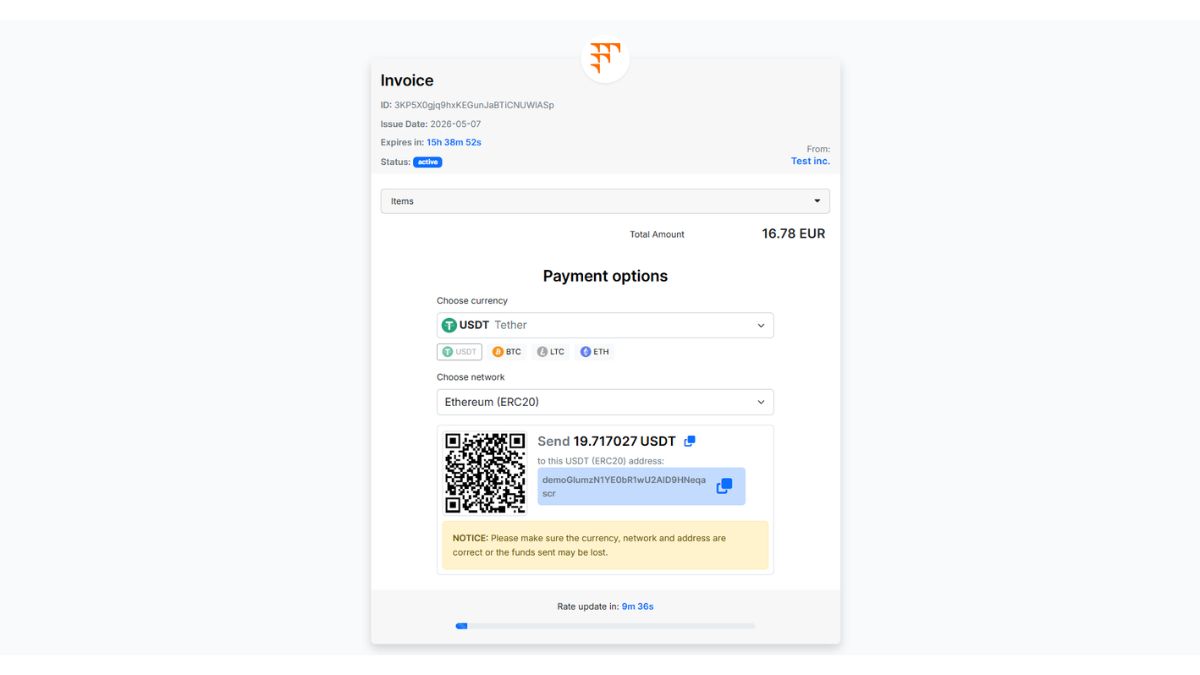
You can edit crypto invoice data anytime after creation. This gives merchants operational flexibility when handling updated invoices or payment requests.
You’ve got the theory — now put it into practice. Turn knowledge into results.
👉 Create your account and start sending crypto payment links.
Why use a crypto payment link instead of a full checkout?
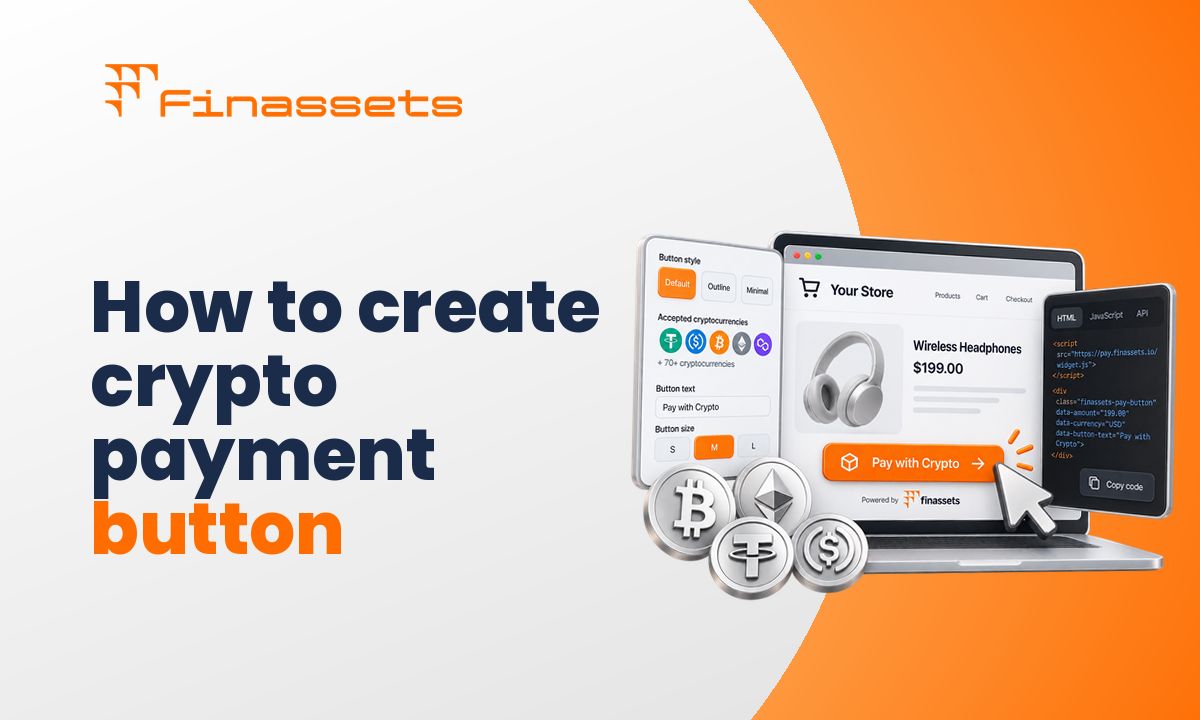
Traditional e-commerce checkout demands shopping carts, plugins, API integrations, and developers. Crypto payment links eliminate all that complexity. You create a link, embed it in invoices or messages, and accept payments without technical integration.
No website needed. Post your link on social media, send it via SMS, or include it in a PDF invoice. These methods enable efficient acceptance of payments across borders without building anything.
Ideal for flexible scenarios. One-off invoices, high-ticket deposits, and international clients all work perfectly. Using crypto payment links allows businesses to reach a wider client base globally without complex integrations.
Reduced overhead. The provider handles network fees, cryptocurrency routing, and conversion if enabled—you focus on your business.
What crypto payment links solve — and what they don’t
| Gives | Doesn’t give |
| Alternative payment rail for crypto-native users | Does not replace card infrastructure |
| Blockchain transaction visibility | Does not guarantee higher conversion |
| QR code and hosted checkout flow | Does not eliminate compliance obligations |
| Cross-border payment capability | Does not remove network fees |
| Chargeback-resistant settlement | Does not prevent incorrect wallet transfers |
Operational considerations before you start accepting crypto payments
Crypto payment links reduce technical integration requirements, but merchants still need operational processes.
Before deployment, consider:
- Blockchain network fees vary by chain load
- Settlement speed differs between networks
- Customers need access to a crypto wallet
- On-chain payments require confirmation time
- Stablecoins reduce volatility but not infrastructure risk
- Payment processors can still apply compliance controls
Typical components in a crypto payment flow
| Component | Function |
| Crypto payment gateway | Generates payment link and processes requests |
| Wallet address | Receives blockchain payment |
| QR code | Simplifies wallet payment flow |
| Blockchain explorer | Verifies transaction hash (TXID) |
| Payment webhook | Updates payment confirmation status |
| Settlement configuration | Controls crypto-to-fiat processing |
Who crypto payment links work best for
Crypto payment links are most useful when customers already use digital assets.
Relevant for:
- SaaS crypto payment flows
- Freelance crypto payment requests
- Digital product payment
- Cross-border ecommerce
- High-risk merchants
- Crypto-native platforms
- Online donations
- Subscription crypto billing
Less relevant for:
- Fiat-only retail businesses
- Local stores without crypto demand
- Businesses dependent entirely on bank payment flows
Crypto payment links work as an additional payment method, not a universal replacement for traditional payments.
Test crypto payment link generation using the free demo
You can test the crypto payment link generator without signing up.
👉 Try the Finassets demo environment.
You can:
- Simulate crypto payment link creation
- Review the crypto invoice template
- Test the user experience
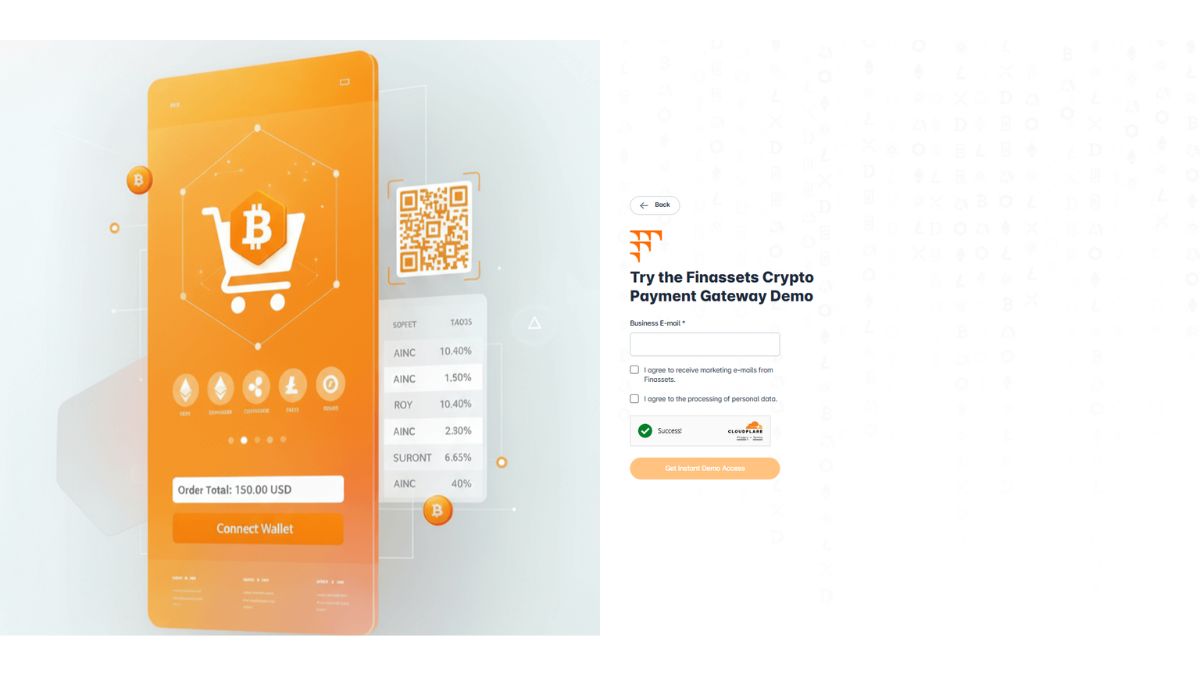
Test features and explore the platform without registration. Just enter your email and receive instant access.
Finassets payment processing fee structure
Finassets uses a volume-based model:
- 0.40% → 0.20% depending on your transaction volume
Fee components
| Component | Description |
| Payment gateway fee | Paid to the payment provider |
| Network fee | Paid to the blockchain network |
Blockchain fees depend on:
- Blockchain network (TRON, Ethereum, Bitcoin)
- Network load (energy/gas fees)
- Settlement configuration
If you plan to accept USDT TRC20 payments via crypto payment links, Finassets is a smart choice thanks to its built-in TRON network optimization system. This advanced blockchain fee optimization system lets you save over 50% on USDT (TRC20) network fees.
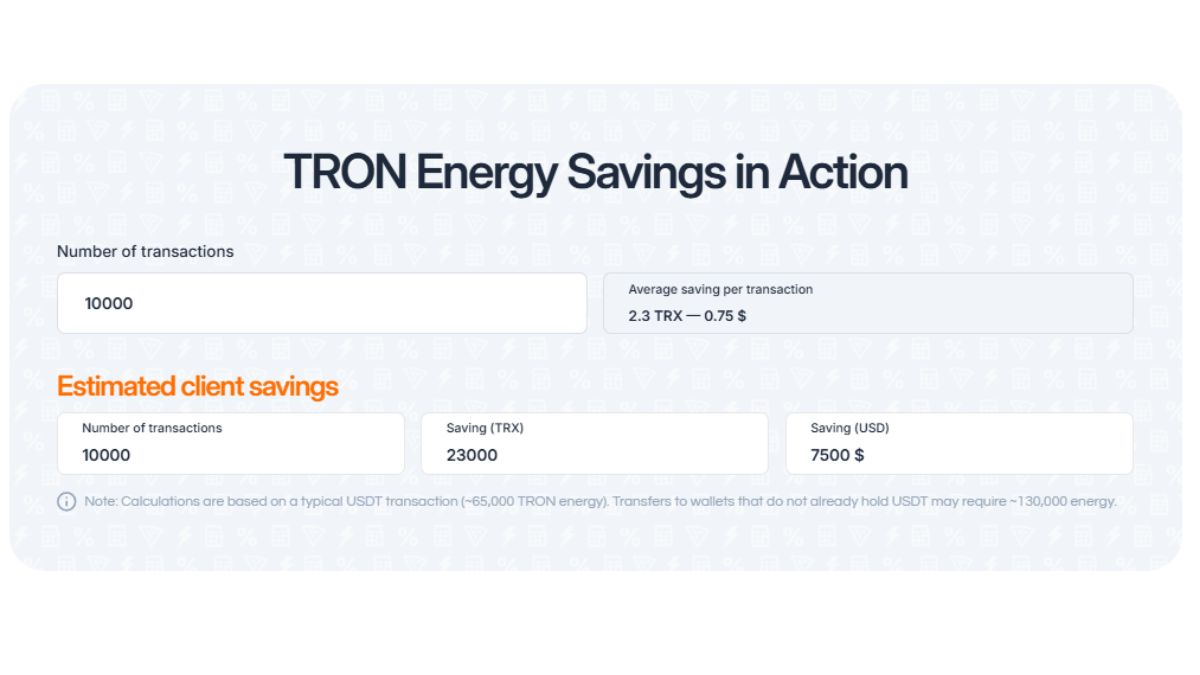
👉 Enter your average transaction volume and discover how much you can save on USDT (TRC20) network fees using our TRON energy calculator.
Supported blockchain networks and assets
Finassets supports multiple blockchain payment networks and cryptocurrencies (70+), including:
- Bitcoin (BTC)
- Ethereum (ETH)
- USDT
- USDC
- Polygon
- Solana
- BNB Chain
- TRON
Network fees and blockchain settlement times depend on:
- Network congestion
- Gas fee conditions
- Blockchain architecture
- Layer 2 payment infrastructure
Checklist before creating a crypto payment link
- Do your customers already use cryptocurrency?
- Do you need cross-border payment coverage?
- Do you want an additional payment option?
- Can your accounting process digital asset settlements?
- Do you understand blockchain transaction fees?
- Do you need crypto-to-fiat conversion?
- Can you track payments through webhooks or dashboards?
- Do you need multi-chain payment support?
- Have you reviewed compliance requirements?
- Do you need hosted checkout instead of custom integration?
Start creating crypto payment links
Crypto payment links help businesses accept cryptocurrency payments without building a full blockchain payment infrastructure from scratch. For merchants serving crypto-native users, they provide additional payment flexibility, operational visibility, and cross-border settlement options.
👉 Create your Finassets account and start generating crypto payment links.
Article details
- Last updated: September 8, 2026
- Published by: Finassets
- Author: Alena K., Crypto Payment Solutions Specialist
- Category: Cryptocurrency Payments, Cryptocurrency Payment Gateways, Cryptocurrency Payment Links
- Reading time: 5–7 minutes
- Content type: Educational guide
- Audience: Businesses, merchants, SaaS companies, developers, and e-commerce owners exploring cryptocurrency payment solutions.
Editorial policy
This article is reviewed periodically to ensure the information remains accurate and reflects the latest developments in cryptocurrency payments, blockchain networks, stablecoins, and payment gateway technologies. Content is based on publicly available documentation, industry best practices, and practical payment infrastructure knowledge. It is intended for informational purposes only and does not constitute financial, legal, or investment advice.