By Anastasiia M., payments content, covering crypto processing for iGaming and eCommerce operators.
Updated: 2026-07-07
A large crypto deposit gets stuck at "Processing" most often because the amount crossed an internal review threshold the payment provider never publishes, and the operator's own support team has no visibility into that review status to explain it to the player. One licensed operator ran into exactly this: a player tried to deposit $50,000 in USDT via TRC-20, the transaction showed "Processing" for several days with no status change, and the player, expecting near-instant confirmation, started looking at alternative platforms.
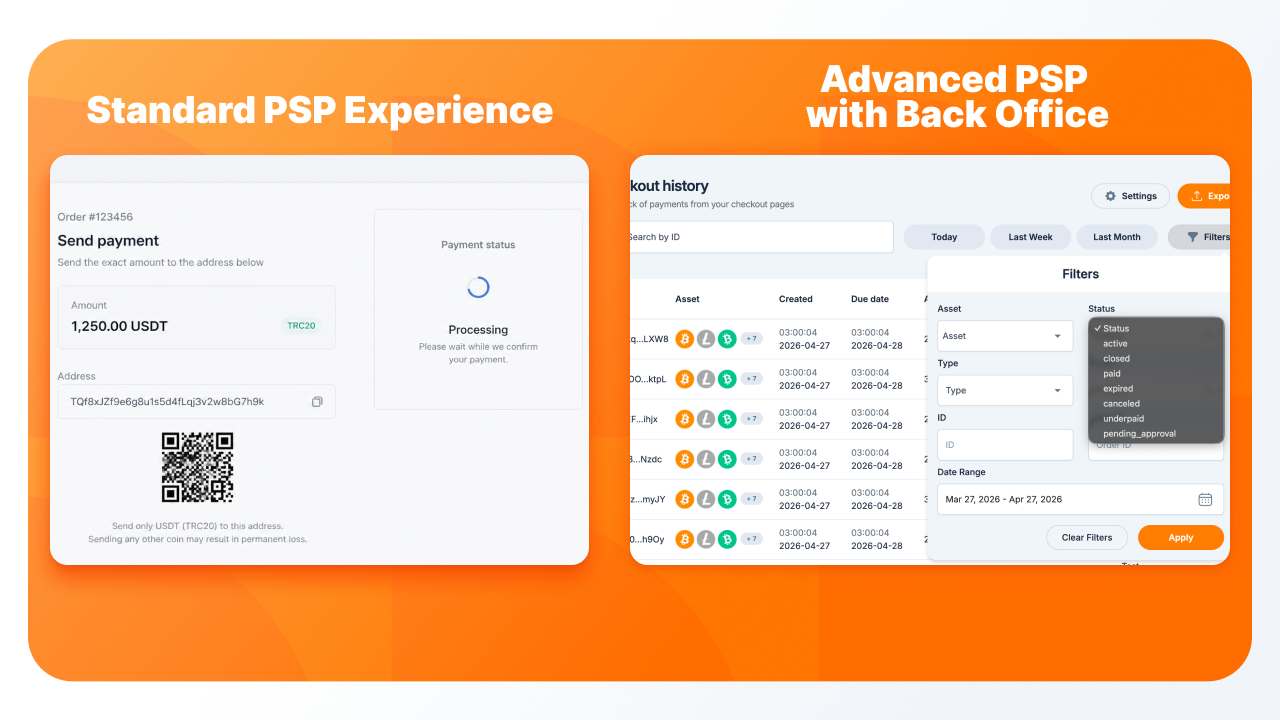
This article breaks down the operational causes behind stuck crypto deposits, what it costs an operator in retention and finance-team time, and what to check when choosing a payment provider built to avoid this specific failure mode.
Why crypto deposits get stuck: four operational causes
Deposit delays rarely come from the blockchain itself; they come from how the payment provider's internal systems handle the transaction once it arrives.
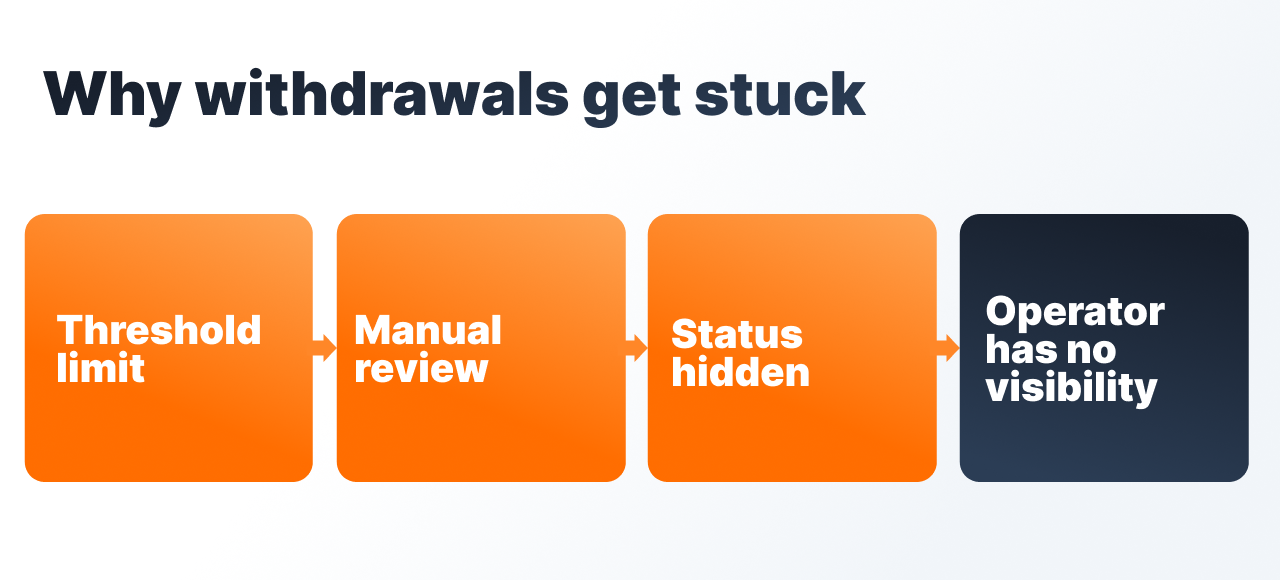
Threshold checks. Many providers set an internal amount threshold above which a transaction is routed to manual review rather than processed automatically. This is standard risk practice, but if the threshold and review timeline aren't documented before integration, the operator has no way to anticipate it.
Manual review without visibility. Stricter KYC and AML procedures mean transactions above a threshold get additional scrutiny, sometimes taking hours, sometimes days, particularly where the provider lacks automated tools for fast review.
Hidden status. When the operator's support team sees only the same generic "Processing" label the player sees, there is nothing concrete to tell the player beyond "please wait," regardless of how experienced that support team is.
No detailed reporting. Providers that don't expose transaction-level reporting leave the operator unable to identify the specific cause of a given delay, which makes it difficult to manage what the player is told or to fix the underlying pattern.
These four causes compound in their effect on player trust: in an industry where withdrawal and deposit speed rank among the top drivers of loyalty, a deposit that sits unexplained for days does more damage to retention than a single losing session ever does.
What a stuck deposit actually costs: three types of damage
Liquidity. While a large deposit sits in "Processing," neither the operator nor the player can treat those funds as settled, which complicates same-day accounting and player balance management.
Reputation. The casino absorbs the reputational cost of a delay that originates in the payment provider's infrastructure, not the operator's own decisions; the player experiencing the delay rarely distinguishes between the two.
Operational time. Finance teams without automated reconciliation spend meaningful hours manually matching transactions to player sessions and investigating individual delays, time that does not scale as deposit volume grows.
TRC-20 fee unpredictability adds a second, separate cost line
Independent of deposit delays, the standard TRON fee mechanism (burning TRX to pay for network resources) produces a variable cost per transaction: a direct burn transfer typically runs $1.60-$4.20 depending on wallet state and network conditions at the time (Eco Network, "USDT TRC-20 Fees 2026"). At high payout volume, this turns a routine cost into a line item that is genuinely difficult to plan around, since the same transaction type can cost a different amount from one week to the next.
The TRON Energy Saving System addresses this specific mechanism: instead of burning TRX in full on every transaction, Finassets pre-purchases Energy in bulk so the transaction cost is fixed before confirmation rather than determined after the fact, with fee reduction depending on Energy availability and network conditions (based on client results; individual outcomes vary).
From manual reconciliation to automated tracking: what changes in practice
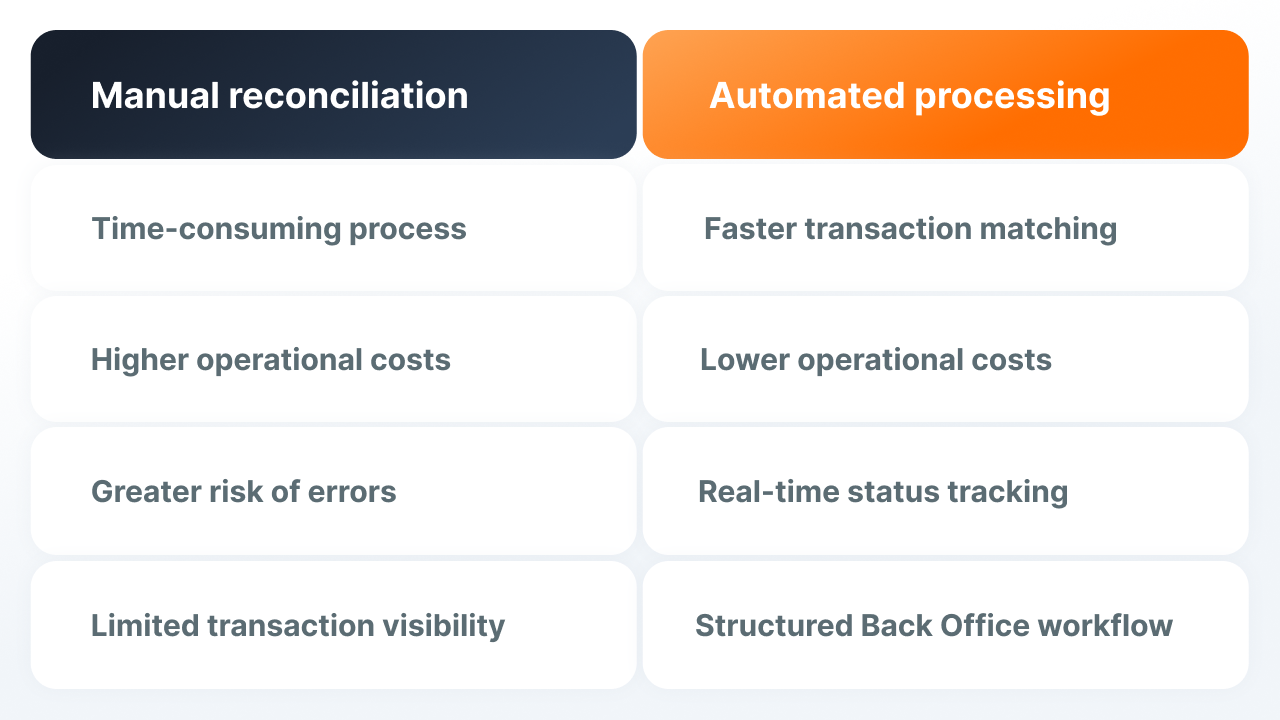
| Without automated tracking | With a Structured Checkout and detailed Back Office |
|---|---|
| Finance team manually matches each transaction to a player session | Reconciliation happens automatically against a per-session unique address |
| Delay causes are invisible to the operator's own support | Every transaction status, including intermediate review states, is visible in real time |
| TCO rises with transaction volume, since manual work scales with it | Reconciliation effort stays roughly flat as volume grows |
| Player told only "please wait" | Support can point to a specific status rather than a generic holding message |
One licensed operator that moved from manual reconciliation to this kind of structured, automated tracking reported a 70% reduction in finance-team operating costs (in this specific case; individual outcomes vary, and the result depends on prior process maturity and transaction volume).
Who benefits from crypto deposits, and who runs into friction
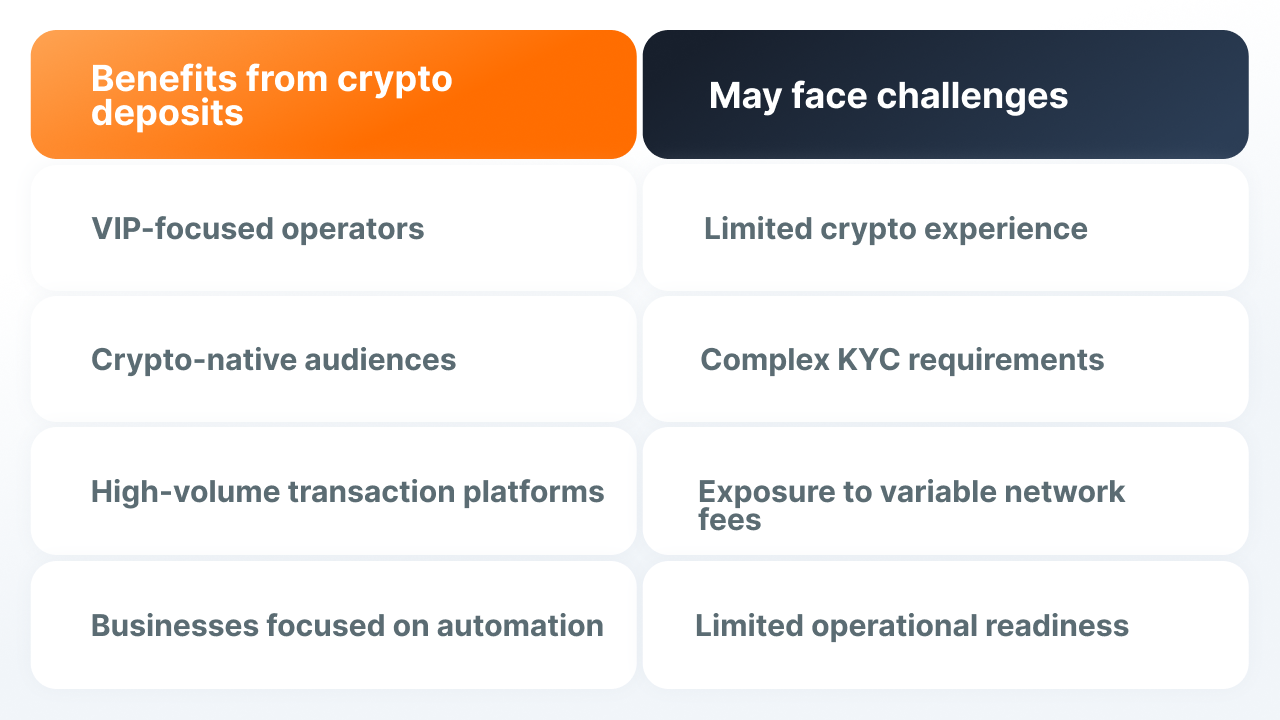
Tends to benefit: operators with a meaningful share of VIP players who expect fast, predictable transactions; platforms serving a crypto-native audience already comfortable with wallets; businesses looking to reduce manual reconciliation load through automation.
Tends to run into friction: operators with no prior experience managing crypto transactions, who may hit avoidable technical issues; platforms that haven't adapted KYC processes for crypto-specific review steps; operators that don't account for TRC-20 fee variability and are surprised by it at volume.
Where crypto deposit processing doesn't solve the problem
None of this applies if a business's audience doesn't hold crypto wallets in the first place, since the constraint is on the customer side, not the payment provider's architecture. It also matters less for operators processing very low deposit volumes, where the cost of manual reconciliation is still small in absolute terms. And it doesn't remove the need for proper KYC and AML controls: a provider that processes deposits fast but skips review entirely creates a different, larger risk than the one this article addresses.
Choosing a crypto processor for iGaming deposits: what to check
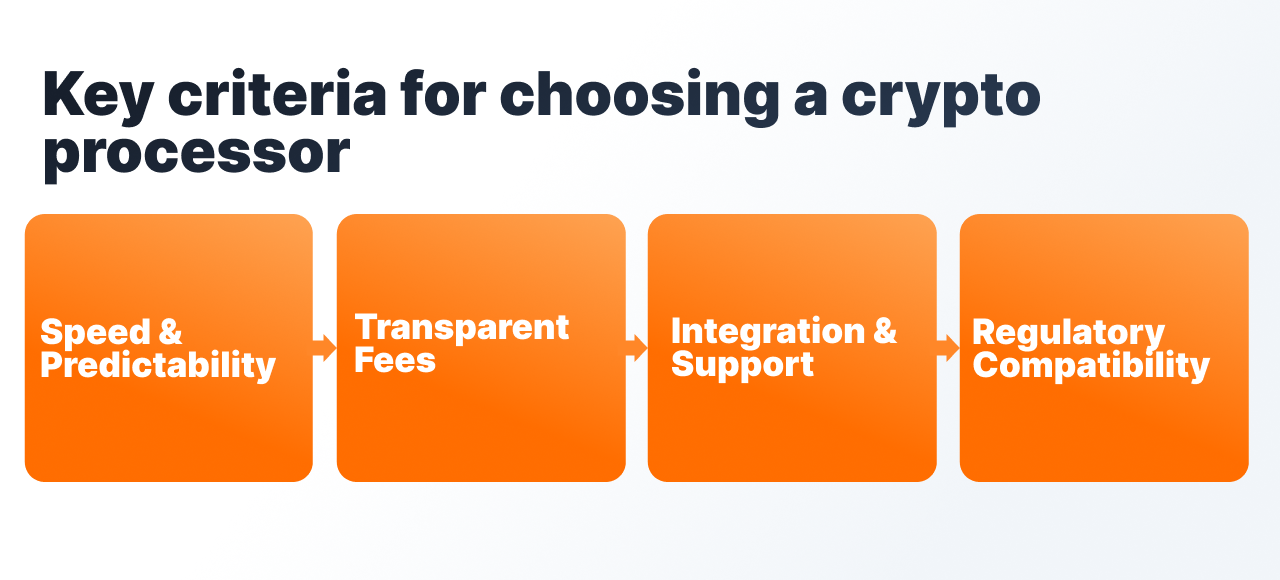
Transaction speed and predictability. TRC-20 USDT typically confirms in seconds once past any internal review step; the review step itself, not the blockchain, is usually what determines whether a deposit feels instant or stuck.
Transparent, fixed fees. A provider that pre-purchases network Energy in bulk can fix the TRC-20 transaction cost before confirmation rather than leaving it to move with TRX's market price.
Integration and technical support. Integration timelines depend on API documentation quality and the scope of testing required for a given setup; support should be reachable through a channel like Telegram, with response-time quality metrics set out in the contract rather than left as a verbal promise.
Jurisdictional fit. Confirm that the provider's regulatory status is compatible with the licensing regime the operator holds (Curaçao, Anjouan, Kahnawake, and similar), since a mismatch here can stall onboarding regardless of how fast the technical integration itself goes.
Checklist before integrating a crypto processor
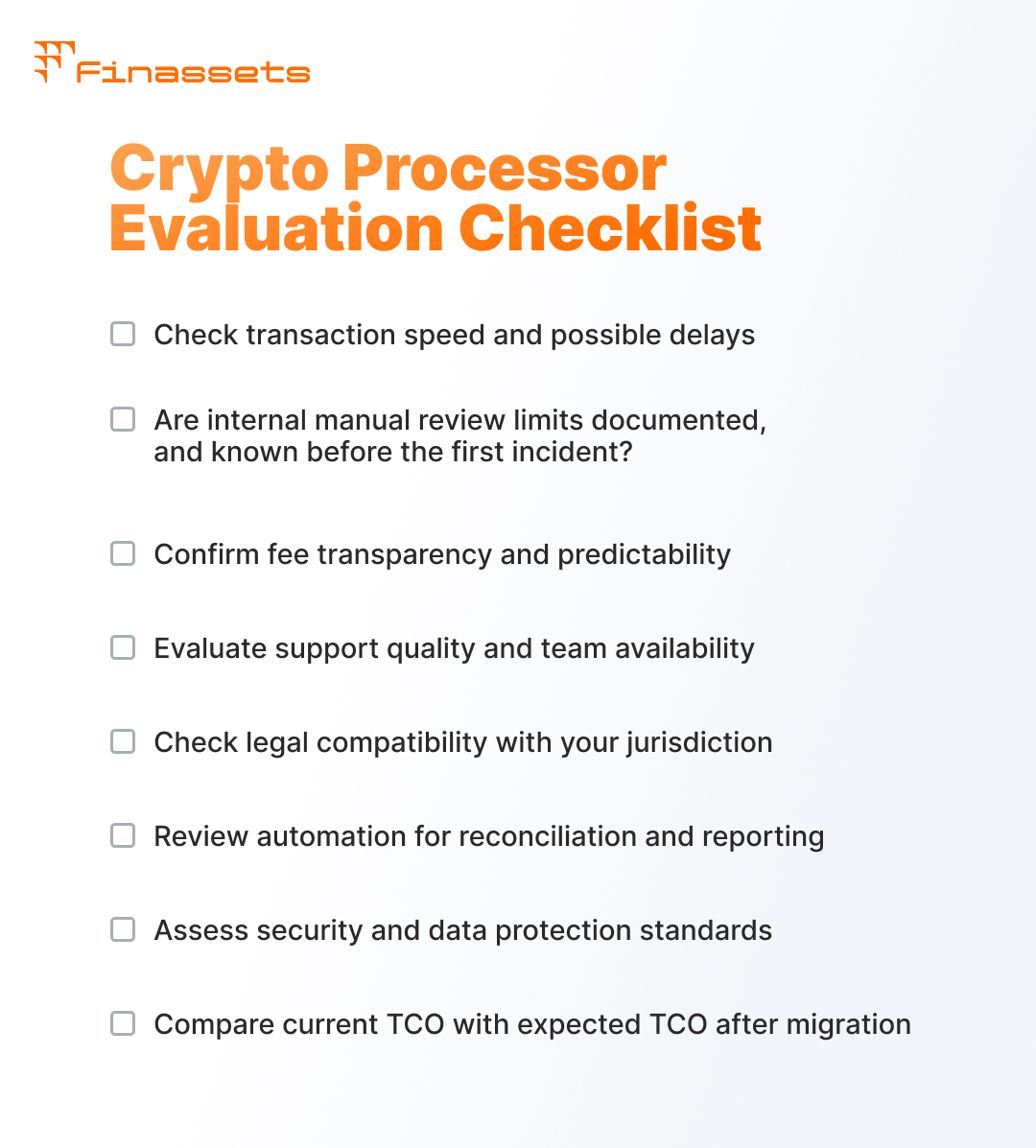
- Confirm typical transaction processing speed and where delays, if any, tend to occur.
- Confirm fee transparency: is the network fee fixed before confirmation or determined after the fact.
- Evaluate technical support availability and documented response-time commitments.
- Check the provider's regulatory status against your specific licensing jurisdiction.
- Confirm whether reconciliation and reporting can be automated, or requires manual matching.
- Review the provider's approach to transaction security and data protection.
- Compare current total cost of ownership against the projected TCO with the new provider.
Finassets: deposit visibility instead of an unexplained "Processing" status
Finassets is a Panama-registered provider of crypto payment infrastructure for licensed iGaming operators, digital goods platforms, and other regulated high-risk businesses operating cross-border, crypto-driven models.
The Back Office shows real-time status for every transaction, including intermediate states during manual review, so support can answer a player's question with a specific status rather than "please wait." Structured Checkout assigns a unique address per session for automatic reconciliation, and the TRON Energy Saving System fixes TRC-20 transaction costs before confirmation, subject to Energy availability. Onboarding typically runs 2-7 business days, subject to KYB and compliance review.
A stuck deposit is a provider architecture problem, not a player problem
The operational causes behind a deposit sitting at "Processing" almost always trace back to how the payment provider's system is built, not to anything the player or the operator's own team did wrong. Evaluating a processor on status visibility and fee predictability before integration is what prevents that first bad experience from becoming a support escalation.
Reach out to walk through your current deposit flow and where delays are actually coming from.
FAQ
Why does a crypto deposit show "Processing" for days with no update? Most often because the amount crossed an internal review threshold the provider doesn't publish, and the operator's support team has no visibility into that review's status beyond the same generic label the player sees. This is an architectural limitation of the payment provider's system, not a sign that the transaction has actually failed.
How much does a TRC-20 transaction typically cost, and why does it vary? Under the standard TRX-burn mechanism, a direct transfer runs roughly $1.60-$4.20 depending on wallet state and network conditions at the time (Eco Network, "USDT TRC-20 Fees 2026"), because the fee moves with the market price of TRX. Providers that pre-purchase Energy in bulk can fix the cost before confirmation instead.
Does automating reconciliation actually reduce finance-team costs? In at least one documented case, a licensed operator that moved from manual reconciliation to a structured, automated tracking setup reported a 70% reduction in finance-team operating costs; this figure reflects that specific case, and results vary depending on prior process maturity and transaction volume.
What should an operator check before integrating a new crypto processor? At minimum: real transaction processing speed and where delays occur, whether fees are fixed before or after confirmation, documented support response times, whether the provider's regulatory status fits the operator's licensing jurisdiction, and whether reconciliation can be automated rather than done manually.
Does crypto deposit processing work for every iGaming operator? No. It offers the most benefit to operators with a meaningful VIP or crypto-native player base and enough transaction volume that manual reconciliation is genuinely costly. Operators with low deposit volume or an audience without crypto wallets see limited benefit from optimizing this specific flow.
Is "instant" crypto deposit processing a realistic claim? Only past the internal review step. TRC-20 confirms on the blockchain in seconds once a transaction clears any manual threshold check; the review step itself, which depends on the provider's own risk policy, is usually what actually determines whether a deposit feels instant or gets stuck.