By Alena K., payments content, covering crypto processing for iGaming and eCommerce operators.
Updated: 2026-07-07
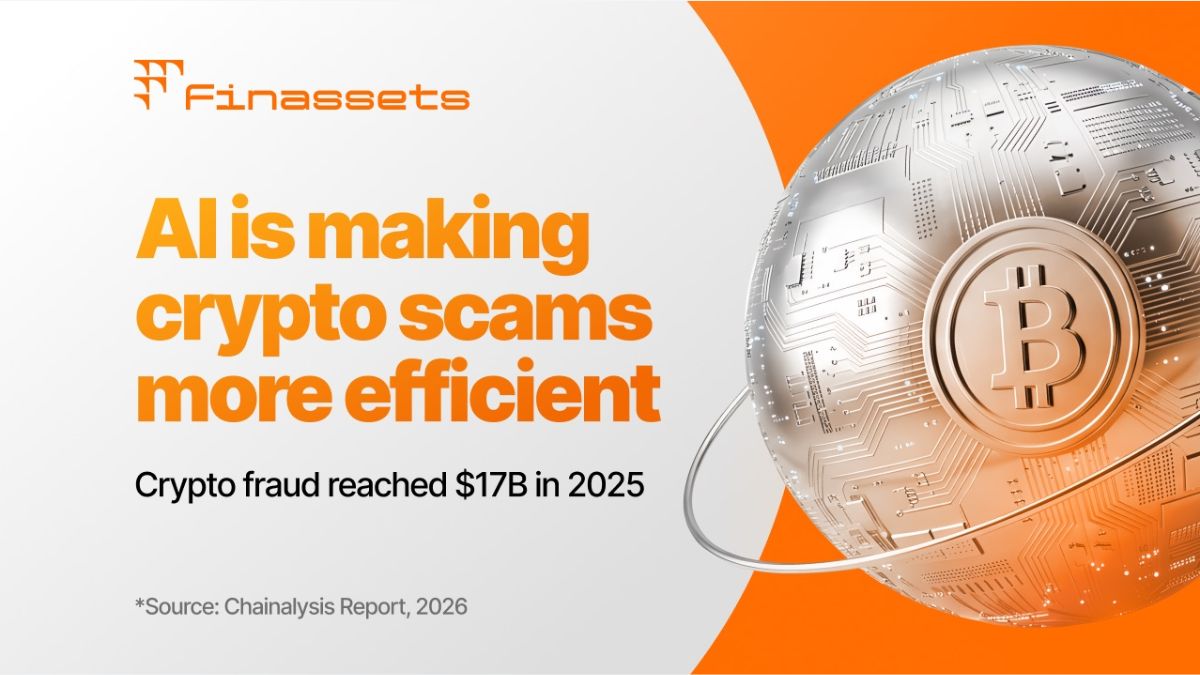
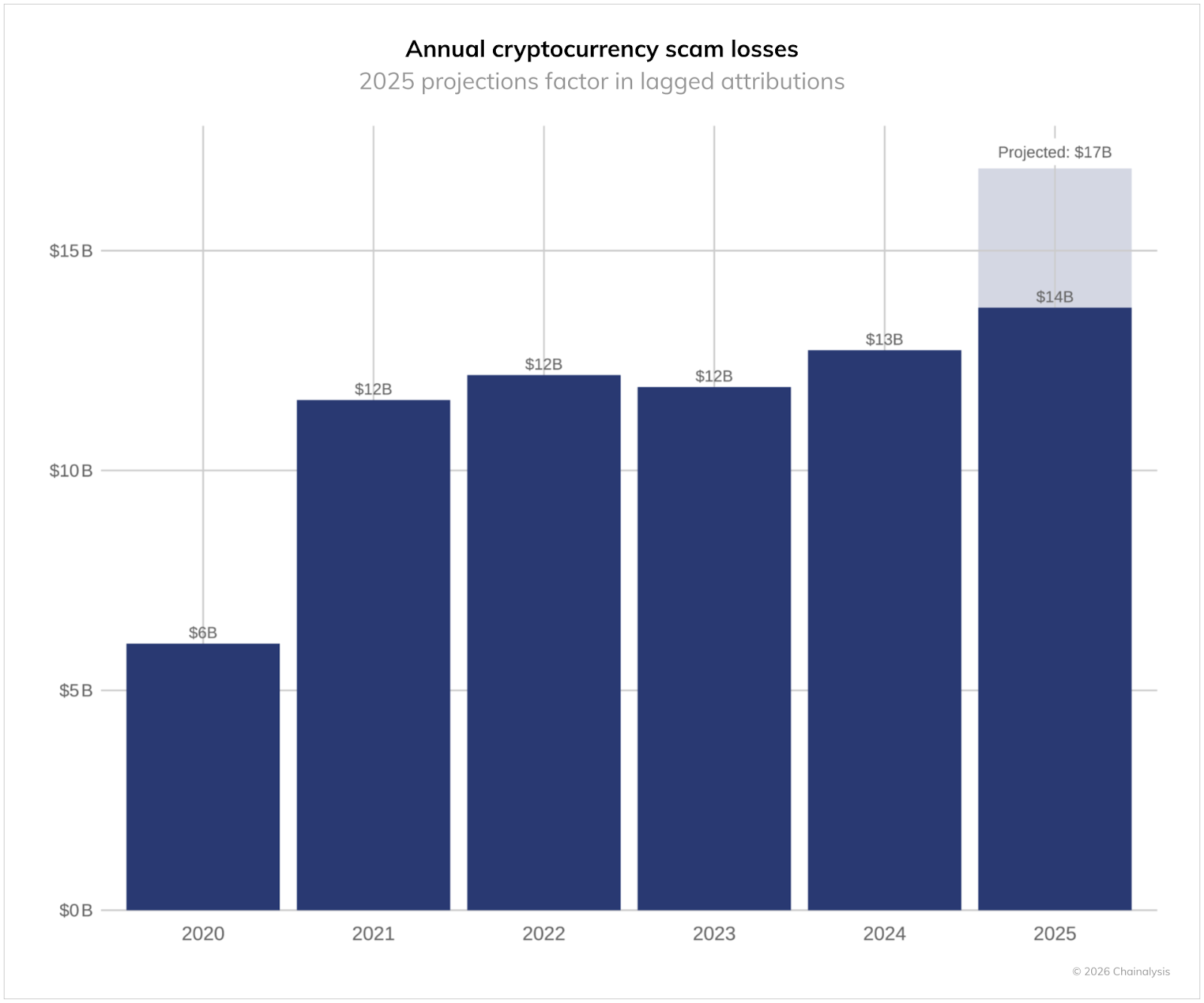
Crypto fraud is increasing in scale and effectiveness, but it isn't chaos or a failure specific to crypto: it reflects a normal evolution of risk as adoption grows. Chainalysis' report "Record $17 Billion Estimated Stolen in Crypto Scams and Fraud in 2025 as Impersonation Tactics and AI Enablement Surge" found that at least $14 billion in on-chain funds flowed into crypto scam addresses in 2025, a figure the firm expects may exceed $17 billion as additional illicit addresses are identified over time, and that the average scam payment rose from $782 to $2,764 in a single year (Chainalysis, 2026).
This article covers what's actually changing in the data, why impersonation has become the dominant risk category, and what a business can practically do about it.
Predictable risk is manageable risk
Crypto fraud is becoming more professional and more efficient. Scam operations are better organized and more focused on results, which mirrors what happened previously with other payment methods as they matured and reached wider adoption. Large, visible numbers make the problem look worse, but visibility is what enables analysis, enforcement, and prevention in the first place. A problem that's invisible can't be measured or prioritized; $14–17 billion in identified losses is a number regulators and platforms can actually act on.
Average scam losses are rising because scams are getting more persuasive, not more technical
The key change in the data is efficiency, not new attack techniques. The average scam payment increased from $782 to $2,764 in a single year, which shows scams are becoming more effective at persuading victims to send larger amounts, not that new technical vulnerabilities are being exploited (Chainalysis, 2026).
This shift reflects stronger use of psychology and trust rather than technical exploitation. AI increasingly supports these efforts by helping scammers communicate more convincingly and at greater scale; Chainalysis found AI-enabled scams were roughly 4.5 times more profitable than traditional scams over the same period (Chainalysis, 2026).
Impersonation is now the main risk area
Impersonation became the fastest-growing scam category, increasing by more than 1,400% year over year (Chainalysis, 2026). Criminals impersonate government services, company support teams, and other trusted institutions to convince victims to send funds directly.
These scams target user behavior and trust; they don't rely on breaking blockchain infrastructure or exploiting technical vulnerabilities in smart contracts or wallets. That distinction matters for where defenses should focus: this is a human-factors problem, not primarily a cryptography or protocol-security problem.

These fraud methods are not new; AI just accelerates them
Impersonation works because trust is universal. Similar patterns have existed for years in email fraud, phone scams, card fraud, and fake news. Artificial intelligence doesn't introduce new fraud methods; it accelerates existing ones by letting scammers interact with more victims simultaneously and appear more convincing while doing it.
Enforcement is becoming more effective
In 2025, law enforcement in the UK recovered 61,000 BTC and carried out major actions against large criminal organizations, including a $15 billion seizure connected to the Prince Group criminal organization (Chainalysis, 2026). These cases show that blockchain transparency supports large-scale investigations and asset seizures, even in complex, cross-border cases where traditional financial systems would offer far less visibility into fund flows.
Waiting increases damage, and unclear processes increase fraud
Fraud grows fastest where there is no early control. Once funds are transferred, recovery becomes difficult and slow, so reducing harm before a transaction completes is significantly more effective than reacting afterward.
Crypto fraud increases where controls are weak and processes are unclear. When crypto payments are integrated carefully with monitoring, filtering, and user protection mechanisms, the resulting risk profile becomes comparable to other payment methods. The pattern in the data is consistent: fraud expands where procedures are unclear and decreases where payment processes are structured and monitored. Crypto is not different from other payment methods in this respect.
Where this doesn't apply
This data describes scam and impersonation fraud specifically, funds victims are persuaded to send voluntarily, not smart contract exploits, exchange hacks, or protocol-level vulnerabilities, which follow different patterns and require different defenses. It also doesn't mean every business integrating crypto payments faces this risk equally: a B2B payment processor moving funds between known, verified counterparties has a very different exposure profile than a consumer-facing platform accepting payments from anonymous retail users. The controls that matter most depend heavily on which side of that line a business sits on.
With proper safeguards, businesses can benefit from adoption while limiting exposure
The data shows a consistent pattern: fraud expands where procedures are unclear and decreases where payment processes are structured and monitored. With proper safeguards in place, monitoring, filtering, and clear user protection mechanisms, businesses can benefit from crypto adoption while limiting their exposure to the specific fraud patterns Chainalysis documents.
For guidance on implementing secure crypto payments, contact the Finassets team to learn more.
FAQ
Is crypto fraud actually getting worse, or is it just more visible now? Both. The dollar figures are genuinely larger, Chainalysis estimates at least $14 billion in on-chain scam funds in 2025, likely to be revised toward $17 billion as more illicit addresses are identified, and the average scam payment nearly quadrupled from $782 to $2,764 in a single year (Chainalysis, 2026). But greater visibility is also part of the story: better on-chain analysis is what allows these numbers to be measured and acted on at all, which is a precondition for enforcement, not just a symptom of a worse problem.
What is driving the growth in impersonation scams specifically? Impersonation grew by more than 1,400% year over year, making it the fastest-growing scam category Chainalysis tracked in 2025 (Chainalysis, 2026). Criminals impersonating government services, company support teams, and other trusted institutions exploit universal trust patterns rather than technical vulnerabilities, and AI tools have made it easier for scammers to run these operations more convincingly and at greater scale.
Does AI create new types of crypto fraud, or does it just make existing fraud worse? It makes existing fraud methods more effective rather than introducing new ones. AI helps scammers communicate more convincingly and interact with more victims simultaneously, which is consistent with Chainalysis finding AI-enabled scams were about 4.5 times more profitable than traditional scams over the same period (Chainalysis, 2026). The underlying tactic, trust-based impersonation, isn't new; the scale and persuasiveness are what changed.
Is law enforcement actually able to recover stolen crypto? Yes, and 2025 produced some of the largest recoveries on record: UK law enforcement recovered 61,000 BTC, and a separate action seized $15 billion connected to the Prince Group criminal organization (Chainalysis, 2026). Blockchain transparency is specifically what makes this possible: transactions are traceable in a way that supports large, cross-border investigations more effectively than some traditional financial systems allow.
Does accepting crypto payments expose a business to more fraud risk than accepting cards? Not inherently. The Chainalysis data shows fraud risk tracks the quality of controls around a payment process, not the payment method itself: crypto integrated with monitoring, filtering, and user protection mechanisms shows a risk profile comparable to other payment methods. The businesses with the highest exposure are typically ones that added crypto payments without building equivalent controls, not businesses using crypto as such.
What can a business actually do to reduce crypto fraud exposure? Focus on catching problems before funds move, since recovery after a transfer is difficult and slow. That means monitoring for unusual patterns, filtering suspicious transactions, and giving users clear protection mechanisms and clear information rather than relying on users to recognize sophisticated impersonation attempts on their own. Structured, monitored payment processes are what the data associates with lower fraud rates, not the choice of payment method itself.