By Katerina V., payments content, covering crypto processing for iGaming and eCommerce operators.
Updated: 2026-07-07
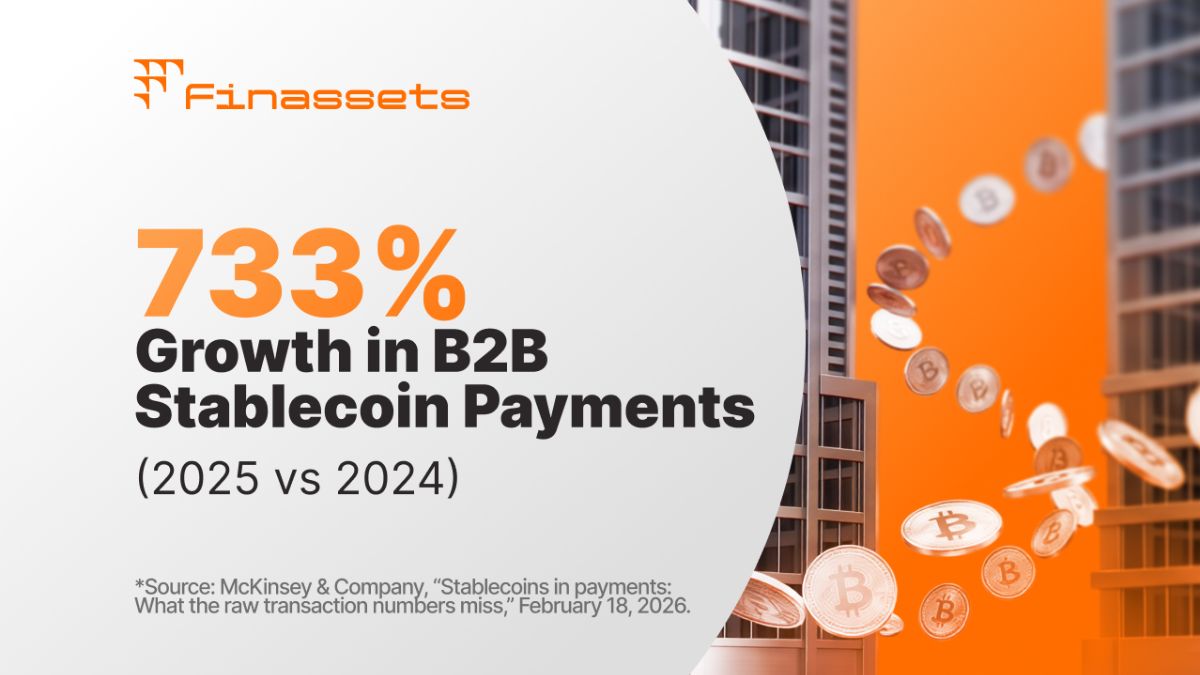
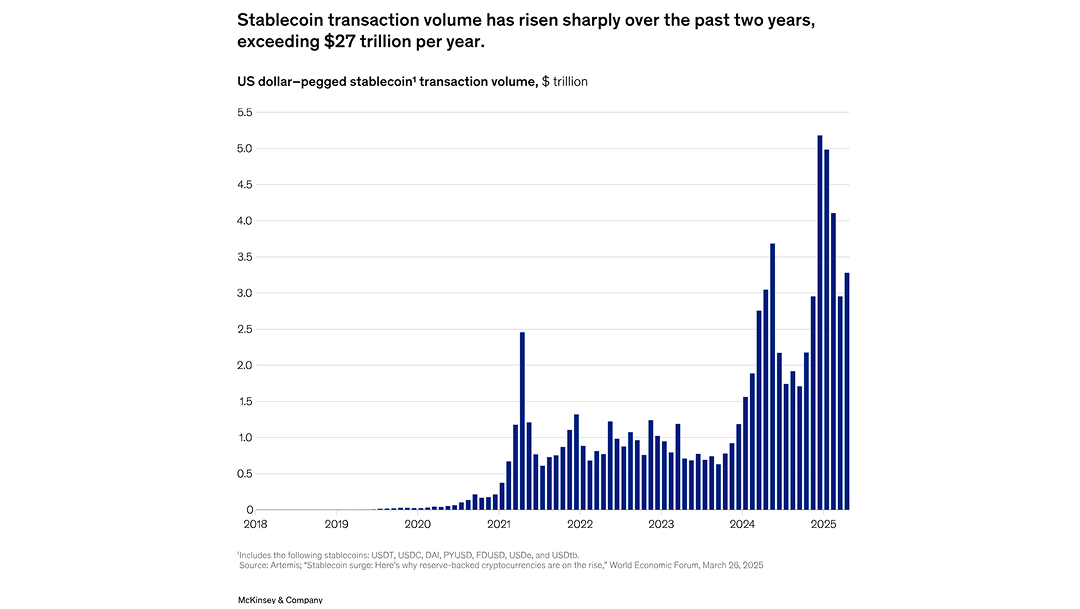
Stablecoin adoption is accelerating because scale and regulatory clarity are moving together for the first time. According to the 2025 Global Payments Report by McKinsey & Company, stablecoin issuance has doubled since early 2024, daily transaction volumes now reach approximately $30 billion, and regulators in the United States, European Union, United Kingdom, Hong Kong, and Japan are actively building clear rules around reserves, licensing, and AML/KYC requirements (McKinsey, 2025).
This article covers what's actually driving that adoption, why businesses are moving away from traditional bank transfers for specific use cases, and where stablecoins fit alongside cards and bank rails rather than replacing them.
Regulation and scale are reinforcing each other
The McKinsey report frames stablecoin growth as scale and regulatory clarity feeding into each other. As issuance grows and transaction volumes increase, regulators are responding with clearer frameworks designed to integrate stablecoins into existing financial systems rather than treat them as an external risk (McKinsey, 2025).
This regulatory momentum reduces uncertainty for businesses and opens stablecoins up to everyday operational payments, not just crypto-native activity. At Finassets, this same shift is visible across client activity: more of the demand is coming from businesses running standard cross-border settlement and payout operations, not from crypto-first companies experimenting with a new rail.
Why some companies are moving away from traditional bank transfers
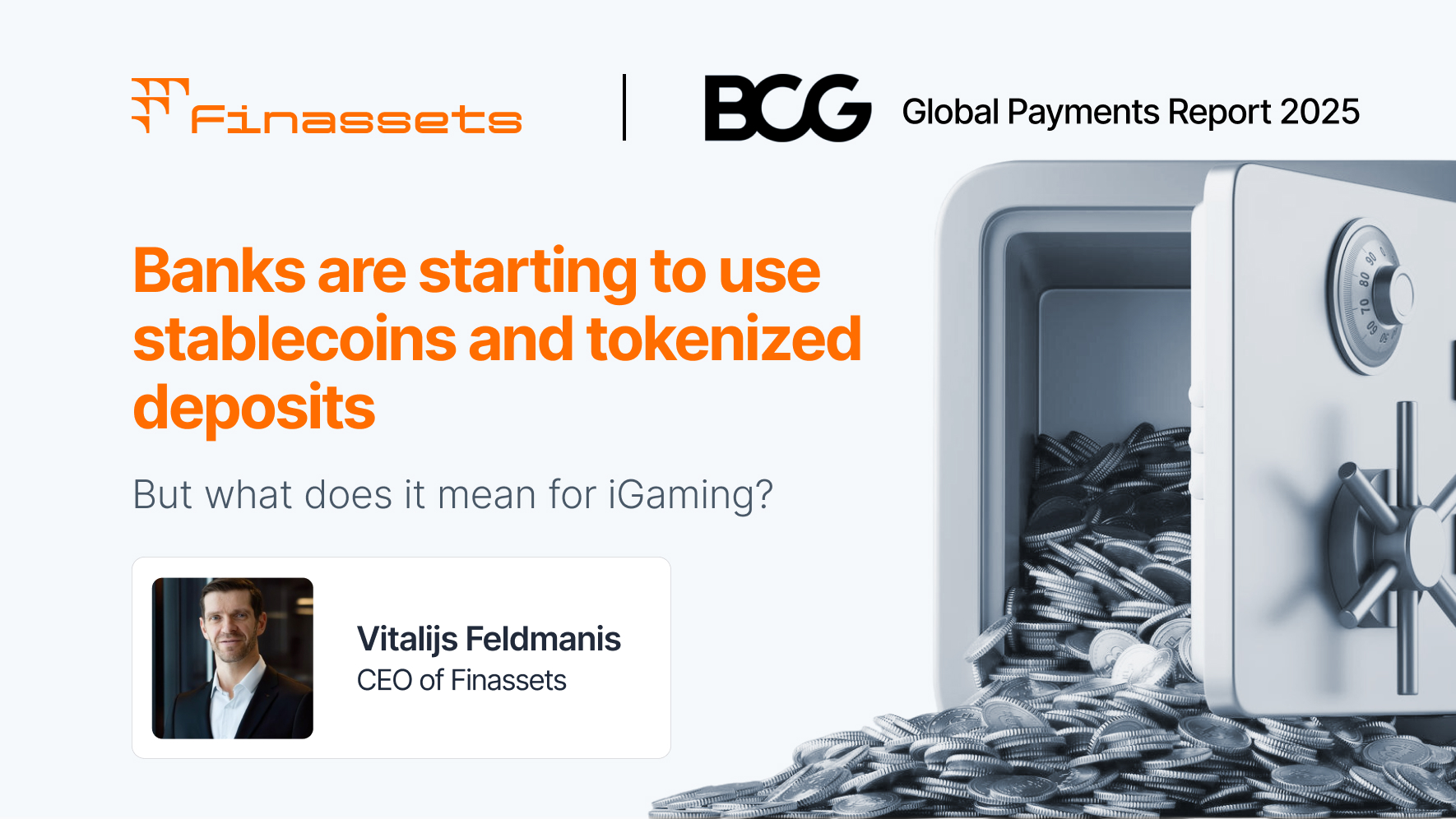
Speed and availability are the most immediate difference businesses notice. As Vitalijs Feldmanis, CEO of Finassets, puts it:
"Stablecoin transfers are instant and work 24/7, there's no need to wait for banks to open. Commissions are just cents, especially on networks like Polygon, BEP20, or TON. And as more countries introduce clear licensing and compliance rules, using digital currencies becomes safer and easier for companies."
Unlike traditional bank transfers, stablecoins operate continuously and don't depend on banking hours or intermediary settlement cycles, which is particularly relevant for businesses operating across time zones and jurisdictions.
Cost efficiency matters as much as speed
Instant settlement gets the attention, but Finassets treats cost transparency and predictability as equally important. Vitalijs Feldmanis describes the approach:
"Payments cost less, commissions go down from 0.4% to 0.2%, plus network optimization on TRON cuts expenses by up to 50%+ compared to the standard burn model, depending on Energy availability and network conditions (based on client results; individual outcomes vary). We also support USDT on TON, where fees are minimal. Companies can easily create invoices, payment links, or mass payouts, and export full reports for accounting."
That commission range reflects Finassets' progressive fee scale, 0.40% → 0.30% → 0.25% → 0.20% by volume, with the TRON Energy Saving System covering the TRC20 network-fee optimization specifically. Lower commissions, network-level fee optimization, and built-in invoicing or payout tools let companies manage digital payments without giving up transparency or control over the actual cost breakdown.
Where this doesn't apply
Stablecoins are not replacing cards or bank transfers for most day-to-day consumer spending, and the McKinsey data doesn't suggest that's the trajectory. Adoption is concentrated where existing rails create real friction: cross-border settlement, treasury operations spanning multiple currencies, and businesses whose counterparties already hold stablecoins. For a company whose customers and suppliers operate entirely within one country's banking system, the case for switching a working payment flow to stablecoins is weak, since the main benefits (24/7 settlement, reduced cross-border friction) don't apply to a purely domestic flow.
A multirail future, not a replacement
Finassets' experience lines up with McKinsey's central conclusion: the future of payments is multirail. Rather than replacing existing systems, stablecoins are joining them. Cards, bank transfers, and stablecoins are increasingly used side by side within a single business, which gives that business more flexibility, faster settlement where it matters, and clearer visibility across payment flows.
Stablecoins are no longer positioned at the edge of finance. With growing scale, declining costs on the right networks, and clearer regulatory frameworks, they are becoming a practical, ordinary component of payment infrastructure rather than an experimental add-on.
Connect with the Finassets team to see how a stablecoin payment gateway could reduce costs and speed up settlement for your company.
FAQ
Is stablecoin adoption actually growing, or is this mostly speculative trading volume? Both things are true, and it matters which one you're looking at. McKinsey's 2025 Global Payments Report shows stablecoin issuance has doubled since early 2024, with daily transaction volumes around $30 billion (McKinsey, 2025). Separately, McKinsey's more detailed February 2026 analysis found that once trading flows and internal transfers are filtered out, real annual payment volume is closer to $390 billion, still substantial, but a fraction of headline "trillions in volume" figures often quoted for the space (McKinsey, 2026).
Why are regulators becoming more open to stablecoins instead of restricting them? Because scale reached a point where treating stablecoins as an unregulated fringe activity created more risk than integrating them. Regulators in the US, EU, UK, Hong Kong, and Japan are actively building frameworks covering reserves, licensing, and AML/KYC requirements specifically so stablecoins can operate inside the existing financial system rather than outside it (McKinsey, 2025). Clearer rules reduce uncertainty for businesses deciding whether to adopt.
What makes stablecoin transfers faster than a bank wire? Stablecoin transfers settle on a blockchain rather than through a chain of correspondent banks, so they aren't limited to banking hours and don't wait on intermediary settlement cycles. That means transfers can move around the clock, which particularly matters for cross-border payments where multiple banks and time zones are otherwise involved in a single transfer.
How much cheaper are stablecoin payments compared to traditional rails? It depends heavily on the network and the volume. Finassets' own commission scale runs from 0.40% down to 0.20% by volume, and network-level costs can be reduced further on TRON specifically: pre-purchasing Energy in bulk can cut TRC20 network fees by up to 50%+ compared to the standard burn model, depending on Energy availability and network conditions (based on client results; individual outcomes vary). Networks like TON and Polygon also carry very low fixed network fees, often a fraction of a cent per transfer.
Are stablecoins replacing cards and bank transfers? No, and that's not what the data points to either. McKinsey frames the shift as a multirail model: cards, bank transfers, and stablecoins increasingly operate side by side within the same business, each used where it fits best, rather than one replacing the others outright. The value comes from having more settlement options, not from abandoning existing ones.
Which businesses see the most benefit from adopting stablecoin payments right now? Businesses with real cross-border settlement needs, multi-currency treasury operations, or counterparties who already hold stablecoins see the clearest benefit, since that's where bank-hour dependency and correspondent-banking friction are most costly today. A business operating entirely within one domestic banking system, with no cross-border flows, has a much weaker case for switching, since the specific frictions stablecoins address don't apply to that flow.