

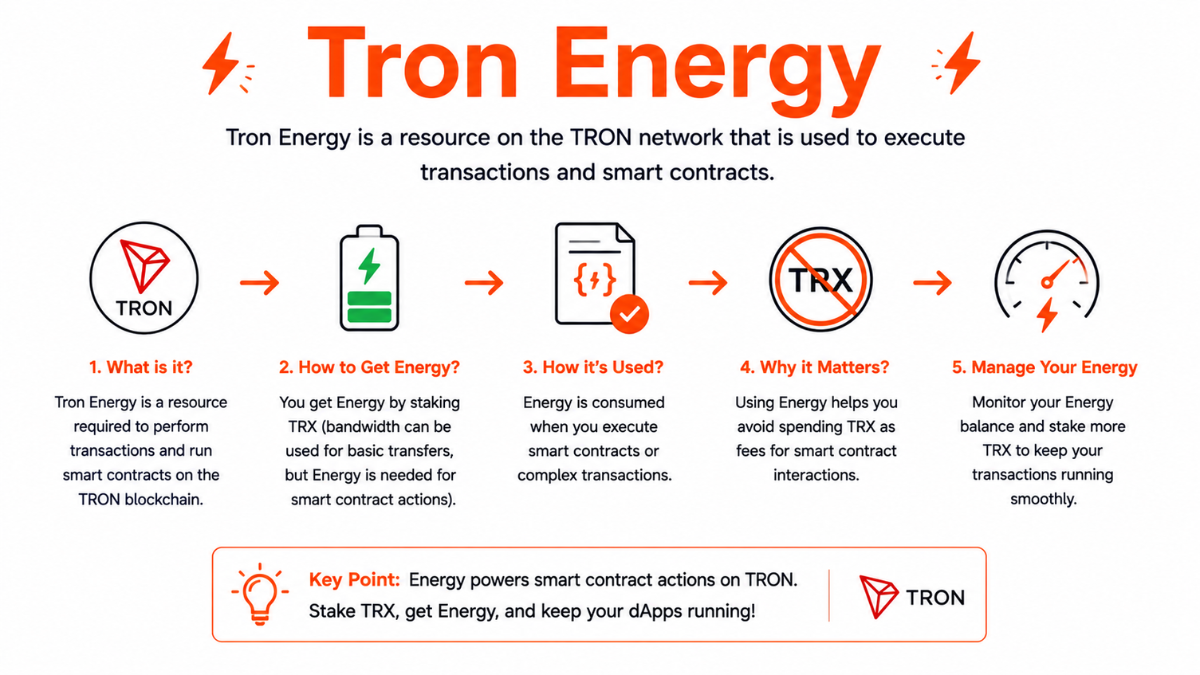
How the Tron Resource Model Works
Tron does not use a simple gas fee model like Ethereum, where every transaction burns a variable amount of the network's native currency based on computational demand. Instead, Tron's fee mechanism is built around two separate network resources: Bandwidth and Energy. Bandwidth covers the byte size of any transaction — simple TRX transfers, for example, consume only Bandwidth. Energy covers the computational cost of executing smart contract operations — which includes every TRC-20 token transfer, because TRC-20 tokens are smart contracts.
Both resources regenerate passively over time or can be obtained by staking TRX. When a wallet's available Energy or Bandwidth is insufficient to cover a transaction, the network burns TRX from the wallet's balance to compensate — effectively charging a fee in TRX for the resource shortfall. The key insight for payment gateways is that by maintaining a sufficient staked TRX balance — and therefore a continuous supply of regenerating Energy — they can execute high volumes of TRC-20 USDT transfers at near-zero cost, with TRX burning only as a fallback when Energy reserves are temporarily depleted.
Energy Rental Markets — an Alternative to Staking
For gateways or businesses that cannot commit the capital required to stake sufficient TRX, secondary Energy rental markets have emerged. Platforms such as Tronsave, TronEnergy.io, and others allow businesses to rent Energy from TRX stakers who have surplus capacity, paying TRX or USDT per unit of Energy rented. Rental prices fluctuate with demand but typically represent a significant discount compared to the TRX-burning cost of not having Energy.
Energy rental works by the renter depositing TRX with the rental service, which then delegating Energy from its pooled staked TRX to the renter's wallet address for a defined period. During that period, the renter's transactions consume Energy from the delegated pool rather than burning TRX. Payment gateways with predictable transfer volumes can negotiate fixed-rate daily Energy allocations; those with variable volumes can use spot rental markets for surge capacity.
Energy Management as a Gateway Operational Cost Driver
For payment gateways where TRC-20 USDT is a primary settlement asset — which describes a significant portion of the global crypto payment market — Energy management is a material operational cost variable. The difference between a well-optimised Energy strategy (near-zero per-transfer costs through adequate staking) and a poorly managed one (paying TRX burn fees on every outgoing transaction) can represent tens of thousands of dollars per month in operational cost differences at high volumes.
Tron Energy optimisation for settlement transactions additionally involves batching outgoing transfers to minimise the number of contract interactions: a gateway that sends 100 individual USDT transfers when a single batch transfer smart contract call could handle all 100 in one contract execution significantly reduces Energy consumption per effective transfer. Some gateways implement custom batch transfer contracts on Tron specifically to optimise Energy use for bulk merchant settlement runs.
Compliance Note: This glossary entry is provided for general educational purposes only and does not constitute financial, investment, legal, or tax advice. Industry terminology may vary across jurisdictions and providers; definitions herein may not directly reflect the specific features, terms, or specifications of Finassets' services. For details on Finassets' offerings, please refer to official product documentation or contact our team directly.