

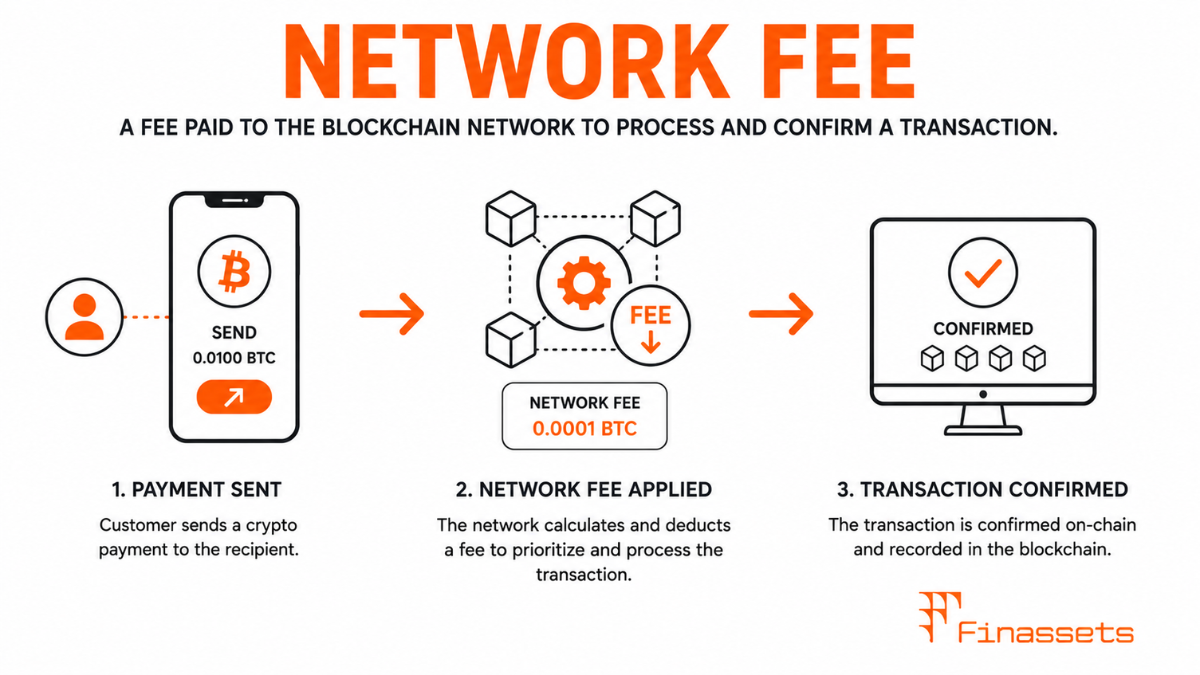
How Fee Markets Work on Different Blockchains
Network fees are not fixed costs — they are determined by market mechanisms that balance demand for block space against available supply. The mechanism differs between major blockchains:
On Bitcoin (PoW), fees are set by a first-price auction: users specify how much they are willing to pay per byte of transaction data (in satoshis per virtual byte, sat/vB), and miners include transactions in descending fee-rate order until a block is full. During low-demand periods, transactions paying even 1 sat/vB may confirm within a few blocks. During high demand, the minimum competitive fee rate can spike to hundreds of sat/vB, making small Bitcoin transactions economically impractical.
On Ethereum (post EIP-1559), the fee model is a base fee (burned, not paid to validators, adjusted algorithmically each block based on how full the previous block was) plus a priority tip (paid to validators, set by the user). The base fee adjusts up by up to 12.5% per block when blocks are full and down when blocks are under half full, creating a more predictable fee environment while still allowing users to pay higher tips to accelerate confirmation during congestion.
Who Pays the Network Fee in Gateway Configurations
The treatment of network fees in a gateway integration depends on the gateway's fee model and what type of transaction is occurring:
● Incoming payments from customers: The customer pays the network fee when they send the transaction from their wallet. Most wallets calculate this automatically. The gateway receives the amount that arrives at the payment address, which may be less than the invoiced amount if the customer's wallet deducts the fee from the payment amount (a common cause of underpayments).
● Outgoing settlement to merchants (fiat via bank): No network fee — the bank transfer is a fiat transaction. Settlement fees are banking charges, not blockchain fees.
● Outgoing settlement to merchants (crypto/stablecoin on-chain): The gateway pays the network fee from its operational wallet. This fee is either absorbed in the gateway's processing margin, passed through to the merchant as a separate deduction, or embedded in the spread.
● Refund transactions: Outgoing crypto transactions initiated as refunds incur network fees. Gateways that execute refunds on merchants' behalf typically charge the network fee back to the merchant account or deduct it from the refund amount.
Network Fee Volatility and Its Impact on Merchant Costs
For Ethereum mainnet payments in particular, network fee volatility can make the economics of accepting crypto payments unpredictable. A gateway that processes ERC-20 USDT payments on Ethereum mainnet during a period of high network demand may face settlement transaction fees of $10–$50 per outgoing transfer — fees that, if absorbed by the gateway, significantly compress its margin, and if passed to merchants, create an unexpected cost surprise.
This volatility is one of the primary drivers of Layer 2 adoption for payment applications. Merchants and gateways that route ERC-20 stablecoin payments through Polygon, Arbitrum, or Base eliminate network fee volatility almost entirely — fees on these networks are stable at sub-cent levels regardless of Ethereum mainnet congestion. The trade-off is requiring customers to hold assets on the specific Layer 2 network, which is becoming easier as more exchanges and wallets support direct L2 withdrawals.
Compliance Note: This glossary entry is provided for general educational purposes only and does not constitute financial, investment, legal, or tax advice. Industry terminology may vary across jurisdictions and providers; definitions herein may not directly reflect the specific features, terms, or specifications of Finassets' services. For details on Finassets' offerings, please refer to official product documentation or contact our team directly.