

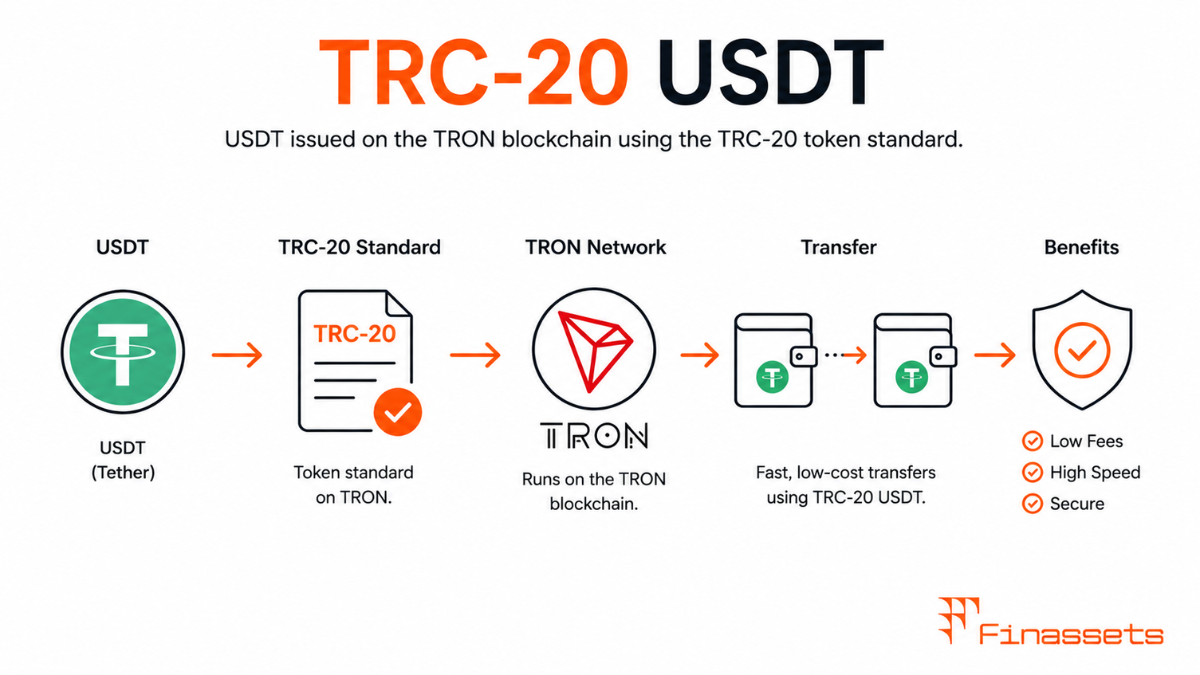
Why TRON Became Dominant for USDT Payments
USDT was originally issued on the Bitcoin blockchain using the Omni Layer protocol, then moved primarily to Ethereum as the ERC-20 standard became the DeFi and exchange standard. However, Ethereum gas fees became a significant barrier for small and medium payments during network congestion periods, sometimes exceeding $10–$50 per transfer. TRON offered a higher-throughput alternative with fees structured around a network resource model rather than a per-byte fee auction.
On TRON, accounts that freeze TRX tokens receive Bandwidth and Energy resources, which are consumed by transactions instead of a gas fee. A wallet with sufficient frozen TRX can send USDT transfers with effectively zero cost; wallets without resources pay small TRX fees that typically amount to less than $1 per transaction. For merchants and individuals making frequent small USDT transfers, this cost advantage made TRC-20 the default.
TRC-20 vs. ERC-20 USDT — Technical and Practical Comparison
|
Factor |
TRC-20 USDT (TRON) |
ERC-20 USDT (Ethereum) |
|
Typical transfer fee |
< $1 (often near zero) |
$1–$50+ depending on congestion |
|
Confirmation time |
~2–3 minutes |
~15 seconds to 5 minutes |
|
Block explorer |
Tronscan.org |
Etherscan.io |
|
Primary use case |
P2P transfers, merchant payments, exchange deposits |
DeFi, institutional, L2 settlement |
|
Centralisation risk |
Higher (fewer validators) |
Lower (many validators) |
|
MiCA compliance status |
TRON USDT subject to same rules as ETH USDT |
Under MiCA EMT framework |
How TRON's Bandwidth and Energy Model Works
Unlike Ethereum, where every transaction pays a fee denominated in ETH, TRON uses a dual-resource system. Bandwidth covers the byte size of the transaction; Energy covers smart contract execution (required for TRC-20 token transfers). Both resources regenerate over time (20% per day when frozen) or can be purchased by burning TRX.
A crypto payment gateway handling TRC-20 USDT at volume typically maintain a TRX balance in their operational wallets sufficient to cover Energy and Bandwidth costs across their expected transaction volume. The operational cost per TRC-20 USDT transfer is thus the TRX burned for resources, which at normal market rates is far lower than the equivalent gas fee on Ethereum mainnet.
Compliance Considerations Specific to TRC-20
USDT on TRON carries the same underlying compliance obligations as USDT on any other network — it is the same stablecoin with the same issuer (Tether). However, blockchain analytics coverage for TRON has historically lagged behind Ethereum, meaning that wallet screening tools may have lower confidence scores for TRON addresses than for Ethereum addresses. Gateways with strong compliance requirements should verify that their blockchain analytics provider has comprehensive TRON coverage before enabling TRC-20 support.
The TRON network itself has a more concentrated validator set than Ethereum — a small number of Super Representatives produce the majority of blocks. This centralisation means that TRON's network-level censorship resistance is lower than Ethereum's, though it does not directly affect the compliance obligations of businesses using the network for USDT transfers.
Common Confusion: TRC-20 Address Compatibility
TRON addresses begin with 'T' (e.g., TXYZabc...) and are not compatible with Ethereum addresses even though both networks use 256-bit elliptic curve key pairs. A common payment error is sending TRC-20 USDT to an ERC-20 address format or vice versa. The funds are irreversibly lost in most cases. USDT Payment gateways display the network alongside the address to reduce this error, and many validate that the customer's provided address matches the expected network format before generating an invoice.
Compliance Note: This glossary entry is provided for general educational purposes only and does not constitute financial, investment, legal, or tax advice. Industry terminology may vary across jurisdictions and providers; definitions herein may not directly reflect the specific features, terms, or specifications of Finassets' services. For details on Finassets' offerings, please refer to official product documentation or contact our team directly.