

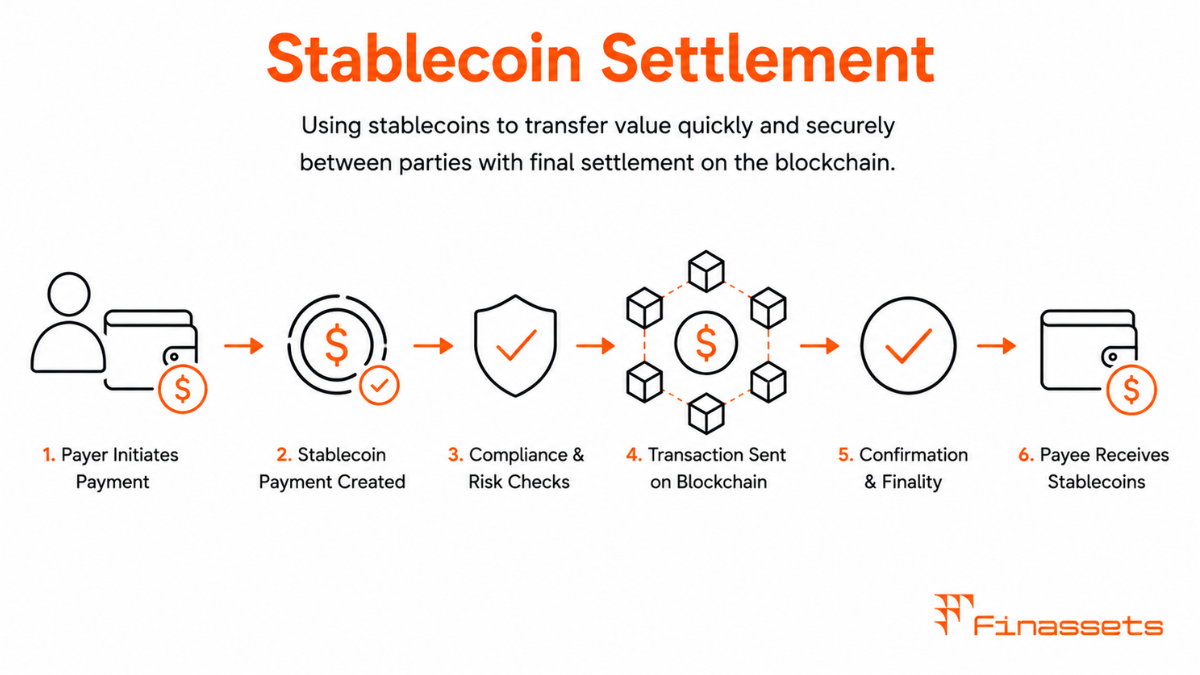
Why Stablecoin Settlement Bridges Two Worlds
Stablecoin settlement occupies a unique position between crypto-to-fiat settlement (maximum simplicity; fiat in bank account) and crypto-to-crypto settlement (maximum crypto exposure; holds volatile assets). It offers the price stability of fiat settlement — 1 USDC is consistently worth $1 — with the operational properties of crypto settlement: 24/7 availability, near-instant settlement, global reach without banking intermediaries, and no correspondent banking delays.
For merchants that do not need fiat in a bank account for their day-to-day operations — because they pay suppliers in stablecoins, hold treasury in stablecoins, or operate in markets where stablecoin banking integration is more accessible than traditional banking — stablecoin settlement is operationally superior to fiat settlement. For merchants with all-fiat cost structures, it adds one step (converting stablecoins to fiat through a local off-ramp) but may still be preferred when speed and cross-border reach outweigh the simplicity of direct fiat deposit.
The Three Settlement Models Compared
|
Factor |
Fiat Settlement |
Stablecoin Settlement |
Crypto Settlement |
|
Price stability |
Full — fiat amount fixed |
Full — stablecoin pegged |
None — volatile asset price |
|
Settlement speed |
1–5 business days (banking) |
Seconds to minutes |
Seconds to minutes |
|
Banking required |
Yes — bank account needed |
No — wallet address sufficient |
No — wallet address sufficient |
|
Geography |
Limited by banking access |
Global (wallet address) |
Global (wallet address) |
|
Accounting complexity |
Low — standard fiat entry |
Low — treat as USD equivalent |
High — track cost basis per holding |
|
Regulatory clarity |
Highest |
Growing — MiCA EMT framework |
Lower — crypto asset treatment varies |
|
Reserve risk |
None — central bank guarantee |
Issuer reserve quality matters |
Market risk on crypto price |
Assessing Reserve Quality for Stablecoin Settlement
Since stablecoin settlement delivers a liability of the stablecoin issuer rather than central bank money, the reserve quality of the issuer is a real credit risk factor that merchants and gateways should assess. A stablecoin that loses its peg would result in the merchant receiving less value than expected. The TerraUSD (UST) collapse in May 2022 demonstrated that an algorithmic stablecoin can lose its peg catastrophically and permanently, making the underlying economic model of the stablecoin critical to evaluate.
For fiat-backed stablecoins like USDT and USDC, the reserve assessment focuses on: the composition of reserves (T-bills are better than commercial paper), the frequency and reliability of attestation reports (Circle USDC issues monthly attestations; Tether has improved transparency over time), the regulatory framework under which the issuer operates (Circle holds US money transmission licences and is pursuing MiCA authorisation), and the historical peg stability (both USDT and USDC have maintained close peg during all major crypto market stresses except brief periods of acute market crisis).
Compliance Note: This glossary entry is provided for general educational purposes only and does not constitute financial, investment, legal, or tax advice. Industry terminology may vary across jurisdictions and providers; definitions herein may not directly reflect the specific features, terms, or specifications of Finassets' services. For details on Finassets' offerings, please refer to official product documentation or contact our team directly.