

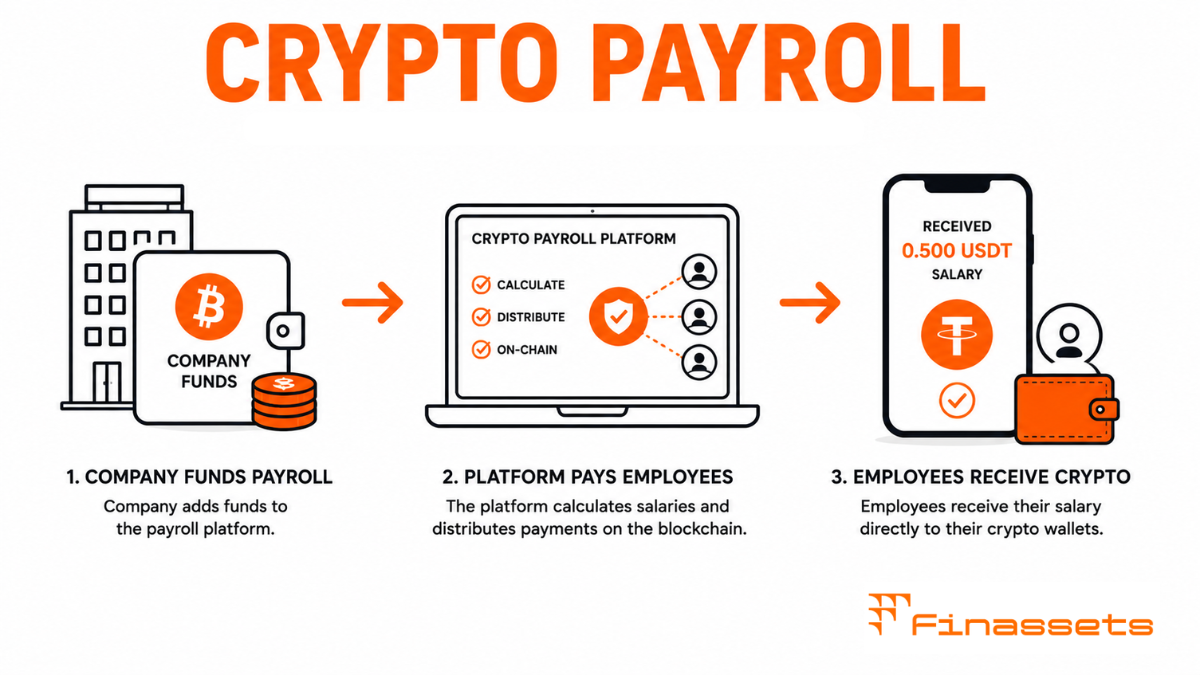
The Legal Framework — Can Employees Be Paid in Crypto?
The legality of paying employees in cryptocurrency varies by jurisdiction and depends primarily on how the relevant labour laws treat 'wages' or 'remuneration'. In most countries, wages must be paid in legal tender — the state's official currency — meaning that 100% crypto salary replacement is legally prohibited for employees subject to domestic employment law. However, most jurisdictions that prohibit full crypto wage payment still allow crypto as a supplement or bonus on top of a legal-tender base salary.
|
Jurisdiction |
Full Crypto Salary Legal? |
Supplement / Bonus Legal? |
Key Requirement |
|
United States |
No — FLSA requires USD for min. wage |
Yes |
Federal minimum wage in USD; rest can be crypto |
|
European Union |
Generally No — national wage laws |
Yes (varies by member state) |
Legal tender requirement for minimum wage portion |
|
El Salvador |
Yes |
Yes |
Bitcoin legal tender; crypto salary fully permitted |
|
UAE |
Permissive — evolving guidance |
Yes |
Labour law reform in progress; DIFC/ADGM have clearer frameworks |
|
Switzerland |
Partial — permitted with employee consent |
Yes |
Canton-specific; some cantons allow full crypto salary |
|
Independent Contractors |
Generally yes globally |
Yes |
Contractors not subject to employment wage laws; contractual freedom |
The contractor exception is practically significant: the vast majority of crypto payroll use cases involve independent contractors rather than salaried employees, and contractors have full contractual freedom to agree to any payment form. This is why crypto payroll has achieved strongest adoption in software development, creative work, content creation, and other sectors with large freelance workforces.
Tax Treatment for Recipients of Crypto Salary
When an employee or contractor receives cryptocurrency as compensation, the crypto's fair market value at the time of receipt is taxable as ordinary income in most jurisdictions — treated the same as cash wages, not as a capital asset received. If the recipient later sells or converts the crypto, any gain or loss relative to the income value at receipt is a capital gain or loss event.
This creates a compliance burden for recipients: they must record the fair market value of each crypto payment at the date of receipt, report it as income in their tax return for that period, and separately track their cost basis for each received amount for future capital gains calculations. Payment gateways and payroll platforms that provide recipients with timestamped records of the fiat value at each payment date significantly ease this compliance burden — platforms that do not provide this data put the full record-keeping obligation on the recipient.
Employer Payroll Tax and Withholding Obligations
Even when paying contractors or employees in crypto, the paying entity must meet its payroll tax withholding obligations in fiat currency. In the US, an employer paying an employee's wages in Bitcoin must still withhold Social Security, Medicare, and federal income tax based on the dollar value of the Bitcoin at the payment date, remit that withholding to the IRS in USD, and issue a W-2 showing the total dollar value of wages paid. The employer cannot substitute crypto for required dollar withholding remittances.
For independent contractor payments, the withholding obligation is different but the reporting obligation remains: paying entities that pay contractors more than $600 in a calendar year (in the US) must file a Form 1099-NEC reporting the total dollar value of compensation. Crypto payroll platforms must track the fiat equivalent of all payments and generate the required tax reporting documents at year-end — a function that distinguishes professional crypto payroll infrastructure from simply sending manual wallet transfers.
Cross-Border Contractor Payments — Crypto's Primary Advantage
The clearest commercial advantage of crypto payroll over fiat is in cross-border contractor payment. Paying a developer in Ukraine, a designer in India, or a writer in Nigeria via international wire transfer involves SWIFT fees ($25–$50 per transfer), 2–5 business day delays, potential correspondent bank deductions, and FX conversion costs at both ends. A USDC transfer on Solana to any of these recipients completes in under a second at negligible cost, with the recipient able to access the funds immediately and convert to local currency through local off-ramps.
This is why Web3 companies, software agencies, and content platforms have been early adopters of crypto payroll — they have genuinely international contractor workforces where the traditional banking system's cross-border friction is most acute. The US FinCEN guidance clarifying that businesses sending crypto to foreign contractors must still file 1099-equivalent forms for US tax purposes applies here, but does not diminish the operational benefits for the payment delivery itself.
Compliance Note: This glossary entry is provided for general educational purposes only and does not constitute financial, investment, legal, or tax advice. Industry terminology may vary across jurisdictions and providers; definitions herein may not directly reflect the specific features, terms, or specifications of Finassets' services. For details on Finassets' offerings, please refer to official product documentation or contact our team directly.