

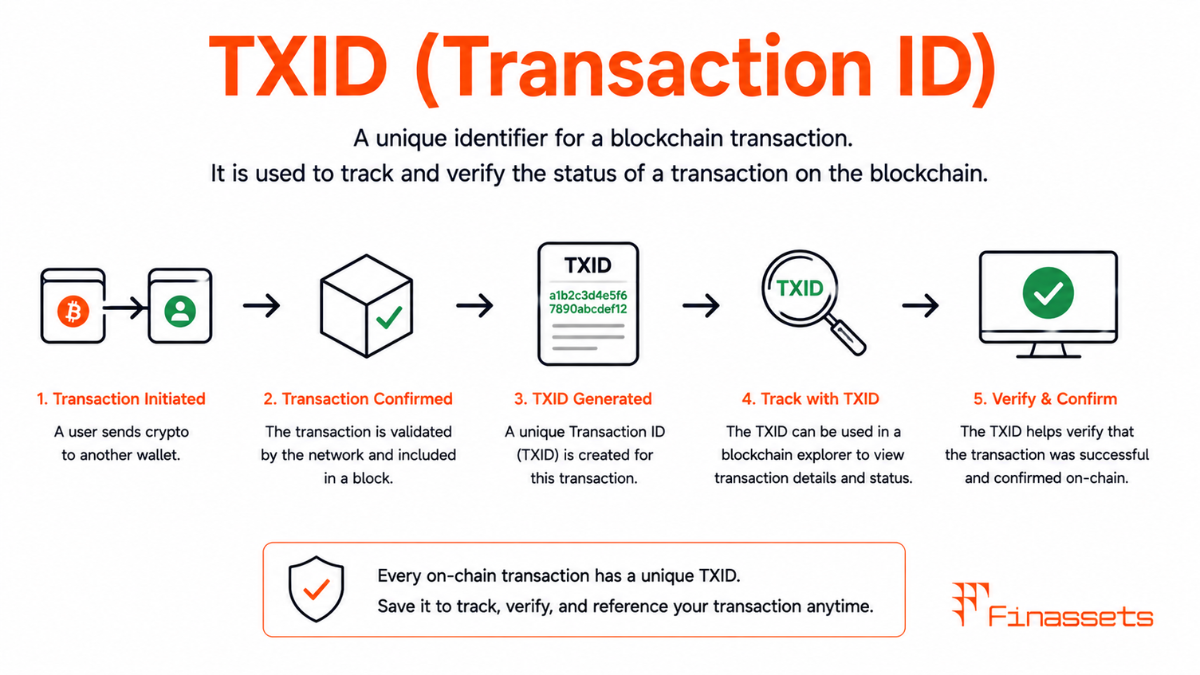
How a TXID is Generated
Every time a crypto transaction is broadcast to a blockchain network, the transaction data — sender address, recipient address, amount, fee, and timestamp — is run through a cryptographic hash function. The output is a fixed-length string of hexadecimal characters: 64 characters on Bitcoin and Ethereum (representing 256 bits), shorter on some other networks. This output is the TXID.
Because hash functions are deterministic, the same transaction data always produces the same TXID. And because they are collision-resistant, no two different transactions will ever produce the same TXID. The TXID is mathematically bound to the exact content of the transaction it represents.
What a TXID Looks Like
A Bitcoin TXID looks like this:
4a5e1e4baab89f3a32518a88c31bc87f618f76673e2cc77ab2127b7afdeda33b
An Ethereum transaction hash looks similar but is prefixed with '0x' to indicate hexadecimal:
0x5c504ed432cb51138bcf09aa5e8a410dd4a1e204ef84bfed1be16dfba1b22060
Different blockchains use different hashing algorithms and may produce differently formatted TXIDs. Solana, for example, uses a Base58-encoded string. Always confirm the expected format for each network when building payment integrations.
When Is a TXID Assigned?
A TXID is assigned the moment a transaction is created and broadcast to the network — not when it is confirmed. This means a transaction can have a TXID while still sitting in the mempool, waiting to be picked up by a miner or validator. A TXID in the mempool is not final; it can still fail to confirm if fees are too low or if the network is congested.
Payment gateways typically detect a TXID as soon as it enters the mempool, display it to the merchant for reference, and then update the payment status once the required number of confirmations is reached.
How to Look Up a TXID
Any TXID can be verified by entering it into a blockchain explorer for the relevant network. Block explorers display the transaction's status, amount, sender, recipient, fee, block height, and number of confirmations.
|
Network |
Block Explorer |
|
Bitcoin |
mempool.space, blockstream.info |
|
Ethereum |
etherscan.io |
|
Tron (TRC-20) |
tronscan.org |
|
Solana |
solscan.io, explorer.solana.com |
|
BNB Chain |
bscscan.com |
TXID vs. Block Hash vs. Wallet Address
These three identifiers are frequently confused:
● A TXID identifies one specific transaction — where money moved and when.
● A block hash identifies an entire block containing hundreds or thousands of transactions.
● A wallet address identifies where funds are held — not a specific movement of funds.
In payment processing, the TXID is the operational reference. The block hash confirms which block a transaction is in, but merchants and gateways work with TXIDs for payment lookup, receipts, and dispute resolution.
Is a TXID the Same as a Transaction Hash?
Yes. TXID and transaction hash are the same thing — two names for the same identifier. 'Transaction hash' describes how it is technically generated (by hashing the transaction data); 'transaction ID' describes how it is used (as a reference identifier). Some blockchains and wallets use one term, others use the other. In practice, they are interchangeable.
Transaction Malleability — a Historical Limitation
In early versions of the Bitcoin protocol, it was possible to alter the signature data in a transaction without changing its content or invalidating it. This would produce a different TXID for the same economic transaction — a vulnerability known as transaction malleability. It was exploited by Mt. Gox and contributed to that exchange's collapse.
SegWit (Segregated Witness), activated on Bitcoin in 2017, resolved transaction malleability by separating signature data from the transaction data used to calculate the TXID. Post-SegWit Bitcoin transactions produce stable, tamper-proof TXIDs. This vulnerability does not affect Ethereum or most other modern blockchains.
Using a TXID for Payment Disputes
When a merchant or customer claims a payment was sent but not received, the TXID is the first and most reliable evidence to check. A TXID on a public blockchain explorer that shows the payment confirmed to the correct address is definitive proof of delivery. Unlike a bank payment reference, a blockchain TXID cannot be fabricated or altered after the fact.
Payment gateways surface TXIDs directly in merchant dashboards and webhook payloads, allowing merchant support teams to resolve payment queries without involving the gateway's support team.
Compliance Note: This glossary entry is provided for general educational purposes only and does not constitute financial, investment, legal, or tax advice. Industry terminology may vary across jurisdictions and providers; definitions herein may not directly reflect the specific features, terms, or specifications of Finassets' services. For details on Finassets' offerings, please refer to official product documentation or contact our team directly.