

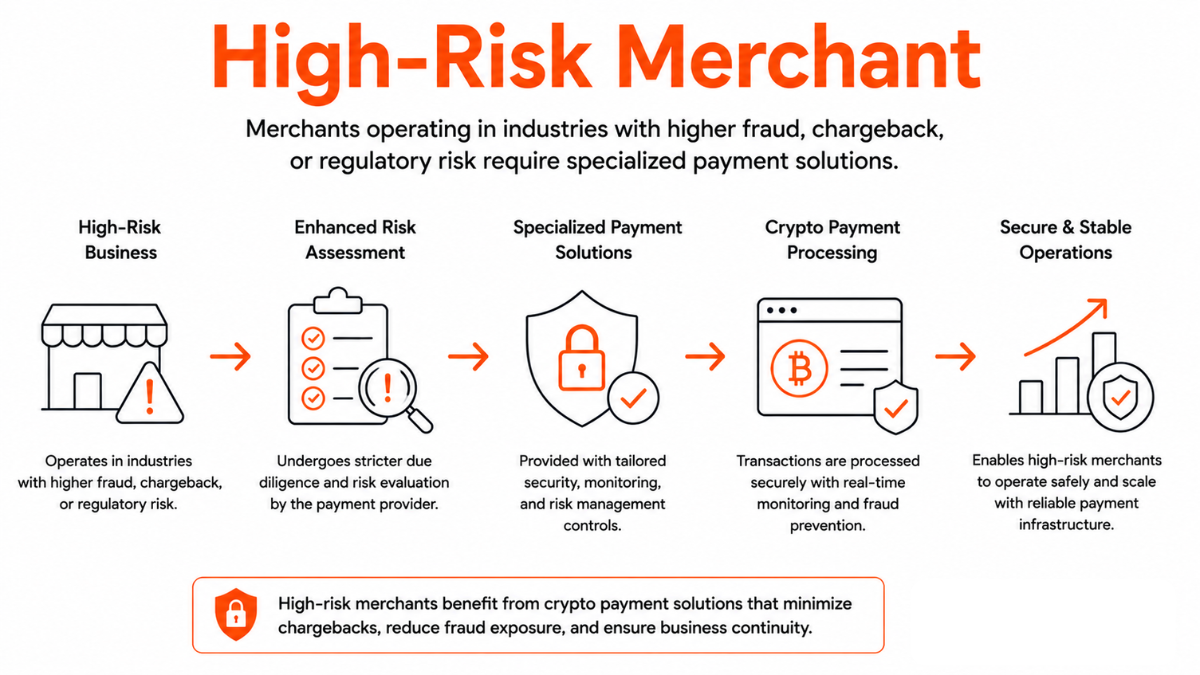
Criteria That Classify a Merchant as High-Risk
High-risk classification is not a binary determination — it is a composite score reflecting multiple risk factors weighted according to the gateway's risk model. A merchant may be classified as high-risk due to a single severe factor (operating in a banned jurisdiction, owning a prior fraud conviction) or due to the accumulation of moderate factors that together exceed the gateway's risk threshold. Common risk factors include:
● Business sector: Online gaming, forex trading, adult content, cryptocurrency exchanges, and nutraceuticals are sector-level high-risk designations that apply regardless of the individual operator's compliance standards.
● Geographic risk: Merchants registered in or primarily serving customers in high-risk jurisdictions — FATF grey-listed countries, countries under EU or OFAC sanctions regimes, or countries with weak AML enforcement — carry elevated country risk.
● Transaction profile: Unusually high average transaction values, very high transaction volumes relative to business size, or large proportions of cross-border transactions can trigger high-risk classification even for otherwise acceptable merchant types.
● Ownership profile: Beneficial owners who are PEPs, who have adverse media coverage, or who are connected to prior regulatory actions carry elevated personal risk regardless of the current business's apparent legitimacy.
● Product or service type: Digital-only products, subscription services, and high-ticket items sold without physical delivery evidence have higher chargeback and fraud rates than physical goods, increasing risk classification probability.
What High-Risk Classification Means Operationally
A high-risk merchant account at a crypto payment gateway differs from a standard account in several operational dimensions:
● Enhanced onboarding: Full EDD package required — audited financial statements, source-of-funds documentation, detailed business description, and potentially site visits or video verification.
● Higher fees: Processing fees for high-risk merchants typically run 50–100% higher than standard rates, reflecting the additional compliance cost of managing the account.
● Lower limits: Processing limits start lower and increase more slowly, with each limit increase requiring additional documentation and review.
● Tighter monitoring: Transaction monitoring alert thresholds are lower; more transactions are flagged for manual review; account activity reports are reviewed more frequently by the compliance team.
● Rolling reserve: Some gateways withhold a percentage (typically 5–10%) of high-risk merchant settlements in a reserve account for 90–180 days, retaining funds to cover potential future liabilities.
Specialised Gateways for High-Risk Merchants
A market segment of specialist crypto payment gateways has developed specifically to serve high-risk merchant categories that mainstream gateways decline. These specialists have invested in the compliance infrastructure, banking relationships, and regulatory licenses needed to serve gaming operators, adult content platforms, forex brokers, and similar businesses at acceptable risk levels. They typically charge substantially higher fees than mainstream gateways — 1.5–3% processing plus wider spreads — but provide access to payment infrastructure that would otherwise be unavailable.
Merchants in high-risk categories should evaluate specialist gateways on compliance quality, banking stability, and settlement reliability rather than on fee levels alone. A specialist gateway that processes payments for two months before losing its banking relationship and freezing merchant funds is far more damaging than a mainstream gateway that charges higher fees but provides reliable long-term service.
Compliance Note: This glossary entry is provided for general educational purposes only and does not constitute financial, investment, legal, or tax advice. Industry terminology may vary across jurisdictions and providers; definitions herein may not directly reflect the specific features, terms, or specifications of Finassets' services. For details on Finassets' offerings, please refer to official product documentation or contact our team directly.