

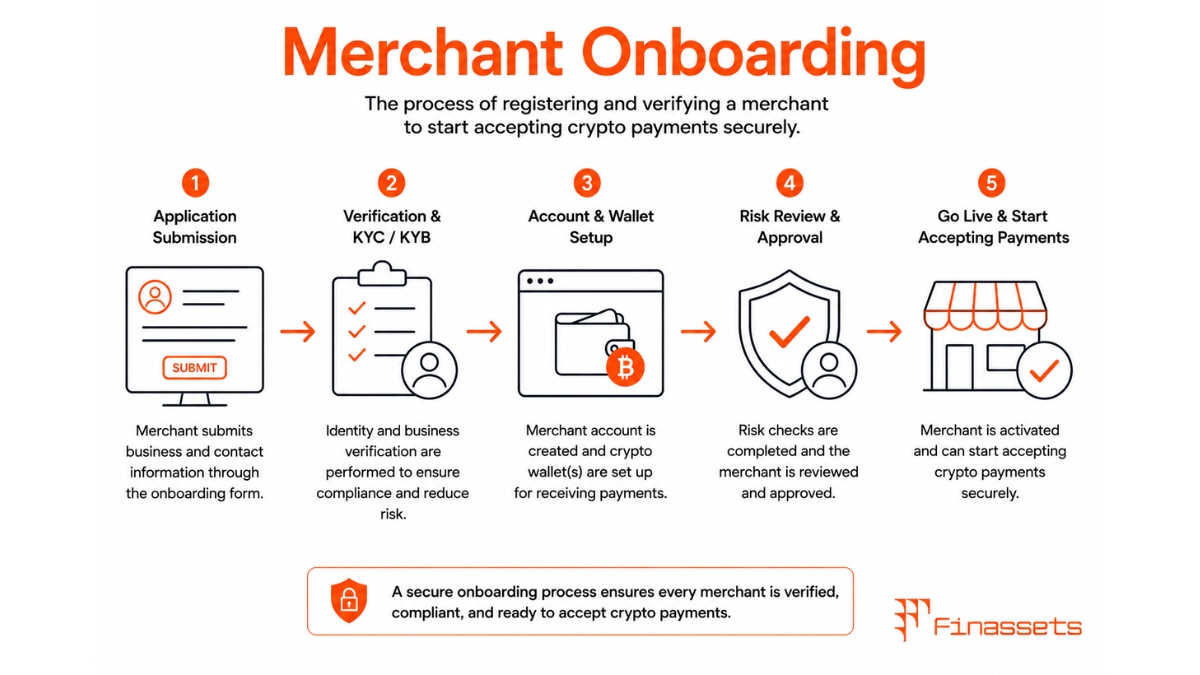
The Onboarding Funnel and Where Merchants Drop Off
Crypto payment gateway onboarding is a sequential funnel with meaningful dropout at each stage. Merchants who begin the application may abandon at document upload (frustration with requirements or file format restrictions), at KYB review (delay in response while the review is in progress), or at integration (technical complexity or insufficient documentation). Understanding where dropout occurs helps gateways improve their onboarding experience and helps merchants prepare.
The stages most likely to cause dropout are document collection — merchants in some jurisdictions struggle to provide corporate structure charts or source-of-funds documentation that gatekeepers require — and the wait between document submission and approval, during which merchants receive no feedback and cannot start integration. Gateways that provide a sandbox environment accessible before KYB approval — allowing technical integration to proceed in parallel with compliance review — significantly reduce total time to first live payment.
Tiered Onboarding: Standard vs. Enhanced
Well-designed onboarding systems are tiered rather than binary. Instead of requiring a complete KYB package before activating any functionality, gateways assign a basic tier on submission of minimum documentation, with limited processing capability, and upgrade to higher tiers as additional documentation is verified. A merchant might receive:
● Tier 1 (basic application submitted): Sandbox access only; no live processing; integration can begin.
● Tier 2 (initial KYB cleared): Live processing up to €10,000/month; limited asset support; standard monitoring.
● Tier 3 (full KYB including UBO verification): Processing up to €100,000/month; full asset list; standard monitoring.
● Tier 4 (enhanced documentation including financial statements): Custom limits; priority support; lower transaction monitoring sensitivity.
This tiered structure generates revenue earlier (merchants begin processing while full KYB completes), reduces dropout (merchants see immediate value), and aligns compliance depth with actual processing volume (low-volume merchants need less scrutiny than high-volume ones).
Risk Assessment During Onboarding
The compliance team's assessment of a merchant during onboarding goes beyond identity verification to evaluate the business risk profile. Key questions that determine the outcome of a risk assessment include: Is the business model clear and plausible? Does the expected transaction volume match the business size? Is the customer base consistent with the stated business activity? Are the jurisdictions involved associated with elevated AML risk? Does the business operate in a sector with known fraud or money laundering vulnerability?
A merchant whose application raises questions in multiple areas — unfamiliar jurisdiction, high-risk sector, unusual transaction volume expectations, complex ownership structure — may be declined or referred for enhanced due diligence even if all individual documents are technically complete. The risk assessment is a holistic judgment, not a checklist, and the outcome reflects the gateway's own risk appetite as much as the merchant's individual profile.
Post-Onboarding Account Management
Onboarding completion is not the end of the compliance relationship — it is the beginning of an ongoing monitoring obligation. Gateways must periodically re-verify merchant information, reassess risk profiles when transaction patterns change significantly, and respond promptly when changes in business ownership, corporate structure, or operating jurisdiction are notified. Merchants who fail to notify their gateway of material changes — particularly changes in beneficial ownership — breach their terms of service and may be subject to account suspension pending re-verification.
Compliance Note: This glossary entry is provided for general educational purposes only and does not constitute financial, investment, legal, or tax advice. Industry terminology may vary across jurisdictions and providers; definitions herein may not directly reflect the specific features, terms, or specifications of Finassets' services. For details on Finassets' offerings, please refer to official product documentation or contact our team directly.