

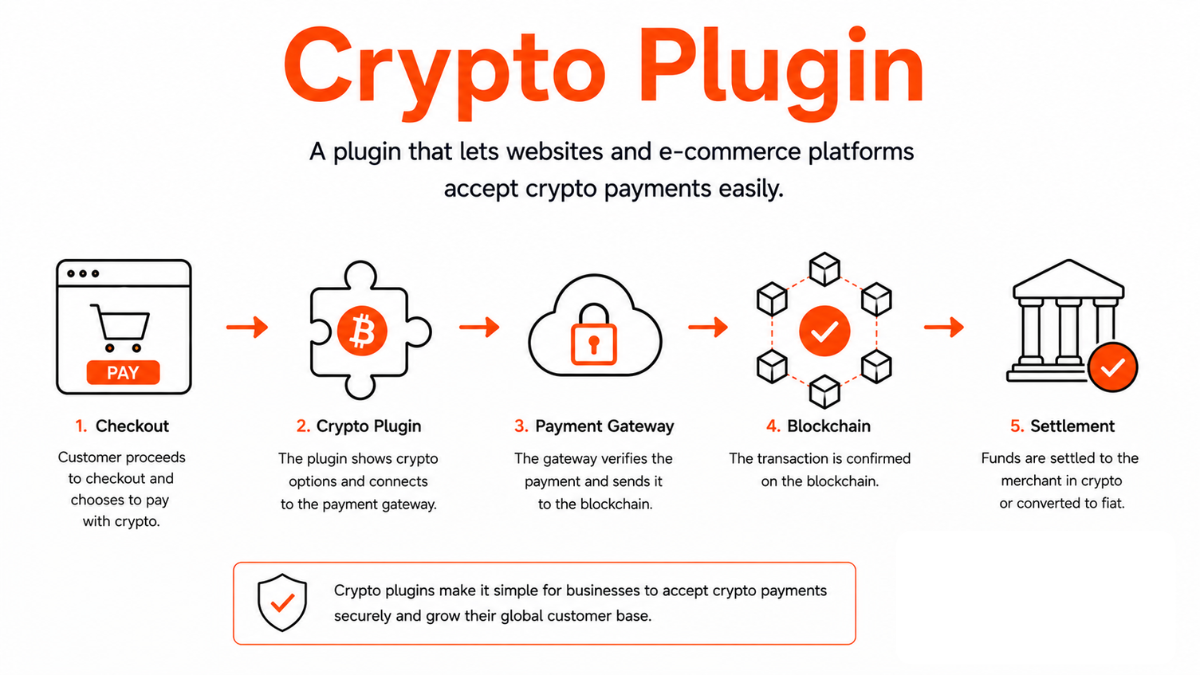
Supported E-Commerce Platforms and Integration Depth
The major e-commerce platforms each have plugin ecosystems that crypto payment gateways extend to add crypto checkout functionality. Plugin availability and quality vary by platform and gateway provider:
|
Platform |
Plugin Mechanism |
Crypto Plugin Quality |
Key Consideration |
|
WooCommerce (WordPress) |
WooCommerce payment gateway API |
Most mature; widest gateway support |
PHP version compatibility; plugin conflicts |
|
Shopify |
Shopify Payment App + External Payment Provider |
Good but requires Shopify Partner Program membership |
Shopify Payments charges extra fee if third-party gateway used on non-Plus plans |
|
Magento / Adobe Commerce |
Payment method integration via Magento module |
Available from major gateways |
Complex; requires developer for installation |
|
PrestaShop |
PrestaShop module marketplace |
Available but fewer options |
Active maintenance varies by module |
|
OpenCart |
Extension marketplace |
Limited options; often community-maintained |
May lack support for latest OpenCart versions |
|
BigCommerce |
App Marketplace integration |
Limited official support from major gateways |
API-based custom integration often required |
What Happens Technically During a Plugin-Mediated Payment
When a customer selects cryptocurrency at checkout on a WooCommerce or Shopify store using a crypto payment plugin, the plugin intercepts the checkout submission and initiates a gateway API call to create a payment invoice, passing the order total, currency, Order ID, and configured callback URL. The gateway returns a payment page URL or widget embed code, and the plugin either redirects the customer to the gateway's hosted checkout page or injects the widget into the store's checkout flow.
Throughout the payment process, the gateway monitors the blockchain and sends webhook callbacks to the URL the plugin registered. The plugin's webhook handler validates the callback signature, checks the payment status, and on receiving a confirmed event, calls WooCommerce's or Shopify's order management API to update the order status to 'processing' or 'completed'. This triggers the store's standard order fulfillment workflow — stock reservation, fulfillment notifications, shipping triggers — exactly as a card payment would.
Plugin Security Considerations
Crypto payment plugins introduce additional attack surfaces to an e-commerce site that merchants should address. The plugin's webhook handler must validate the gateway's HMAC signature on every callback — a plugin that processes payment confirmations without signature validation can be spoofed, resulting in order fulfillment without actual payment. Plugin updates from the gateway provider should be applied promptly, as security patches may fix vulnerabilities in payment processing logic. The API credentials stored in the plugin's settings page should be scoped to the minimum permissions required — a read-only reporting key should not be the same credential as the invoice creation key.
WordPress-based WooCommerce sites face particular plugin security complexity because the WordPress ecosystem includes thousands of third-party plugins that may conflict with or interfere with the crypto payment plugin. Regular security audits of the full plugin stack, not just the payment plugin in isolation, are a standard recommendation for any merchant accepting crypto payments through a WordPress-based store.
Compliance Note: This glossary entry is provided for general educational purposes only and does not constitute financial, investment, legal, or tax advice. Industry terminology may vary across jurisdictions and providers; definitions herein may not directly reflect the specific features, terms, or specifications of Finassets' services. For details on Finassets' offerings, please refer to official product documentation or contact our team directly.