

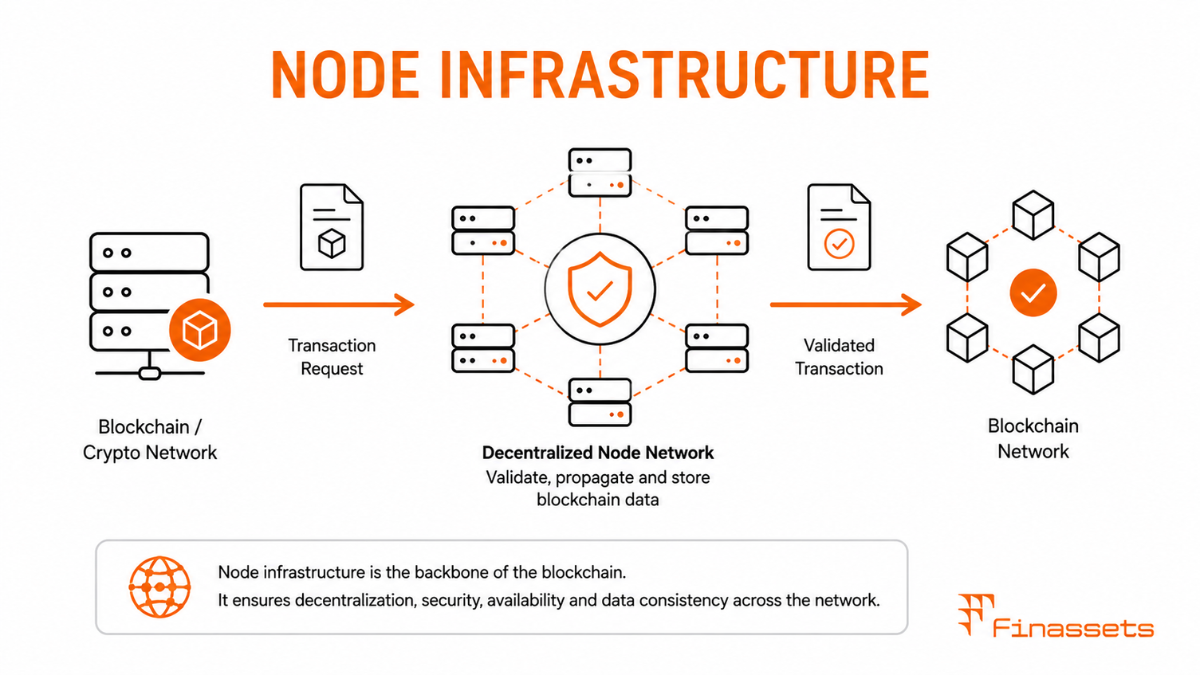
Types of Blockchain Nodes Used in Payment Gateways
Payment gateways interact with blockchains through nodes — software clients that connect to a blockchain's peer-to-peer network and maintain varying levels of blockchain data. The choice of node type involves trade-offs between data access depth, storage requirements, synchronisation speed, and operational cost:
● Full nodes: Download and verify every block and transaction since the genesis block. Provide complete, trustless access to blockchain data without relying on any third party. Required for authoritative balance verification, transaction broadcasting, and mempool access. Resource-intensive: Bitcoin full nodes require 700GB+ of storage; Ethereum full nodes require multiple terabytes.
● Light nodes (SPV — Simplified Payment Verification): Download only block headers rather than full block data. Can verify that a transaction is included in a block using Merkle proofs without storing the full blockchain. Lower resource requirements but rely on connected full nodes for transaction data — introducing a trust dependency that full nodes eliminate.
● Archive nodes: Store the complete blockchain history including all historical state data, not just the current state. Essential for querying historical wallet balances or replaying past transactions. Extremely storage-intensive — Ethereum archive nodes require 20+ terabytes. Used by analytics providers and indexers rather than payment gateways for routine operations.
● Indexer nodes: Full or archive nodes with additional database layers (typically using tools like The Graph or custom PostgreSQL indexes) that allow fast querying of events, transactions, and balances by address or time range. Payment gateways use indexers to efficiently monitor addresses and retrieve transaction history.
Self-Operated Nodes vs. Third-Party Node Providers
|
Factor |
Self-Operated Nodes |
Third-Party Providers (Alchemy, Infura, QuickNode) |
|
Control |
Full — no dependency on external party |
Limited — provider outage affects gateway |
|
Reliability |
Depends on own infrastructure team |
Provider SLAs typically 99.9%+ |
|
Latency |
Lowest — local network |
Slightly higher — API round-trip |
|
Cost |
High upfront (hardware) + ongoing (staff, bandwidth) |
Subscription-based; lower upfront |
|
Privacy |
Transaction data stays internal |
Transaction data sent to third party |
|
New chain support |
Must provision new nodes per chain |
Provider adds chain; immediate access |
Most production payment gateways use a hybrid approach: self-operated nodes for the highest-volume networks where reliability and latency justify the investment (Bitcoin, Ethereum, Tron), and third-party providers for newer or lower-volume chains where provisioning dedicated infrastructure would not be cost-effective. Critical path operations — incoming payment detection and outgoing transaction broadcasting — should always route through infrastructure the gateway controls, with third-party providers as fallback rather than primary.
Node Synchronisation and Chain Reorganisation Handling
A newly provisioned full node must synchronise from the genesis block to the current chain tip before it can be used for payment monitoring — a process called initial block download (IBD). For Bitcoin, IBD takes days to weeks depending on hardware and network speed. For Ethereum with its larger state, IBD for a full node takes weeks. This synchronisation requirement means that node provisioning must be planned well in advance of go-live, not as a response to an existing node failure.
During normal operation, nodes must handle chain reorganisations — when the network temporarily follows an alternative chain tip before reverting to the longer chain. A payment gateway's monitoring system must detect reorgs, identify which transactions were affected (present in the original chain tip but absent in the post-reorg chain), and adjust any merchant credit that was based on a transaction later removed from the canonical chain. Reorg handling is a mandatory capability in production payment monitoring systems, not an edge case that can be deferred.
Compliance Note: This glossary entry is provided for general educational purposes only and does not constitute financial, investment, legal, or tax advice. Industry terminology may vary across jurisdictions and providers; definitions herein may not directly reflect the specific features, terms, or specifications of Finassets' services. For details on Finassets' offerings, please refer to official product documentation or contact our team directly.