

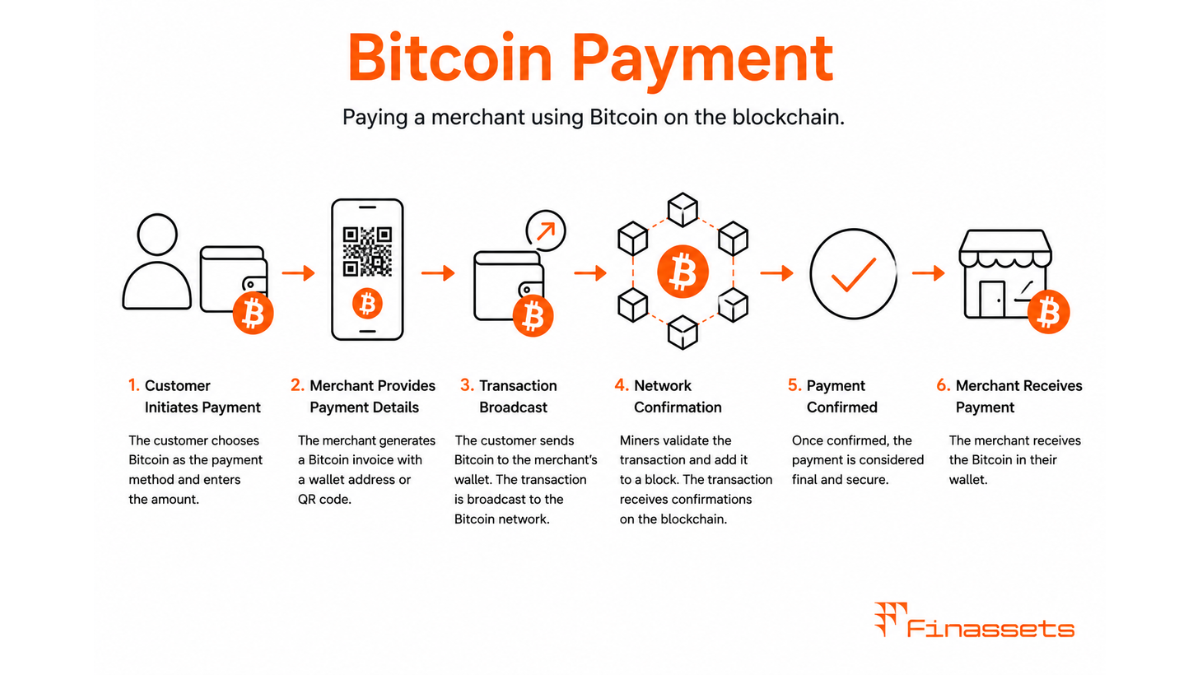
Bitcoin's Unique Position in Merchant Payment Acceptance
Bitcoin occupies a distinct commercial position in the crypto payment landscape. It is simultaneously the highest-profile cryptocurrency that merchants cite when explaining crypto acceptance to customers, and the one with the most significant checkout friction due to its confirmation times. A merchant who accepts Bitcoin attracts a customer segment that specifically holds BTC — often long-term holders who prefer to spend Bitcoin at merchants that accept it, reducing their need to convert through exchanges first. For these customers, Bitcoin acceptance is a genuine purchase driver, not merely a payment convenience.
From a merchant economics perspective, Bitcoin payments compare favourably to card payments even after accounting for gateway processing fees. A card payment costs a merchant 1.5–3.5% in interchange and processing fees plus the risk of chargebacks. A Bitcoin payment via a crypto gateway typically costs 0.5–1.5% in processing fees plus a spread, with zero chargeback risk. For merchants with high average transaction values or elevated chargeback rates from card payments, Bitcoin acceptance can represent a meaningful improvement in net margin per transaction.
On-Chain Bitcoin vs. Lightning — Two Different Products
For merchants evaluating Bitcoin acceptance, on-chain Bitcoin and Lightning Network payments should be understood as two distinct products with different use case profiles:
|
Factor |
On-Chain Bitcoin |
Lightning Network |
|
Confirmation time |
10–60 minutes (1–6 blocks) |
< 1 second |
|
Fee for customer |
$0.50–$5 (variable) |
< $0.01 |
|
Best transaction size |
€100+ (fee makes small payments expensive) |
Any size, including micropayments |
|
Double-spend risk at 0-conf |
Moderate (RBF-signalled transactions) |
None — HTLC atomic settlement |
|
Merchant setup complexity |
Low — gateway handles |
Low — gateway handles (channel management abstracted) |
|
Customer wallet compatibility |
Near-universal |
Growing — most major wallets support |
|
Best for |
High-value purchases; B2B |
Micro-payments; retail; high-frequency |
Volatility Management for Bitcoin-Accepting Merchants
Bitcoin's price volatility is the most common objection merchants raise when considering Bitcoin payment acceptance. A customer who pays 0.005 BTC for a €200 product when Bitcoin is at €40,000 presents no volatility concern for a merchant using auto-conversion — the gateway converts at that rate and the merchant receives €200 (minus fees). The volatility exposure only exists if the merchant retains the Bitcoin rather than converting.
For merchants who want to participate in Bitcoin's potential appreciation while maintaining fiat revenue predictability, a partial retention model works: configure auto-conversion for 80% of received Bitcoin to EUR, retain 20% as a Bitcoin treasury position. The retained 20% is an explicit, sized investment exposure rather than an inadvertent consequence of accepting crypto. This structured approach allows merchants to 'stack sats' from their business revenue without taking on unmanaged treasury risk.
Bitcoin Payment Regulation — Global Snapshot
Bitcoin's regulatory status as a payment instrument varies globally. In the US, Bitcoin is treated as property for tax purposes (IRS Notice 2014-21), meaning each Bitcoin payment received creates a taxable income event at fair market value. El Salvador made Bitcoin legal tender in 2021, legally obligating businesses to accept it, though enforcement remains limited in practice. The EU treats Bitcoin acceptance under the same CASP framework as other crypto assets. Most jurisdictions require businesses processing Bitcoin payments above certain thresholds to register as VASPs or money transmitters and comply with AML requirements.
Compliance Note: This glossary entry is provided for general educational purposes only and does not constitute financial, investment, legal, or tax advice. Industry terminology may vary across jurisdictions and providers; definitions herein may not directly reflect the specific features, terms, or specifications of Finassets' services. For details on Finassets' offerings, please refer to official product documentation or contact our team directly.