

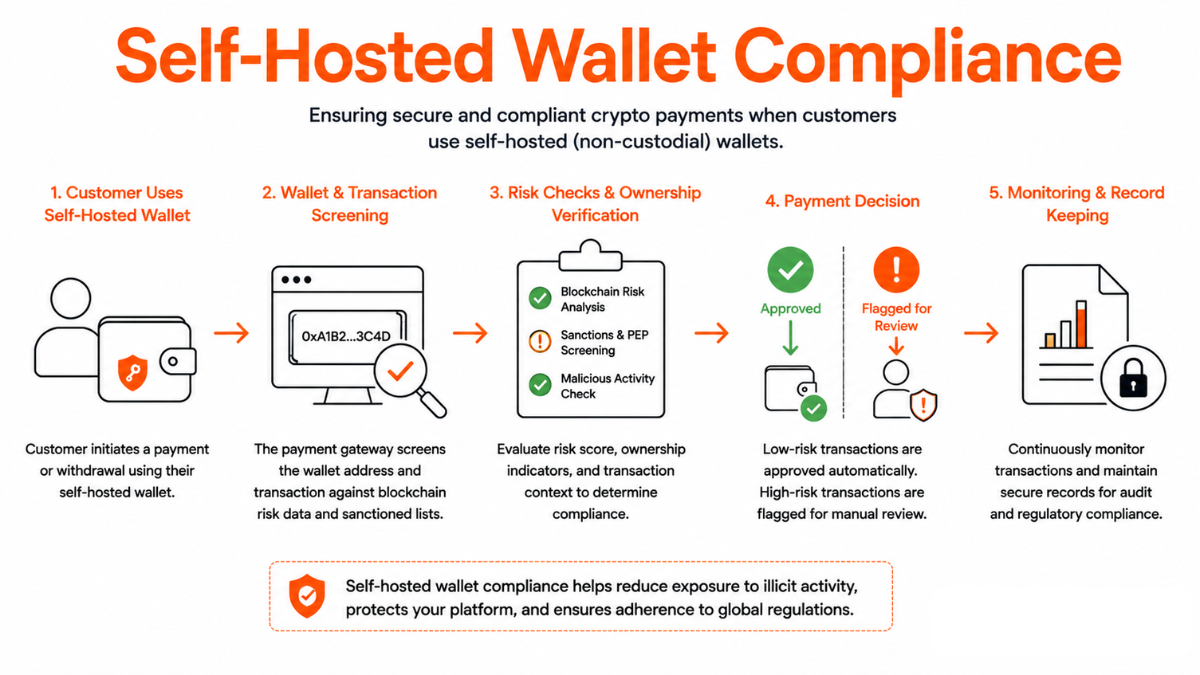
What Makes a Wallet 'Self-Hosted'
A self-hosted wallet — also called an unhosted or non-custodial wallet — is one where the user holds their own private keys rather than delegating custody to a third party. MetaMask, Ledger, Trezor, and mobile wallets like Trust Wallet are all self-hosted: the user controls the keys and there is no financial institution that can be asked to identify the wallet's owner or freeze its funds. This contrasts with a VASP-hosted wallet — an exchange or custodian account where the institution holds keys on behalf of the user and maintains the identity records that Travel Rule compliance depends on.
The compliance challenge is that self-hosted wallets have no institutional counterparty from whom a gateway can request identity data. When a customer sends USDT from a MetaMask wallet, the gateway receives a transaction from a blockchain address — but there is no Tether, no MetaMask support team, and no regulatory body that can identify the owner of that address. The gateway must verify ownership and identity itself, or apply risk-based controls to the transfer.
Compliance Note: This glossary entry is provided for general educational purposes only and does not constitute financial, investment, legal, or tax advice. Industry terminology may vary across jurisdictions and providers; definitions herein may not directly reflect the specific features, terms, or specifications of Finassets' services. For details on Finassets' offerings, please refer to official product documentation or contact our team directly.