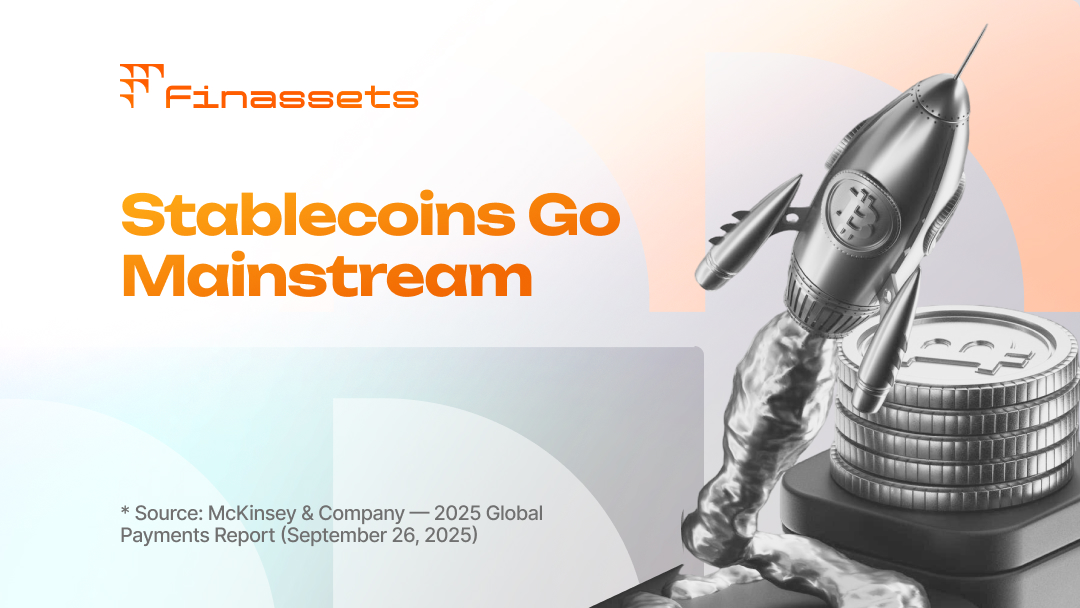
Stablecoins are no longer a crypto-side experiment. According to the 2025 Global Payments Report by McKinsey & Company, released on September 26, stablecoin issuance has doubled since early 2024. Daily transaction volumes now reach approximately $30 billion, and regulators in the United States, European Union, United Kingdom, Hong Kong, and Japan are actively establishing clear rules around reserves, licensing, and AML/KYC requirements.
These developments signal a structural shift. Stablecoins are moving closer to regulated payment infrastructure, supporting real-world use cases such as cross-border settlements, programmable treasury operations, and supply-chain payments.
At Finassets, this same transformation is visible across client activity.
Regulation and Scale Are Driving Adoption
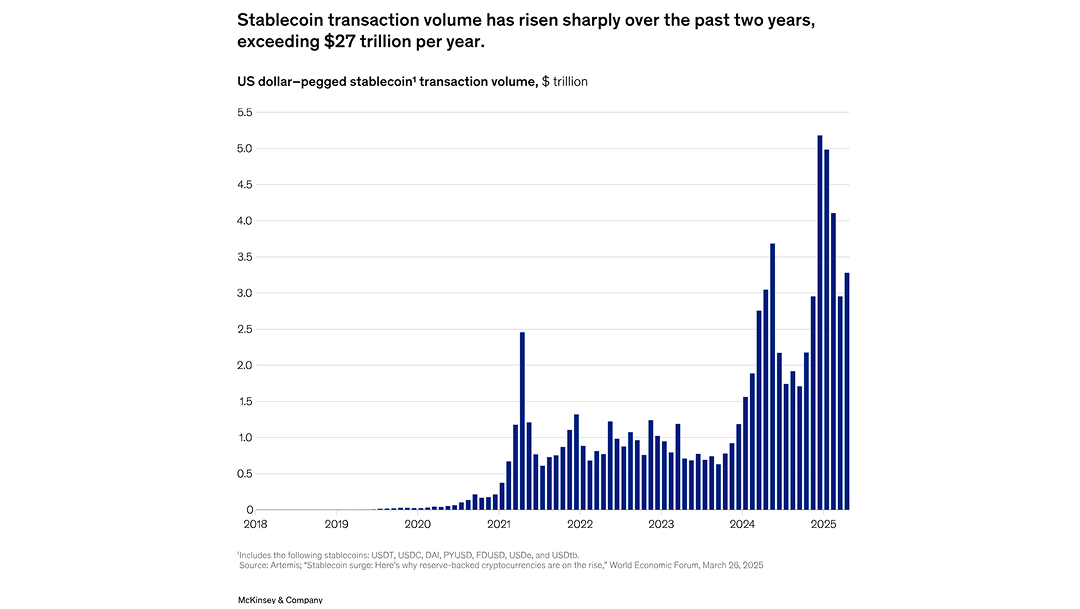
The McKinsey report highlights a combination of scale and regulatory clarity as the key drivers behind stablecoin adoption. As issuance grows and transaction volumes increase, regulators are responding with clearer frameworks designed to integrate stablecoins into existing financial systems rather than treat them as an external risk.
This regulatory momentum reduces uncertainty for businesses and enables stablecoins to be used not only for crypto-native activity, but for everyday operational payments.
Why Companies Are Moving Away from Traditional Bank Transfers
As Vitalijs Feldmanis, CEO of Finassets, explains, speed and availability play a central role:
“Stablecoin transfers are instant and work 24/7, there’s no need to wait for banks to open. Commissions are just cents, especially on networks like Polygon, BEP20, or TON. And as more countries introduce clear licensing and compliance rules, using digital currencies becomes safer and easier for companies.”
Unlike traditional bank transfers, stablecoins operate continuously. They do not depend on banking hours or intermediary settlement cycles, which makes them particularly attractive for global businesses operating across time zones.
Cost Efficiency Beyond Speed
While instant settlement is important, Finassets emphasizes that efficiency and security matter just as much.
Vitalijs Feldmanis outlines how Finassets approaches stablecoin payments for businesses:
“Payments cost less, commissions go down from 0.4% to 0.2%, plus network optimization on TRON cuts expenses by up to 50%. We also support USDT on TON, where fees are minimal. Companies can easily create invoices, payment links, or mass payouts, and export full reports for accounting.”
This combination of lower commissions, network optimization, and built-in payment tools allows companies to manage digital payments without sacrificing transparency or control.
A Multirail Future for Payments
Finassets’ experience aligns with McKinsey’s central conclusion: the future of payments is multirail.
Rather than replacing existing systems, stablecoins are joining them. Cards, bank transfers, and stablecoins are increasingly used side by side within a single ecosystem. This approach gives businesses greater flexibility, faster settlement, and clearer visibility across payment flows.
Stablecoins are no longer positioned at the edge of finance. With growing scale, declining costs, and clearer regulatory frameworks, they are becoming a practical component of modern payment infrastructure.
👉 To understand how a stablecoin payment gateway can reduce costs and accelerate settlements for your company, connect with the Finassets team.