The best crypto payment gateway in 2026 is the one that combines low processing fees, network fee optimization, multi-coin support, fast settlement, seamless integration, strong security, and scalable infrastructure. There is no single provider that fits every business model. The right crypto payment gateway depends on your jurisdiction, transaction volume, supported cryptocurrencies, geographic reach, and operational priorities.
With cryptocurrency payments exceeding $8 trillion in annual global volume, businesses are increasingly adopting crypto payment solutions to reduce cross-border costs, eliminate chargebacks, and unlock new revenue streams beyond traditional payment methods.
This guide explains the 10 essential criteria you must evaluate when selecting the best crypto payment gateway.
Why Stablecoins and USDT TRC20 Matter in 2026
Stablecoins dominate cryptocurrency transactions because they eliminate price volatility while preserving blockchain efficiency.
Benefits of stablecoin payments:
- 1:1 USD peg reduces exchange rate volatility
- Lower transaction fees than international card payments (on average 0.4%–1.5% vs. 3%–5%)
- Faster cross-border transactions
- Global accessibility without banking limitations
Among stablecoins, USDT TRC20, on the Tron blockchain, is widely used for high-frequency crypto transactions due to low transaction costs and fast confirmation times.
For businesses handling recurring payments, subscription billing, or B2B settlements, cost efficiency at both the processing and network level is critical.
10 Criteria to Compare When Choosing the Best Crypto Payment Gateway
1. Experience
Experience indicates infrastructure maturity and operational reliability.
Evaluate:
- Years operating in the crypto world
- Proven handling of high-volume transactions
- Stability during market volatility
- Experience serving global merchants
- Support for eCommerce, SaaS crypto billing, and B2B crypto payments
An experienced cryptocurrency payment processor minimizes downtime, improves transaction throughput, and ensures scalable crypto processing under peak demand. The Finassets.io low-fee crypto payment gateway has operated since 2021, while the project’s IT team has worked in the crypto payment industry since 2014.
2. Supported Coins and Blockchains
Broad cryptocurrency support improves customer experience and checkout conversion rates.
A competitive crypto payment gateway should support:
- Bitcoin (BTC)
- Ethereum (ETH)
- Tether (USDT)
- USD Coin (USDC)
- Litecoin (LTC)
- ERC20 / BEP20 / TRC20 tokens
- Multiple blockchain networks
Supporting stablecoins is especially important to protect merchants from cryptocurrency volatility.
Multi-chain compatibility ensures customers can pay with their preferred digital currencies, increasing cryptocurrency acceptance. Finassets supports 70+ cryptocurrencies, including popular stablecoins (USDT, USDC), across multiple blockchains.
3. Fees
Processing fees directly affect your profit margins.
Typical industry ranges:
|
Cost Component |
Market Range |
|
Processing fee |
0.5% – 2% |
|
Conversion fee |
0.5% – 1% |
|
Settlement fee |
0% – 1% |
|
Network gas fees |
Variable |
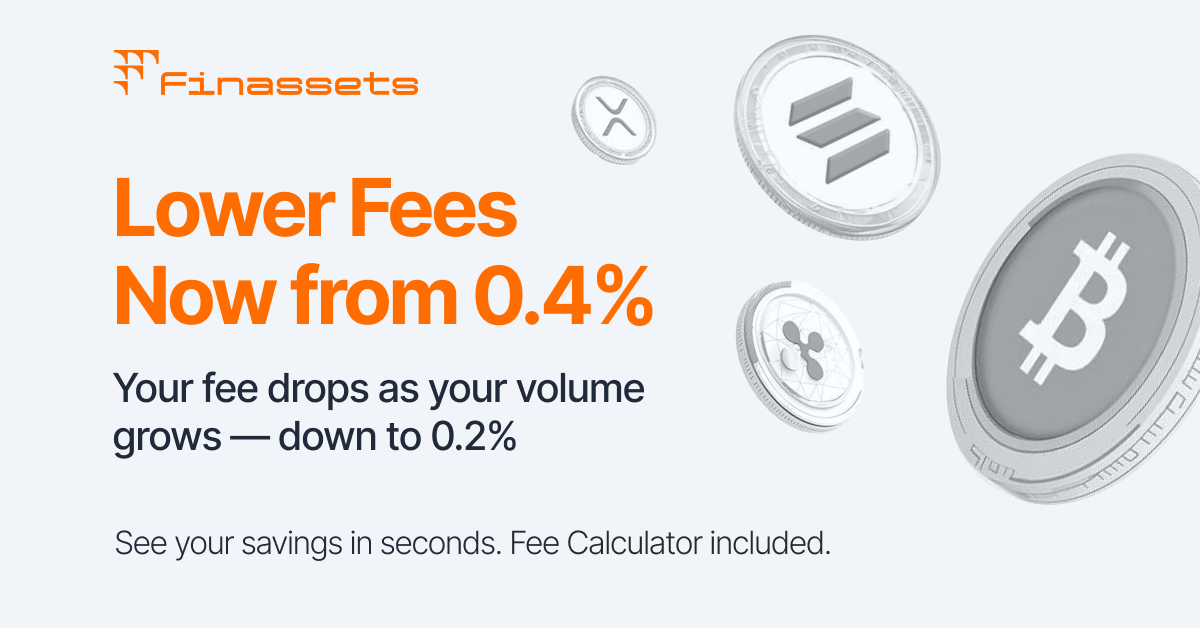
The Finassets progressive fee model, which reduces the processing commission from 0.4% to 0.2%, offers one of the lowest fee structures in the crypto payment gateway market.
For high-volume merchants, even a 0.1% difference can translate into significant annual savings.
Always review:
- Hidden spreads
- Withdrawal fees
- Currency conversion rates
- Cross-border transaction costs
👉 Use our crypto payment gateway fee calculator to compare average industry fees.
4. Network Fee Optimization System
Network fees can significantly increase total payment costs—especially for frequent transactions.
Most crypto payment gateways pass blockchain gas fees directly to merchants. Advanced platforms implement optimization mechanisms that reduce network costs.
For example, Finassets Tron Energy Saving System can reduce TRC20 network fees by 50% or more, creating measurable savings for:
- SaaS subscription payments
- Recurring billing models
- Cross-border stablecoin transfers
- High-frequency merchant settlements
For businesses using USDT TRC20 regularly, network optimization is a structural advantage.
5. Payout Flexibility
Flexible payout options improve liquidity and treasury management.
A strong crypto payment gateway should allow:
- Settlement in cryptocurrency
- Settlement in fiat currencies
- Multiple payout addresses
- Cross-border withdrawals
- Scheduled payouts
Businesses operating internationally require reliable payout flexibility to manage bank accounts, digital assets, and preferred currencies efficiently.
Finassets enables both crypto withdrawals and EUR bank transfer off-ramping, giving merchants flexible settlement options between digital assets and fiat currency.
6. Automatic Conversion of Digital Assets into Stablecoins or Fiat
Automatic conversion protects against cryptocurrency price fluctuations.
Look for:
- Real-time conversion rates
- Instant settlement in fiat currencies
- Stablecoin conversion options (USDT, USDC)
- Transparent exchange rates
- Competitive conversion fees
Auto conversion allows merchants to accept cryptocurrency payments while settling in USD, EUR, or other traditional currencies without exposure to exchange rate volatility.
Finassets provides automatic conversion of cryptocurrency payments into fiat currencies or stablecoins, helping businesses protect revenue from price fluctuations.
7. Integration Capabilities
Easy integration reduces time to market and technical complexity.
Essential integration features include:
- REST API integration
- Webhooks
- SDK integration
- E-commerce plugins
Seamless integration ensures compatibility with existing systems and improves checkout experience.
Finassets offers an easy integration process and a wide range of crypto payment services, including API integration, crypto invoicing, payment buttons, exchange services, custody, and mass payouts. You can explore them in the ‘Services’ section of the menu or in the company documentation.
8. Analytics and Sandbox Environment
Advanced analytics and sandbox testing improve operational control and development efficiency.
A modern cryptocurrency payment gateway should provide:
- Real-time reporting and analytics
- Merchant dashboard insights
- Transaction monitoring
- Exportable financial reports
- Sandbox testing environment
- Developer documentation
Analytics help merchants monitor revenue streams, transaction volume, and conversion rates.
Sandbox environments allow teams to test API integration before going live, reducing deployment risk.
After registration, Finassets provides clients with access to a Sandbox environment. Unregistered users can use a Demo version, which is more limited and serves as a preview of the workspace.
👉Try the Finassets Crypto Payment Gateway Demo!
9. Security and Compliance
Strong security measures protect both funds and customer data.
A secure crypto payment gateway must implement:
- Strong encryption protocols
- Two-factor authentication (2FA)
- Multi-signature wallet support
- Cold wallet storage
- Fraud prevention systems
- Secure API infrastructure
In addition to security, evaluate whether the provider supports compliance processes aligned with your operating jurisdictions, including AML procedures and transaction monitoring.
For businesses accepting cryptocurrency payments internationally, security and risk management standards are non-negotiable.
Jurisdiction and Licensing
Regulatory requirements vary depending on your operating region and business model. Some jurisdictions require crypto payment processors to hold specific registrations or financial licenses.
Before choosing a crypto payment gateway, confirm that its compliance framework aligns with:
- Your target markets
- Cross-border payment activity
- Fiat settlement requirements
- Long-term expansion goals
Security and compliance standards are non-negotiable for sustainable international operations.
Finassets supports jurisdictions such as Curaçao, Anjouan, and Kahnawake, with legal infrastructure for USDT and stablecoin processing. It is particularly well-suited for iGaming platforms, online merchants, SaaS providers, digital service platforms, and cross-border B2B businesses that process high volumes of USDT TRC20 transactions and prioritize low processing fees with optimized network costs.
10. Support and Processing Speed
Reliable support and fast payment confirmation directly affect customer experience.
Evaluate:
- Payment confirmation speed
- Transaction throughput
- 24/7 technical support availability
- Dedicated account management
- Response time guarantees
- Scalability during peak traffic
Layer 2 solutions and optimized blockchain routing reduce confirmation delays and improve checkout completion rates.
Fast support resolution prevents revenue disruption.
Finassets provides its clients with a personal manager available 24/7 via a private Telegram channel, allowing clients to quickly resolve issues and get answers to their questions.
Why Cost Efficiency and USDT (TRC20) Optimization Matter for High-Volume Merchants
For businesses processing large volumes of USDT TRC20 payments, the best crypto payment gateway is the one that minimizes total cost.
The Finassets crypto payment processor combines:
- Progressive processing fees from 0.4% down to 0.2%
- Network fee optimization system - reducing TRON network costs by 50%+
- Stablecoin-focused infrastructure
- Real-time settlement options
- Flexible payout systems
All of this together creates a long-term competitive advantage. In an annual report, this can amount to savings in the tens of thousands.
Finassets.io delivers this cost-efficient infrastructure, making it particularly suitable for:
- SaaS crypto billing
- Subscription-based businesses
- Cross-border B2B payments
- High-frequency digital commerce
- Global merchants handling USDT TRC20 transactions
For these use cases, reducing both processing fees and network gas fees significantly improves margins.
👉 Sign up for your Finassets business account here.
Final Thoughts
Choosing the best crypto payment gateway in 2026 requires evaluating 10 critical criteria: experience, supported coins, fees, network fee optimization, payout flexibility, automatic conversion, integration, analytics, security, and support speed.
There is no universal best solution for every business.
For high-volume merchants prioritizing USDT TRC20 efficiency, selecting a gateway that combines ultra-low processing fees with 50%+ network fee savings provides a measurable and sustainable advantage in the evolving crypto payment industry.